
- What Is A Church Extension Plan?
- Why Start An Extension Project?
- How To Assess Readiness
- How To Define Your Vision
- How To Fund Your Project
- How To Choose A Funding Partner
- How To Plan Facilities And Site
- How To Mobilize People And Leaders
- How To Run Fundraising Campaigns
- How To Execute Projects Effectively
- Which Metrics Show Progress
- Playbook, Templates, Checklist
- Common Mistakes To Avoid
- FAQs
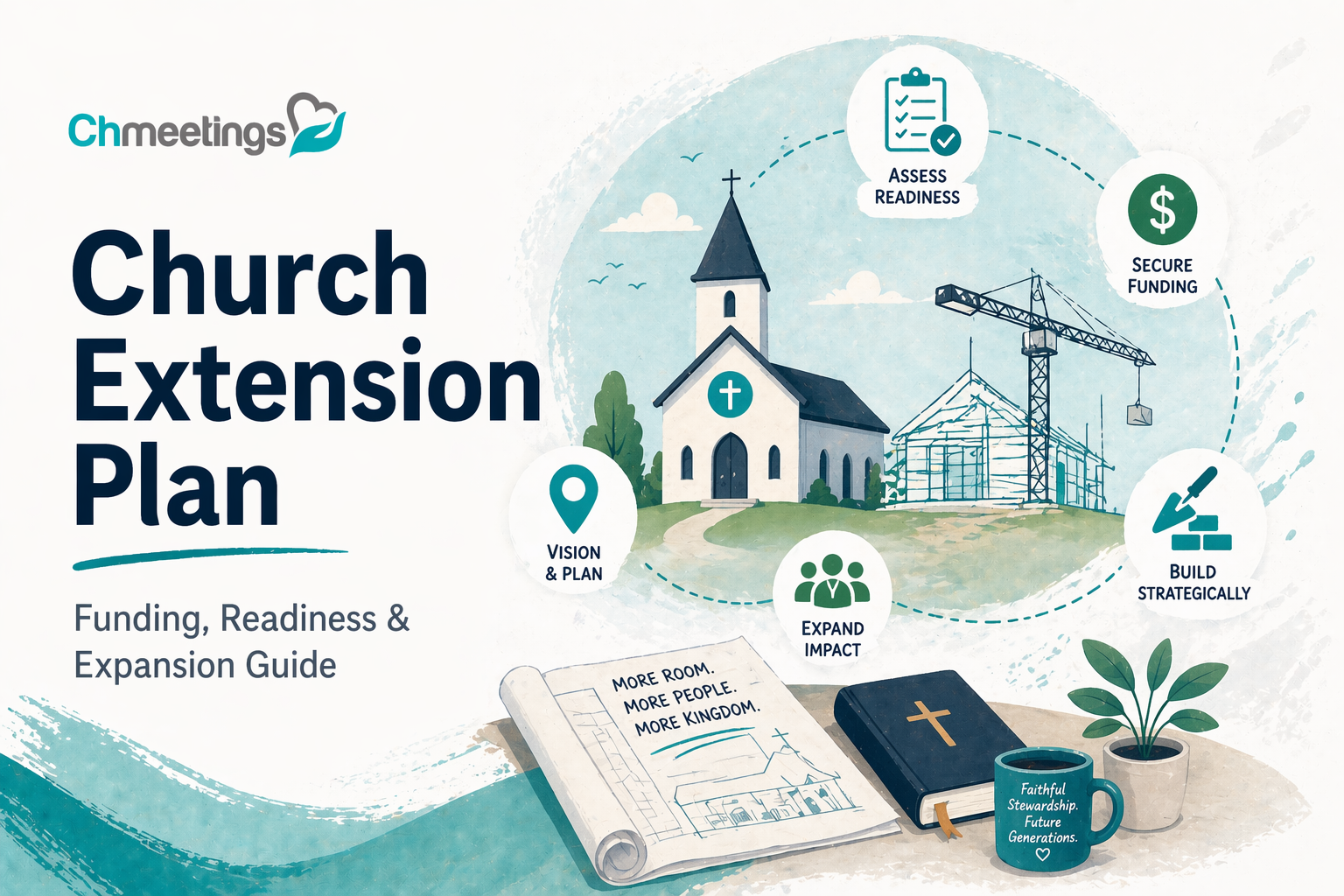
What Is A Church Extension Plan?
Who Benefits From This Plan
A church extension plan is for any congregation thinking beyond current walls. Small churches ready to serve more people, growing congregations needing room or new locations, and established churches planning new ministries all gain clarity from a formal plan. Local neighborhoods benefit when churches add community services, schools, or outreach hubs. Donors and leaders benefit too, because a written plan reduces uncertainty and makes stewardship easier.
What Projects It Covers

An extension plan covers physical building projects, like new campuses, additions, or renovations. It also includes program expansions that need space, such as childcare, youth ministries, or community service centers. Land purchases, lease agreements, and site improvements fall under the same umbrella. The plan should also outline supporting systems, like staffing, technology, and ongoing maintenance, not just bricks and mortar.
How It Differs From A Capital Campaign
A capital campaign is a fundraising effort focused on generating the money to pay for a project. An extension plan is broader, it defines the ministry purpose, scope, timeline, and operational model for that expansion. Think of the plan as the strategy and blueprint, and the campaign as one tactical tool to fund it. A solid extension plan makes a capital campaign easier to run, because donors see clear outcomes and realistic budgets.
Why Start An Extension Project?
When Expansion Makes Sense
Start planning when demand consistently exceeds capacity, whether in worship attendance, program waitlists, or volunteer burnout. Expansion also makes sense when demographic shifts or neighborhood growth offer new mission opportunities. If current facilities limit the ministry vision, or if multiple short-term fixes keep coming up, it’s time to consider a deliberate extension project.
What Long-Term Outcomes To Target
Target outcomes that are measurable and ministry-focused. Examples: increase weekly attendance by a specific number, launch X new community programs, reduce class waitlists by Y percent, or establish a permanent outreach site in a targeted neighborhood. Include sustainability goals, like balanced operating budgets for new sites and volunteer pipelines that prevent burnout.
How Expansion Supports Church Growth
Expansion creates space for more people to encounter ministry, but its real value is strategic capacity. New or larger facilities enable new ministries, longer service hours, and better hospitality. When backed by good systems, expansion makes discipleship and volunteer onboarding scalable. The building should serve the mission, not become the mission.
How To Assess Readiness

Evaluate Membership Trends
Look at three to five years of attendance and membership data to identify trends, not one-off spikes. Track new member assimilation rates, retention, and engagement in small groups or ministries. Consistent growth in multiple indicators signals readiness; isolated increases in a single metric need deeper investigation.
Review Financial Health
Assess operating reserves, debt capacity, and giving patterns over several years. Create conservative pro forma budgets for the extension, including one-time capital costs and recurring operating expenses. Factor in realistic fundraising scenarios and contingency reserves. A project that undermines core ministries is not ready.
Assess Leadership Capacity
Expansion requires project leadership, pastoral bandwidth, and skilled volunteers. Evaluate whether staff and lay leaders have the time and track record to execute complex projects. If gaps exist, plan to recruit or train leaders before committing to construction or new sites.
Survey Community Needs
Confirm that expansion answers a real need in your neighborhood, not just internal desires. Use simple tools, like short surveys at services, community listening sessions, and local demographic research. Data from schools, city planning, or outreach partners helps validate your assumptions and shapes project priorities.
How To Define Your Vision
Set Clear Ministry Objectives
Turn broad aspirations into specific ministry objectives. Instead of saying, we want to reach more people, specify the target groups, desired outcomes, and how you will measure success. Clear objectives guide design choices, budget priorities, and volunteer recruitment.
Choose Geographic Or Program Focus
Decide whether the extension targets a place or a ministry. A geographic focus might be planting a neighborhood site or buying property near a growing suburb. A program focus could prioritize a youth center, counseling clinics, or community education. That choice affects location, facility design, staffing, and fundraising strategy.
Create Measurable Goals And Timeline
Translate objectives into measurable goals, assign ownership, and set a realistic timeline with milestones. Include feasibility checks, permit deadlines, fundraising phases, and a post-launch evaluation window. Use simple dashboards to monitor progress so leaders can act quickly when things drift. A church management app can help track attendance, giving, volunteer capacity, and project milestones in one place, keeping ministry data aligned with the extension plan.
How To Fund Your Project
Compare Funding Sources

List the realistic avenues and match each to your timeline and risk tolerance. Options include operating reserves, a capital campaign, construction loans, denominational loan funds, grants from foundations, major gifts, lease revenue, and asset sales or partnerships. Reserve-based funding reduces borrowing but limits operating flexibility. Loans speed execution but add debt service and covenants. Grants and gifts lower cost, but often come with specific restrictions and timing. Rank potential sources by speed, cost, control, and reliability to pick the right mix for your congregation.
Build A Realistic Budget
Start with an itemized budget that separates hard costs, soft costs, and long-term operating expenses. Hard costs, like construction and site work, should rely on contractor estimates. Soft costs include design fees, permits, inspections, insurance, and project management. Add a contingency of at least 10 percent for inflation and unknowns. Don’t forget lifecycle items, like roofing, HVAC, and technology refreshes, and plan for increased utilities and staffing. Get multiple bids, document assumptions, and update the budget as permits and estimates firm up. Use your church management software to track pledges, donor commitments, and cash receipts so financial projections stay accurate.
Blend Loans, Gifts, And Grants
Design a financing structure that reduces risk while honoring donor intent. A common approach is to cover an initial threshold with gifts and grants, then finance the remainder with a construction loan that converts to a mortgage. Consider short-term bridge loans if pledges will arrive over time. If denominational funds are available, compare their flexibility with commercial options. Be transparent about which funds are restricted, which are available for general capital use, and how naming or recognition aligns with donor expectations. Build covenant tests into your plan that you can meet even under conservative giving scenarios.
Forecast Cash Flow And Reserves
Map cash inflows against construction draw schedules and ongoing operating costs. Forecast pledge collection rates rather than assuming 100 percent payment, and stagger spending to match expected receipts. Maintain an operating reserve large enough to cover at least three months of operating expenses plus an additional contingency for construction overruns. Run stress tests, such as slower-than-expected pledge fulfillment or higher borrowing costs, to see how long reserves will hold. Clear cash flow planning prevents work stoppages and protects core ministries.
How To Choose A Funding Partner
Compare Denominational Funds And Banks
Denominational and faith-based lenders often offer mission-aligned terms, flexible underwriting that understands seasonal giving, and quicker approvals for congregations. Community banks and credit unions may provide personalized service and local knowledge. Larger commercial banks bring capacity for complex deals and construction lines. Evaluate lenders on understanding church revenue cycles, willingness to accept pledge schedules, and experience with congregational borrowers. Don’t pick only on rate, pick on fit.
Evaluate Rates And Loan Terms
Look beyond the headline rate. Compare fixed versus variable interest, amortization period, possibility of balloon payments, prepayment penalties, and required reserves. Check covenant language, like minimum operating reserves or debt service coverage ratios, and see how restrictive reporting requirements are. Ask for example amortization schedules under different rates so you can see true monthly cost and total interest paid. Insist on written explanations for all fees, closing costs, and conditions that could trigger higher rates.
Check Application Requirements
Start compiling the documents lenders typically ask for: board minutes approving the project, articles of incorporation and bylaws, the last three years of financial statements and IRS filings, current operating budget, pledge schedule, project budget, construction contract or bids, property appraisal, title report, and environmental assessment if needed. Some lenders want personal guaranties or ordination paperwork. Know the timeline and fees for underwriting so you can coordinate fundraising milestones and permit deadlines.
Sample Rate Comparison
- Denominational fund: hypothetical rate 4.0 percent, amortization 20 years, lower fees, flexible pledge acceptance, possible covenant on reserves.
- Community bank: hypothetical rate 5.0 percent, amortization 25 years, moderate fees, strong local relationships, faster closings.
- Regional commercial lender: hypothetical rate 5.5 percent, amortization 30 years, higher fees, stricter covenants, capacity for larger loans.
These numbers are examples only. get current quotes and run payment scenarios at different rates to understand long term impact.
Manage Account Access And Login
Decide who will have online access and set role-based permissions, so finance volunteers, staff, and trustees get only what they need. Use unique logins, two-factor authentication, and document signatory authority in board minutes. Update access promptly when staff or volunteers leave. Reconcile accounts weekly during construction and preserve an audit trail for deposits, draws, and vendor payments. Where possible, integrate bank deposit records with your church management software to simplify reconciliation and donor tracking.
How To Plan Facilities And Site
Decide Buy, Lease, Or Build

Weigh speed, cost, and mission fit. Buying an existing building can be quick and often cheaper upfront, but renovations may add hidden costs. Leasing cuts capital needs and offers flexibility, but long-term control and customization are limited. Building from scratch gives a tailored facility but requires time, permits, and higher upfront capital. Create a decision checklist that covers budget sensitivity, lease terms, resale value, neighborhood fit, and long-term ministry strategy.
Conduct Zoning And Site Surveys
Early due diligence prevents expensive surprises. Confirm zoning designation, allowable uses, parking requirements, conditional use permits, and setback rules. Commission a survey, soil and geotechnical reports, utility capacity checks, and a phase 1 environmental assessment if needed. Talk with local planning staff and neighbors to surface issues early. Secureing favorable zoning or variances can take months, so factor that into your timeline.
Plan Phased Construction Options
Phasing reduces immediate capital need and minimizes disruption. Options include building a shell and finishing interiors later, completing critical program areas first, or opening parts of the site while other areas are under construction. Phasing changes cash flow, so align fundraising or loan tranches with each phase. Plan temporary spaces and logistics for ongoing ministries during construction to keep ministry continuity.
Ensure Accessibility And Code Compliance
Design for accessible entry, circulation, seating, restrooms, and routes to key services. Confirm local building, fire, and life safety codes, and plan for required inspections and permits. If your project includes childcare, kitchen facilities, or assembly spaces, expect additional health and safety requirements. Build compliance checks into your construction schedule so final occupancy permits aren’t delayed.
How To Mobilize People And Leaders
Recruit And Train Volunteers
Define specific roles with written descriptions and time commitments, then recruit from small groups, ministry teams, and recent volunteers. Provide role-based training, background checks where required, and a clear chain of command on site. Offer short, practical training sessions before major events or build phases, and recognize volunteers often to keep momentum high.
Define Staff And Team Roles
Create an org chart for the project with clear responsibilities: project manager, finance liaison, facilities lead, communications lead, donor relations, and volunteer coordinator. Specify decision authority and approval thresholds so procurement and change orders don’t stall. Plan for staff bandwidth by reallocating duties or hiring temporary project support if needed.
Engage Small Groups And Congregation
Bring the congregation along with listening sessions, site tours, FAQs, and transparent financial updates. Turn small groups into ambassadors who can host conversations and relay feedback. Use testimonies and clear ministry outcomes to connect the project to mission, not just building. Frequent, honest communication builds trust and encourages giving.
Coordinate Volunteer Schedules
Use a central scheduling tool to publish shifts, track signups, and manage backups. Break tasks into short shifts to lower the barrier to serve. Build contingency teams for weather delays or overruns. Send automated reminders and easy check-in instructions. Tie volunteer hours to recognition and compliance tracking so you maintain safety standards and celebrate service. Where possible, sync schedules and volunteer contact details with your church management software to reduce manual work and keep all ministry data in one place.
How To Run Fundraising Campaigns
Choose A Campaign Model
Pick a model that matches your timeline, donor base, and risk tolerance. Common approaches:
- Silent major gifts phase followed by a public pledge drive, good when you need large lead gifts before asking the whole congregation.
- Congregational pledge drive, simpler and fast when broad participation matters more than large gifts.
- Matching gift or challenge grant to create urgency and leverage giving.
- Loan-first model, where initial financing starts work and gifts retire the debt over time.
Decide which mix of major gifts, recurring donors, grants, and loans will hit your funding target without stressing operations.
Craft Stewardship Messaging
Lead with mission, not mortar. Explain how the project advances ministry outcomes, name specific benefits, and show concrete metrics you’ll track. Use plain language, consistent talking points, and an agreed theology of giving so staff and lay leaders tell the same story. Offer clear giving levels and tangible naming or recognition opportunities, but keep the emphasis on participation and spiritual investment. Close each message with a single next step, whether it’s a pledge card, online form, or meeting with a campaign ambassador.
Integrate Online Giving Tools
Make it easy to give, pledge, and fulfill gifts online. Offer multiple payment options, recurring or one-time gifts, and mobile-friendly donation pages. Sync online receipts, pledge schedules, and contribution statements with your donor records so follow-up and reporting stay accurate. A church management app like ChMeetings can connect online giving, pledge tracking, and contribution statements in one place, reducing manual reconciliation and speeding donor acknowledgement.
Collect Testimonials And Reviews
Stories persuade where numbers alone fall short. Gather brief written testimonies, short video clips, and community endorsements that show real impact. Guide storytellers to focus on one clear outcome, include a name and role, and sign a permission release. Put these stories on your campaign page, in slides at services, and in grant or lender packets. Rotate fresh content so updates feel live, not recycled.
How To Execute Projects Effectively
Build A Project Timeline
Map major phases: feasibility, schematic design, permitting, contractor selection, construction, commissioning, and occupancy. Identify the critical path items that determine the overall finish date, and set realistic milestone deadlines with buffer time for permits and inspections. Publish a cadence for status updates and decision points so leadership knows when approvals or funds must be ready.
Select Contractors And Vendors
Use a formal procurement process, even for familiar vendors. Issue an RFP or request qualified bids, check references, verify insurance and bonding, and review prior work in similar church environments. Compare contract types, fixed price versus guaranteed maximum price, and insist on clear change order procedures and liquidated damages for schedule slippage. Pick partners who understand ministry rhythms and can coordinate around worship and events.
Manage Permits And Inspections
Engage the authority having jurisdiction early, and confirm application requirements and expected timelines. Bundle permit submissions where possible to reduce back-and-forth. Create an inspections calendar and assign a team member to track approvals, certificates, and permit fees. Keep all permit paperwork in a single, accessible project binder or digital folder so occupancy certificates and final approvals don’t become last-minute blockers.
Track Budget, Schedule, And Quality
Run weekly or biweekly financial and schedule reviews with the project team. Maintain a live change order log, a draw schedule tied to contractor invoices, and a punch list with clear owners and completion dates. Use holdbacks for final closeout to ensure defects are fixed. Bring in independent inspections for critical systems, and report deviations to the board with action plans. Keep construction finances reconciled to your accounting system, and keep donor-restricted funds segregated.
Which Metrics Show Progress
Financial Health Metrics To Track
Track cash on hand, percentage of campaign goal achieved, pledge fulfillment rate, contingency remaining, cost per square foot, and debt service coverage ratio if you borrow. Monitor monthly burn rate against the construction draw schedule and a rolling three-month forecast. Set trigger thresholds for board review, for example, less than 60 percent funding or contingency below 5 percent.
Attendance And Engagement Metrics
Measure average weekly attendance, new visitor count, connection class sign-ups, small group growth, and program enrollments tied to the new space. Track capacity utilization, like percentage of seats filled or class occupancy versus design capacity. Use these numbers to validate that the building is meeting intended ministry outcomes.
Volunteer And Leadership Metrics
Monitor the number of volunteers recruited, roles filled, retention rate, and percent of volunteers who completed required training or background checks. Track volunteer hours dedicated to the project and pipeline metrics for future leadership roles. Healthy volunteering shows the congregation is owning the project, not just funding it.
How To Report Progress To Congregation
Choose a regular cadence, such as monthly financial snapshots and quarterly town halls. Use simple dashboards that show campaign percent complete, pledge fulfillment, key milestones, and next actions. Pair numbers with short stories and photos so people see both the impact and the accounting. Automate segmented email updates and contribution statements so donors get timely receipts and leaders get consolidated reports. ChMeetings church management software can help automate donor acknowledgements and segmented communications, reducing manual work for your team.
Playbook, Templates, Checklist
0–6 Month Prelaunch Checklist

- Form a steering committee and name a project lead.
- Define scope, rough budget, and success metrics.
- Clean and segment donor and member lists.
- Draft a concise case statement and campaign theme.
- Run basic site and zoning due diligence.
- Compile preliminary lender requirements and timeline.
- Identify major gift prospects and begin quiet conversations.
- Create a communications plan and initial FAQ.
- Secure board approval for moving to feasibility work.
6–18 Month Implementation Timeline
- Months 6–9: finalize schematic design, issue contractor RFPs, start permitting, begin silent phase outreach to major donors.
- Months 9–12: select contractor, finalize construction documents, close financing, launch public campaign phase.
- Months 12–16: break ground, complete foundation and core systems, schedule utilities.
- Months 16–18: interior finishes, inspections, punch list, staff training, soft opening and final fundraising closeout.
Adjust milestones to local permit timelines and seasonal construction constraints.
Capital Campaign Letter Template
Dear [Name],
We believe God is calling [church name] to expand our capacity to serve [specific community or ministry outcome]. To do that, we are asking our church family to join a capital campaign to fund [project name]. Your support, through a pledge over [term] or a one-time gift, will make possible [three specific benefits]. Please prayerfully consider partnering at a level that reflects your gratitude and trust. To pledge, visit [link] or contact [staff person, phone/email]. Thank you for praying and giving as we take this step together.
In gratitude,
[Lead Pastor or Campaign Chair]
Loan Application Checklist
- Board resolution approving the project and loan application.
- Articles of incorporation, bylaws, and IRS exemption letter.
- Financial statements and tax returns for the last three years.
- Current operating budget and cash reserves schedule.
- Pledge schedule and campaign materials.
- Detailed project budget and construction contract or GMP.
- Property appraisal, title report, and survey.
- Environmental or geotechnical reports if required.
- Insurance certificates and risk management plan.
- Resumes or bios of key leadership and project managers.
Site Selection And Ongoing Maintenance Checklist
Site selection
- Confirm zoning, permitted uses, and parking requirements.
- Assess traffic patterns, visibility, and pedestrian access.
- Verify utility capacity and stormwater requirements.
- Evaluate neighborhood fit, safety, and future growth potential.
Ongoing maintenance
- Create a preventative maintenance schedule for HVAC, roofing, plumbing, and landscaping.
- Budget for lifecycle replacements and establish a reserve fund.
- Set service contracts for critical systems and clear vendor SLAs.
- Maintain access and security plans for worship and events.
- Record warranties, manuals, and contact lists in a central maintenance binder.
Common Mistakes To Avoid
Underestimating Costs
Many projects focus on construction numbers and forget soft costs, testing, permits, and escalation. Always include design fees, inspections, insurance, utility upgrades, and a realistic contingency of at least 10 percent. Factor lifecycle replacements and increased operating expenses into long‑term budgets so the new space doesn’t become a drain on core ministries.
Neglecting Communication
Silent surprises kill trust faster than cost overruns. Keep donors, volunteers, staff, and neighbors regularly informed with simple, consistent updates. Use clear FAQs, short progress reports, and visual milestones so people know what’s happening and when they’ll be asked to act.
Rushing Leadership Development
A plan needs leaders who can carry it beyond the build phase. Don’t assume existing staff can absorb extra responsibilities without training or relief. Recruit and train lay leaders early, assign clear decision authority, and build a succession plan so volunteer turnover doesn’t stall the project.
Ignoring Community Feedback
If the project doesn’t answer local needs, it will struggle to gain support or face opposition in permitting. Hold listening sessions, survey nearby residents, and meet with local stakeholders. Use that feedback to adjust programming, hours, parking plans, and outreach so the building fits the neighborhood, not just your wishlist.
FAQs
How Do I Log In To A Church Extension Plan Account?
Go to the fund’s official website and find the member or account login link. Sign in with the email or username and password you registered with. If you don’t have credentials, use the create account or forgot password link, or contact the fund’s support team for help. For security, enable two factor authentication if available.
What Are Typical Church Extension Plan Rates?
Rates vary by lender, loan type, term, and market conditions. Denominational funds often offer lower, mission‑friendly rates, community banks sit in the middle, and large commercial lenders may be higher but add capacity. Request current quotes, compare fixed versus variable options, and run amortization scenarios to see true monthly cost.
Where Can I Read Church Extension Plan Reviews?
Check Google Reviews and Facebook pages for lenders and denominational funds, read posts in denominational forums and clergy groups, and ask other congregations for references. Many funds can provide client testimonials or a list of recent borrowers you can contact directly.
What Is The Disciples Church Extension Fund?
The Disciples Church Extension Fund is the lending and investment ministry that supports the Christian Church (Disciples of Christ). It provides loans for building projects and investment opportunities for congregations and donors. Visit their official site or contact their office for program details and current offerings.
How Do I Access Church Extension Fund Login?
Visit the specific fund’s website and click the member or investor portal link. You’ll need your account number or registered email and password. If your congregation holds an institutional account, your treasurer or authorized officer may need to request access on your behalf. Contact the fund’s help desk if you hit a roadblock.
What Are Disciples Church Extension Fund Rates?
Rates change with market conditions and depend on the product, whether it’s a construction loan, long term mortgage, or investment offering. The fund publishes a current rate sheet, so check their website or call a representative for the latest loan and investment rates.
What Are Lutheran Church Extension Fund Rates?
Lutheran Church Extension Fund rates differ by product and region. Loan terms, amortization, and investment yields all affect quoted rates. For accurate, up‑to‑date figures, consult the LCEF website or speak with a local LCEF representative.
Is There A Church Extension Fund In Michigan District?
Many denominations operate district or regional extension funds. To confirm, contact your denomination’s Michigan District office or search the district’s website for extension fund or loan program information. District staff can point you to available financing, eligibility rules, and local contacts.
Does LCMS Offer Church Extension Funding?
Yes. LCMS congregations commonly access financing through the Lutheran Church Extension Fund and through district loan programs or partnerships. Reach out to your LCMS district office or the LCEF to learn about current loan products, rates, and application steps.