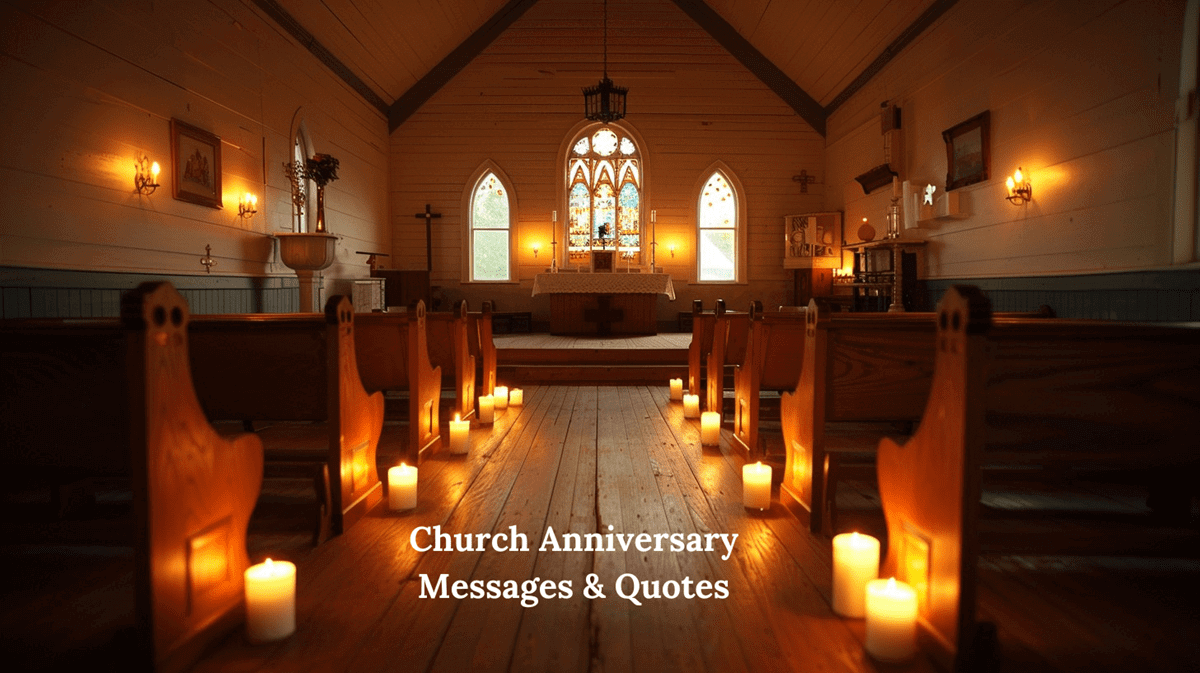
A church anniversary is more than a date on the calendar. It is a moment to remember God’s faithfulness, honor the people who helped build the ministry, strengthen congregational identity, and look forward with renewed purpose.
For some churches, an anniversary may mark the first year of ministry. For others, it may celebrate 25, 50, 100, or more years of worship, service, prayer, outreach, and community life. No matter the size of the milestone, the purpose should remain the same: to reflect on the journey, celebrate what God has done, and recommit the church to its mission.
A strong church anniversary celebration does not need to be expensive or overly complicated. It needs prayerful planning, meaningful storytelling, thoughtful activities, community involvement, and a clear connection between the church’s past, present, and future.
This guide walks through the meaning of a church anniversary, biblical messages to use, theme ideas, planning strategies, celebration activities, publicity tips, church history displays, community involvement, and post-event follow-up.
- Importance of Celebrating Church Anniversaries
- Creative Themes for Church Anniversaries
- Effective Planning Strategies for Church Anniversaries
- Engaging Activities for the Celebration
- Publicity and Community Involvement
- Gathering and Presenting Church History
- Post-Celebration Reflection and Follow-Up
-
FAQs
- What activities should we include in our church anniversary celebration?
- How far in advance should we start planning our church anniversary?
- What themes can we use for our church anniversary?
- How can we connect our church history to the celebration?
- What Bible verse is good for a church anniversary?
- What role does the community play in our anniversary celebrations?
- How can we advertise our church anniversary effectively?
- What follow-up should we do after the anniversary celebration?
- Final Thoughts
- Importance of Celebrating Church Anniversaries
- Creative Themes for Church Anniversaries
- Effective Planning Strategies for Church Anniversaries
- Engaging Activities for the Celebration
- Publicity and Community Involvement
- Gathering and Presenting Church History
- Post-Celebration Reflection and Follow-Up
-
FAQs
- What activities should we include in our church anniversary celebration?
- How far in advance should we start planning our church anniversary?
- What themes can we use for our church anniversary?
- How can we connect our church history to the celebration?
- What Bible verse is good for a church anniversary?
- What role does the community play in our anniversary celebrations?
- How can we advertise our church anniversary effectively?
- What follow-up should we do after the anniversary celebration?
- Final Thoughts
Importance of Celebrating Church Anniversaries
A church anniversary gives the congregation a chance to pause and remember. In the normal pace of ministry, churches often move from one service, meeting, outreach, and program to the next without stopping to reflect on the larger story God is writing through the church.
An anniversary creates space for that reflection.
It allows long-time members to remember what God has done. It helps newer members understand the church’s roots. It gives younger generations a picture of faithfulness across time. Most importantly, it reminds the whole congregation that the church is not just an organization. It is a community shaped by worship, service, sacrifice, prayer, and shared mission.
What Is a Church Anniversary?
A church anniversary is an annual or milestone celebration that commemorates the founding of a church or another major moment in its journey. That may include the launch of the congregation, the opening of a building, a major ministry milestone, or a significant year in the church’s history.
It is both practical and spiritual. Practically, it gives the church a chance to gather members, thank volunteers, recognize leaders, preserve history, and strengthen community. Spiritually, it gives the congregation a chance to thank God for His guidance, reflect on the mission, and renew commitment to the work ahead.
A church anniversary can include a special worship service, guest speaker, music program, fellowship meal, outreach event, history display, testimony video, or full anniversary weekend.
The goal is not only to celebrate how long the church has existed. The deeper goal is to ask: How has God been faithful, and how are we called to serve Him next?
Biblical Foundations for Celebration
Celebration has a strong biblical foundation. Scripture often calls God’s people to remember His works, tell His deeds to the next generation, and mark moments of deliverance, provision, and faithfulness.
In the Old Testament, memorials and feasts helped Israel remember what God had done. These moments were not empty traditions. They were teaching tools. They helped families and communities pass faith from one generation to another.
A church anniversary can serve a similar purpose. It becomes a visible reminder of God’s faithfulness through years of worship services, baptisms, outreach events, leadership transitions, answered prayers, giving, teaching, and community care.
A church anniversary is not about praising the institution for its own sake. It is about recognizing God’s grace through the life of the congregation.
11 Church Anniversary Quotes and Messages from the Bible
Bible verses can give a church anniversary celebration spiritual depth. They help the congregation remember that the church’s story is not only built on programs, buildings, or events. It is built on God’s faithfulness, the unity of believers, and the shared mission of the body of Christ.
These 11 church anniversary Bible verses can be used in sermons, invitations, anniversary programs, social media posts, welcome messages, or prayers during the celebration.
| Bible Verse | Church Anniversary Message |
|---|---|
| Psalm 127:1: “Unless the Lord builds the house, those who build it labor in vain.” | This verse reminds the church that every year of ministry depends on God’s guidance and blessing. A church anniversary is a moment to thank Him for building, sustaining, and strengthening the congregation. |
| 1 Corinthians 12:12-13: “For as the body is one and hath many members, and all the members of that one body being many are one body, so also is Christ.” | This passage is a strong reminder that the church is one body made up of many people. It is fitting for celebrating unity, shared service, and the different gifts within the congregation. |
| Ephesians 4:16: “From him the whole body, joined and held together by every supporting ligament, grows and builds itself up in love, as each part does its work.” | This verse works well for honoring volunteers, leaders, ministries, and members who have helped the church grow through love and faithful service. |
| Matthew 16:18: “And I tell you that you are Peter, and on this rock, I will build my church, and the gates of Hades will not overcome it.” | This is a powerful verse for celebrating the foundation of the church. It reminds the congregation that Christ is the one who builds and protects His church. |
| Psalm 133:1: “How good and pleasant it is when God’s people live together in unity!” | This verse is ideal for anniversary services focused on fellowship, community, and healing. It celebrates the beauty of believers worshiping and serving together. |
| Hebrews 10:25: “Not forsaking the assembling of ourselves together, as the manner of some is; but exhorting one another.” | This passage reminds the congregation why gathering matters. A church anniversary is a chance to renew commitment to worship, fellowship, encouragement, and shared faith. |
| Romans 12:5: “So we, though many, are one body in Christ, and individually members one of another.” | This verse highlights shared belonging. It is especially useful when celebrating the people who make up the church, not only the history of the building or institution. |
| Philippians 1:6: “Being confident of this, that He who began a good work in you will carry it on to completion until the day of Christ Jesus.” | This verse connects the past and future beautifully. It reminds the church that God is not finished with His work in the congregation. |
| 1 Thessalonians 1:2-3: “We always thank God for all of you and continually mention you in our prayers.” | This passage is a meaningful way to thank faithful members, volunteers, leaders, and ministry teams for their work produced by faith, labor prompted by love, and endurance inspired by hope. |
| Isaiah 40:31: “But those who hope in the Lord will renew their strength.” | This verse is helpful for churches that have passed through difficult seasons. It reminds the congregation that strength for the future comes from hoping in the Lord. |
| Acts 2:42: “They devoted themselves to the apostles’ teaching and to fellowship, to the breaking of bread and to prayer.” | This verse gives a simple picture of a healthy church community. It is perfect for an anniversary message focused on worship, teaching, fellowship, prayer, and spiritual growth. |
These verses can also be turned into short church anniversary messages:
- For gratitude: “Thus far, the Lord has helped us. Today, we remember His faithfulness and give thanks for every person He has used in this church’s story.”
- For unity: “We are many members, but one body in Christ. This anniversary reminds us that every gift, every act of service, and every prayer matters.”
- For future vision: “He who began a good work will carry it on to completion. We celebrate the past with gratitude and step into the future with faith.”
- For community: “How good and pleasant it is when God’s people live together in unity. May this anniversary renew our love for one another and our commitment to serve together.”
- For recommitment: “Like the early church, may we remain devoted to teaching, fellowship, prayer, and the breaking of bread as we continue the mission God has placed before us.”
Community Bonding Through History
Every church has a story. That story includes founding members, early struggles, faithful pastors, building projects, children’s programs, mission efforts, community outreach, worship traditions, and moments when the church had to trust God through uncertainty.
A church anniversary brings these memories back into view.
This matters because history strengthens identity. When people understand where the church has been, they often feel more connected to where it is going. Long-time members feel honored when their stories are remembered. New members feel more rooted when they understand the congregation’s journey. Children and young adults begin to see that they are part of something larger than one Sunday service.
The anniversary becomes a bridge between generations.
It can also heal disconnection. In many churches, newer members may not know the sacrifices behind the church they now enjoy. Older members may feel that their contributions have been forgotten. An anniversary gives both groups a chance to listen, learn, and appreciate each other.
Fostering Future Vision
A church anniversary should not only look backward. It should also ask, “What is God calling us to next?”
This is where many celebrations become too narrow. They remember the past but do not connect it to the future. A better approach is to use the past as a foundation for renewed mission.
For example:
- If God has helped the church build a strong worshiping community, how can worship deepen in the next season?
- If God has blessed the church with faithful volunteers, how can younger leaders be raised up?
- If the church has served the neighborhood for many years, what new needs should it respond to now?
- If the congregation has endured hardship, how can that testimony encourage others?
This gives the anniversary a forward-looking purpose. The celebration becomes not just a memory, but a recommitment.
Creative Themes for Church Anniversaries
A strong church anniversary theme gives the celebration focus. It can shape the sermon series, invitations, decorations, worship songs, printed materials, social media posts, historical displays, testimonies, and outreach activities.
The best themes are not just catchy. They connect the church’s story with Scripture and mission.
A good theme should answer one simple question:
What truth do we want our congregation to remember during this anniversary season?
Examples of Spiritual Themes
Here are several church anniversary themes that can work for different milestones, church sizes, and celebration styles.
| Theme | Main Idea | Scripture Connection |
|---|---|---|
| Thus Far the Lord Has Helped Us | Remembering God’s faithfulness | 1 Samuel 7:12 |
| Rooted in Faith, Growing in Grace | Honoring the past while growing forward | Colossians 2:6-7 |
| A Legacy of Faithfulness | Celebrating generations of service | Psalm 78:4 |
| Built on Christ, Sent to Serve | Connecting foundation and mission | 1 Corinthians 3:11 |
| One Body, Many Generations | Celebrating unity across ages | 1 Corinthians 12:12 |
| Remembering Grace, Renewing Mission | Looking back and moving forward | Philippians 1:6 |
| The Light Still Shines | Continuing witness in the community | Matthew 5:14-16 |
| Cornerstone of Love | Centering the church on Christ | Ephesians 2:19-22 |
The theme should be simple enough for members to remember and rich enough to support sermons, prayers, songs, and activities.
For example, “Thus Far the Lord Has Helped Us” works well for a church that wants to emphasize gratitude. “Built on Christ, Sent to Serve” works well for a church that wants to connect its history to future outreach. “One Body, Many Generations” is helpful when the church wants to highlight intergenerational unity.
Engaging the Community in Selection
Choosing a theme does not have to be limited to pastors or a small committee. Involving the congregation can create stronger ownership.
Churches can invite members to suggest theme ideas, share favorite anniversary Scriptures, or vote on several approved options. This can be done through printed forms, online surveys, small group discussions, or announcements after worship.
A simple survey could ask:
- What word best describes our church’s journey?
- What Scripture reminds you of our congregation?
- What do you hope this anniversary will help us remember?
- What do you believe God may be calling our church to next?
This process does more than produce a theme. It helps leaders hear how members understand the church’s identity.
The final decision should still be guided by pastoral wisdom and theological clarity. But inviting input can make the celebration feel shared, not imposed.
Cultural Influences on Theme Design
Church anniversaries are strongest when they reflect the actual life of the congregation. A church’s culture, traditions, language, music, neighborhood, and history should shape the celebration.
For example, a church with a strong choir tradition may build the anniversary around worship and music. A church known for community outreach may include a service project. A multicultural church may include songs, prayers, readings, or food from different cultures represented in the congregation.
The key is to make culture serve the spiritual purpose of the anniversary. Decorations, music, food, and customs should not feel random. They should help tell the story of the church and honor the people who make up the congregation.
A thoughtful theme can bring these pieces together.
Effective Planning Strategies for Church Anniversaries
A memorable church anniversary rarely happens by accident. It requires early planning, clear responsibilities, realistic timelines, and consistent communication.
For major milestones, planning should ideally begin 12 to 18 months in advance. Smaller anniversaries may need less time, but even a simple celebration benefits from structure.
Planning early gives the church enough time to choose a theme, form committees, collect historical materials, invite speakers, prepare media, involve the community, create promotional materials, and avoid last-minute pressure.
Creating a Planning Timeline
A planning timeline helps everyone understand what needs to happen and when. It also prevents the anniversary from becoming one person’s burden.
Here is a practical timeline template churches can adapt.
| Timeline | Planning Focus | Key Tasks |
|---|---|---|
| 12 to 18 months before | Vision and leadership | Choose anniversary date, appoint planning chair, form core committee, define purpose |
| 9 to 12 months before | Theme and structure | Select theme, confirm event format, identify speakers, estimate budget |
| 6 to 9 months before | History and programming | Collect photos, stories, testimonies, milestone dates, and archival materials |
| 4 to 6 months before | Promotion and logistics | Design invitations, prepare publicity plan, assign hospitality and decoration teams |
| 2 to 4 months before | Final program details | Confirm worship elements, activities, printed materials, video interviews, and outreach plans |
| 1 month before | Communication push | Promote through announcements, newsletters, social media, local media, and personal invitations |
| Event week | Final preparation | Confirm volunteers, seating, technology, food, signage, and program flow |
| 1 to 4 weeks after | Follow-up | Send thank-you notes, gather feedback, share photos, publish recap, discuss next steps |
This timeline can be adjusted for small churches, large churches, single-day events, or multi-week anniversary celebrations.
What Is the Church Celebration Year?
The church celebration year is the year in which a congregation marks an anniversary through special events, sermons, activities, and community moments. It may be a first anniversary, a 10th anniversary, a 50th anniversary, or another major milestone.
A church celebration year can include more than one event. Instead of placing everything into one service, some churches spread the celebration across several weeks or months.
For example, a church may plan:
- A launch Sunday for the anniversary theme
- A sermon series on faithfulness and mission
- A month of member testimonies
- A church history display
- A community outreach day
- A main anniversary worship service
- A fellowship meal or banquet
- A post-celebration vision Sunday
This approach gives the anniversary more depth. It also allows more people to participate.
Assigning Roles and Responsibilities
Clear roles make the planning process smoother. Without role clarity, important tasks may be duplicated, delayed, or forgotten.
A church anniversary committee may include:
| Role | Main Responsibility |
|---|---|
| Planning Chair | Oversees the full process and keeps the team aligned |
| Pastoral Lead | Guides spiritual direction, theme, sermons, and worship focus |
| History Team | Collects photos, documents, testimonies, and milestone dates |
| Worship Team | Plans music, prayers, readings, and service flow |
| Hospitality Team | Handles welcome, seating, meals, guests, and accessibility |
| Communications Team | Manages invitations, announcements, social media, and local media |
| Decoration Team | Designs visual setup, displays, banners, and event atmosphere |
| Outreach Team | Plans community involvement and service opportunities |
| Follow-Up Team | Collects feedback, shares recaps, and thanks participants |
Smaller churches can combine roles. Larger churches may need subcommittees. The goal is not complexity. The goal is shared responsibility.
Considerations for Inclusive Engagement
An anniversary should feel like a celebration for the whole congregation, not only one age group or leadership circle.
Inclusive planning means thinking about:
- Long-time members
- New members
- Children and youth
- Young adults
- Senior adults
- Former members
- Community partners
- Local neighbors
- Volunteers
- Families with accessibility needs
- People who cannot attend in person
This may affect the schedule, seating, transportation, language, food, communication methods, and event format.
For example, a church may offer both printed invitations and digital registration. It may include children in worship. It may provide transportation for older members. It may record video testimonies for those who cannot speak live. It may livestream the anniversary service for former members who live elsewhere.
Inclusivity is not only logistical. It is pastoral. It communicates that the church’s story belongs to the whole body.
Engaging Activities for the Celebration
The activities you choose will shape how the anniversary feels. Some churches may prefer a formal worship service. Others may plan a weekend celebration, banquet, outreach day, concert, family event, or historical exhibit.
The best approach is to combine worship, storytelling, fellowship, and mission.
A church anniversary should not feel like entertainment only. It should help people worship, remember, connect, and respond.
Interactive Worship Services
The anniversary worship service is often the heart of the celebration. It should be planned with care because it sets the spiritual tone for the event.
Elements to consider include:
- Anniversary sermon connected to the theme
- Scripture readings from different generations
- Special music or choir selections
- Prayers of thanksgiving
- Testimonies from members
- Recognition of founders, pastors, leaders, and volunteers
- A moment of remembrance for members who have passed away
- A congregational recommitment prayer
- A vision statement for the next season
Interactive elements can make the service more meaningful. For example, members can write short notes of gratitude and place them near a memory display. Families can bring forward symbolic items. Children can read short prayers. Long-time members can share one sentence about what the church has meant to them.
The goal is to help the congregation participate, not only watch.
Celebration Events for All Ages
A church anniversary can include activities beyond the worship service. These activities help people connect and make the celebration memorable.
Ideas include:
- Anniversary banquet or fellowship meal
- Church history exhibit
- Photo wall with old and new pictures
- Testimony night
- Community service day
- Children’s anniversary program
- Youth-led worship segment
- Gospel concert or choir celebration
- Family picnic
- Prayer walk through the neighborhood
- Time capsule project
- Anniversary booklet
- Honoring long-serving volunteers
- Former pastors and leaders panel
- Mission fair showing ministries past and present
- Intergenerational storytelling circles
For children and youth, consider activities that help them understand the church’s history in a simple way. They could create artwork, interview older members, perform a song, or help build a timeline display.
For older members, provide opportunities to share memories without making the event physically tiring. Video interviews, printed stories, or seated panel discussions can work well.
For the wider community, consider an open house, outreach event, food drive, neighborhood meal, or service project.
Using Social Media to Enhance Connections
Digital tools can make the celebration more visible and more participatory.
Social media can be used before, during, and after the anniversary.
Before the event:
- Share old photos with short captions
- Post weekly anniversary memories
- Invite members to submit stories
- Create countdown posts
- Announce the theme and schedule
- Share short video invitations from leaders
During the event:
- Post photos and short clips
- Use a dedicated anniversary hashtag
- Livestream key parts of the service
- Share quotes from testimonies
- Invite members to tag the church in their memories
After the event:
- Publish a recap post
- Share a photo gallery
- Thank volunteers and guests
- Post video highlights
- Share next steps connected to the church’s vision
Video can be especially powerful. Short interviews with long-time members can create emotional connection and preserve history. A simple video testimonial can ask:
- When did you first come to this church?
- What is one moment you will never forget?
- How have you seen God work through this congregation?
- What do you hope for the church’s future?
These stories can be shown during the event and saved for future anniversary planning.
Publicity and Community Involvement
A church anniversary is not only for the congregation. It can also be a powerful opportunity to reconnect with former members, invite neighbors, strengthen community relationships, and tell the story of the church’s service.
Publicity should not feel like self-promotion. It should feel like invitation.
The message is simple: God has been faithful, and we would love for you to celebrate with us.
Utilizing Local Media
Local media can help spread the word, especially for major anniversaries or celebrations with community value.
Churches can reach out to:
- Local newspapers
- Community newsletters
- Radio stations
- Local TV stations
- City or neighborhood websites
- Community Facebook groups
- Local event calendars
A short media announcement should include:
- Church name
- Anniversary milestone
- Event date and time
- Location
- Theme
- Key activities
- Whether the public is invited
- Contact information
- Any special community service component
Unique programming can make the event more newsworthy. For example, a historical exhibit, community service day, free concert, neighborhood meal, or long-time member storytelling project may attract more interest than a standard internal event.
Community Involvement Strategies
The anniversary can become a bridge between the church and the broader community.
Community involvement might include:
- Inviting neighbors to the celebration
- Partnering with local organizations
- Hosting a community meal
- Organizing a service project
- Supporting a local charity
- Inviting civic leaders or community partners
- Collaborating with nearby churches
- Creating a prayer focus for the neighborhood
- Offering a free family event
- Collecting donations for a local need
The key is to connect the anniversary to mission. The church is not only celebrating how long it has existed. It is celebrating why it exists.
A community involvement checklist can help:
| Question | Yes or No |
|---|---|
| Have we invited former members and leaders? | |
| Have we invited neighbors near the church? | |
| Have we included a community service element? | |
| Have we contacted local media or event calendars? | |
| Have we created clear promotional materials? | |
| Have we made the event welcoming to guests? | |
| Have we prepared follow-up for visitors? |
This keeps outreach intentional.
Crafting Effective Promotional Materials
Promotional materials should be clear, warm, and visually consistent.
Churches may need:
- Printed invitations
- Posters
- Social media graphics
- Website announcement
- Email newsletter
- Bulletin inserts
- Event registration form
- Press release
- Short video invitation
- Anniversary program booklet
The message should include the basic event details, but also the emotional reason to attend.
Instead of only saying:
“Join us for our 50th church anniversary.”
Say something like:
“Join us as we celebrate 50 years of God’s faithfulness, honor the people who shaped our story, and look forward to the next season of ministry.”
That gives the event meaning.
Promotional materials should also make it clear who is invited. If former members, neighbors, community leaders, or local families are welcome, say that directly.
Gathering and Presenting Church History
Church history is one of the most important parts of an anniversary celebration. Without it, the event may feel like a normal service with decorations. With it, the celebration becomes a living testimony.
The goal is not to create a perfect museum. The goal is to tell the story of faithfulness clearly and meaningfully.
Documenting Key Milestones
Start by creating a timeline of major church milestones.
Possible milestones include:
- Founding date
- First worship location
- First pastor or leadership team
- Building purchase or construction
- Major renovations
- Mission launches
- Community outreach efforts
- Baptism milestones
- Youth or children’s ministry milestones
- Music or worship ministry developments
- Leadership transitions
- Significant anniversaries
- Times of challenge and renewal
A simple timeline can be displayed on a wall, printed in a booklet, shared online, or turned into a visual graphic.
Here is a basic structure:
| Year | Milestone | Why It Matters |
|---|---|---|
| Year founded | Church begins meeting | Marks the start of the congregation’s story |
| First building | Permanent worship space established | Shows growth and commitment |
| Major outreach launch | New community ministry begins | Reflects mission beyond the church walls |
| Leadership transition | New pastor or team begins | Marks a new season of ministry |
| Current anniversary | Church celebrates milestone | Connects past faithfulness to future vision |
The timeline should not only list dates. It should explain meaning.
Collecting Community Stories
Stories make history personal. Dates and buildings matter, but testimonies show how God worked in people’s lives.
Churches can collect stories through:
- Interviews with long-time members
- Written memory cards
- Video testimonials
- Small group storytelling nights
- Family photo submissions
- Former pastor reflections
- Volunteer stories
- Youth interviews with older members
Good questions include:
- What is your earliest memory of this church?
- How has this church helped you grow in faith?
- What moment in the church’s history stands out to you?
- Who encouraged you spiritually here?
- What ministry or event shaped your life?
- What do you hope future generations remember?
These stories can be used in the anniversary program, video presentations, social media posts, printed displays, or worship service testimonies.
Visual History Displays
Visual displays help people engage with church history quickly and emotionally.
Ideas include:
- Photo timeline
- Memory wall
- Old bulletins and newsletters
- Pastor and leader gallery
- Baptism or membership milestones
- Ministry map
- Video loop of old photos
- Testimony quote wall
- Time capsule table
- “Then and Now” display
- Children’s artwork about the church’s future
A strong visual history display should be easy to understand. Avoid overcrowding it with too much text. Use clear labels, dates, short captions, and meaningful photos.
If possible, place the display where people naturally gather before or after the service. Encourage members to walk through it together and share memories.
Post-Celebration Reflection and Follow-Up
The work is not finished when the anniversary event ends. Post-celebration follow-up helps the church preserve momentum, honor volunteers, gather feedback, and turn inspiration into action.
A strong anniversary should leave the church more connected, more grateful, and more focused.
Collecting Feedback
Feedback helps leaders understand what worked well and what could improve for future events.
Churches can collect feedback through:
- Printed survey cards
- Online forms
- Small group conversations
- Volunteer debrief meetings
- Staff or committee review
- Informal conversations with guests
Good feedback questions include:
- What part of the anniversary celebration was most meaningful?
- Did the event help you feel more connected to the church’s story?
- What could have been clearer or better organized?
- Were guests welcomed well?
- What follow-up would you like to see after the anniversary?
- What should we remember for the next milestone?
This feedback should not be treated as criticism only. It is a tool for learning and future planning.
Sustaining Engagement After the Event
The anniversary can create fresh energy. Churches should think carefully about how to continue that momentum.
Possible follow-up steps include:
- Share a recap video or photo gallery
- Send thank-you notes to volunteers and speakers
- Publish stories collected during the celebration
- Invite visitors to a next-step gathering
- Launch a new ministry initiative connected to the anniversary theme
- Continue a sermon series on mission or church identity
- Create a digital archive of anniversary materials
- Follow up with former members who attended
- Invite the congregation into a new service project
- Share the church’s future vision clearly
If the celebration included a future-focused theme, the church should name the next step. Otherwise, the anniversary may feel meaningful in the moment but disconnected from ongoing ministry.
Looking Ahead to Future Anniversaries
Every anniversary teaches something that can help the next one.
After the event, save important materials in an organized place:
- Planning notes
- Vendor contacts
- Printed programs
- Graphic files
- Photos and videos
- Testimony recordings
- Timeline documents
- Budget records
- Volunteer lists
- Survey feedback
- Lessons learned
This creates a foundation for future milestone celebrations.
The church can also create a living archive, updated each year with important events, photos, and stories. That way, future anniversary planning becomes easier and more accurate.
FAQs
What activities should we include in our church anniversary celebration?
Good church anniversary activities include an anniversary worship service, testimonies from members, a church history display, a fellowship meal, community outreach, children’s programs, special music, a photo wall, and video interviews with long-time members.
The best activities should match the purpose of the anniversary. If the goal is gratitude, include testimonies and prayers of thanksgiving. If the goal is community outreach, include a service project or neighborhood invitation. If the goal is history, include timelines, photos, and member stories.
How far in advance should we start planning our church anniversary?
Ideally, churches should begin planning 12 to 18 months in advance, especially for major milestones like a 25th, 50th, 75th, or 100th anniversary.
This gives enough time to form committees, choose a theme, collect historical materials, invite speakers, prepare promotional materials, organize volunteers, and plan meaningful activities.
Smaller anniversary celebrations may need less time, but early planning still helps reduce stress and improve participation.
What themes can we use for our church anniversary?
Strong church anniversary themes include “Thus Far the Lord Has Helped Us,” “Rooted in Faith, Growing in Grace,” “A Legacy of Faithfulness,” “Built on Christ, Sent to Serve,” “One Body, Many Generations,” and “Remembering Grace, Renewing Mission.”
The best theme should connect Scripture with the church’s story. It should be simple, memorable, spiritually meaningful, and flexible enough to support sermons, decorations, invitations, and activities.
How can we connect our church history to the celebration?
You can connect church history to the celebration by creating a timeline of key milestones, collecting stories from long-time members, displaying old photos and documents, recording video testimonials, and including historical moments in the worship service.
The goal is to show how God has worked through the church over time. History should not feel like a dry list of dates. It should feel like a testimony of faithfulness.
What Bible verse is good for a church anniversary?
A strong Bible verse for a church anniversary is 1 Samuel 7:12: “Thus far the Lord has helped us.” It works well because it expresses gratitude, remembrance, and dependence on God.
Other meaningful church anniversary verses include Psalm 127:1, Philippians 1:6, Psalm 133:1, Matthew 16:18, and Acts 2:42.
What role does the community play in our anniversary celebrations?
The community can play an important role in a church anniversary. Churches can invite neighbors, former members, local leaders, nearby churches, ministry partners, and community organizations.
An anniversary can also include outreach events, service projects, neighborhood meals, charity drives, or open house activities. This helps the celebration move beyond the church walls and reflect the church’s mission.
How can we advertise our church anniversary effectively?
You can advertise your church anniversary through church announcements, newsletters, printed invitations, social media posts, local media, community event calendars, posters, email campaigns, and personal invitations.
The message should be clear and meaningful. Include the date, time, location, theme, key activities, and who is invited. Use warm language that highlights God’s faithfulness, the church’s story, and the opportunity to celebrate together.
What follow-up should we do after the anniversary celebration?
After the anniversary, gather feedback, thank volunteers, share photos and videos, publish a recap, follow up with visitors, and discuss how to continue the momentum.
The anniversary should not end as a one-day event. Use it as a starting point for renewed engagement, deeper community, and future ministry planning.
Final Thoughts
A church anniversary is a sacred opportunity to remember, celebrate, and recommit.
It reminds the congregation that their church did not arrive at this moment by accident. It came through prayer, sacrifice, worship, service, leadership, and the faithfulness of God across time.
The most memorable church anniversaries are not the ones with the biggest budgets. They are the ones that tell the church’s story honestly, honor the people who carried the ministry, involve the whole community, and point clearly toward the future.
Plan with care. Choose a meaningful theme. Gather stories. Create space for worship and gratitude. Invite the community. Follow up well.
When done thoughtfully, a church anniversary becomes more than a celebration of the past. It becomes a moment of renewed faith for the next chapter of ministry.