
- What Is Church Engagement?
- Build A Clear Engagement Vision
- Map The Member Journey
- Track Engagement That Grows Community
- Core Tools Every Church Admin Needs
- Managing Volunteers Without The Chaos
- Turn Visitors Into Committed Members
- Strengthen Small Groups And Discipleship
- Build Community Impact Through Outreach
- Increase Giving Through Better Engagement
- Church Engagement Playbook And Templates
- Key Metrics To Track
- Avoid Common Engagement Mistakes
- FAQs
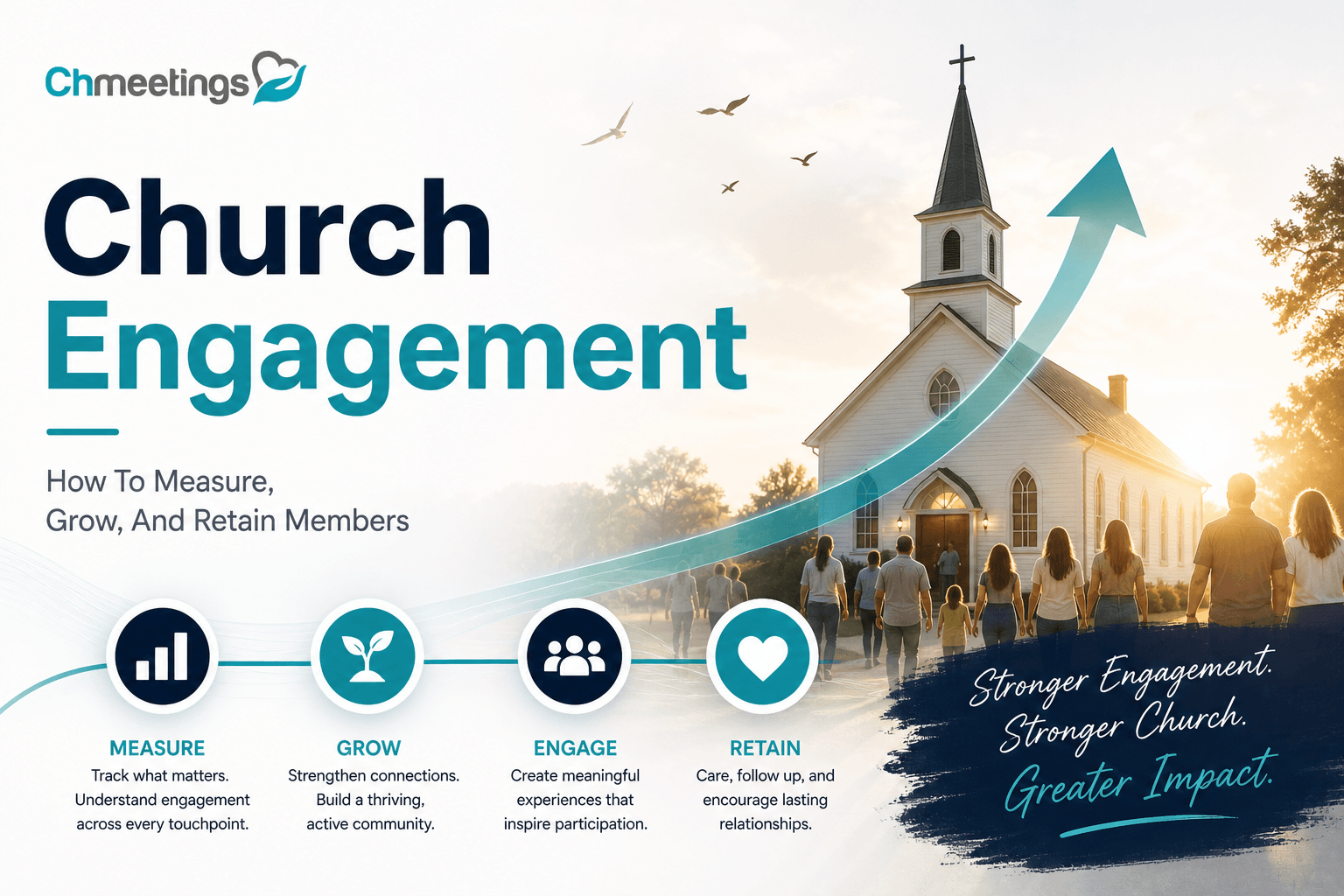
What Is Church Engagement?
Define Engagement Beyond Attendance

Engagement is relationship and participation, not just bodies in seats. It includes how people connect with other members, contribute their gifts, grow spiritually, serve, and respond to invitations. A person who shows up every week but never joins a group, volunteers, or gives consistently may be present but not engaged. Measuring engagement means tracking interactions, not only presence.
Why Engagement Drives Spiritual Growth

Spiritual growth happens inside relationships, practices, and responsibility. When members belong to a group, serve regularly, and receive pastoral care, they move from consumer to contributor. Engagement creates rhythm — study, worship, service, accountability — that shapes discipleship. Churches that focus on engagement design systems so these rhythms are predictable and repeatable, which makes spiritual growth scalable.
Read Attendance And Demographic Data
Attendance gives you the “what” and demographics give you the “who.” Look for patterns, like age cohorts dropping off after a life change, or families who rarely attend but give online. Compare weekend attendance, event check‑ins, small group participation, and giving history to spot early disengagement. Use that insight to target pastoral care and programming to the people most at risk of slipping away.

Build A Clear Engagement Vision
Set Measurable Engagement Goals
Pick 3 to 5 measurable goals that match your mission, for example, increase small group retention by 25 percent, move 40 percent of newcomers into a next-step within 60 days, or grow volunteer base by 15 people this year. Attach a timeframe and a baseline. Goals make it clear what success looks like and keep leadership focused on outcomes, not just activity.
Align Staff And Volunteer Roles
Define who owns each part of the journey, from first-time welcome to ongoing pastoral care. Staff should coach and equip, volunteers should execute relational touchpoints. Make role descriptions short and actionable, so everyone knows which KPIs to watch and what conversations to have. When roles align with goals, follow-up doesn’t fall through the cracks.
Create A One Page Strategy
Boil your engagement plan down to a single page: mission-aligned goals, priority audiences, key touchpoints, owner for each touchpoint, and the metrics you’ll track. A one page strategy keeps teams coordinated and makes it easy to share with volunteers. It also clarifies what to stop doing, because focus requires both starts and stops.

Map The Member Journey
Identify Key Touchpoints
Map every point someone interacts with your church, from website visit and first email to kids check-in, service attendance, group sign-up, baptism, and stewardship conversations. Mark which touchpoints are opportunities to deepen relationship, and which are merely administrative. That map turns vague hope into a clear sequence of invitations.
Design Welcome And Follow Up Paths

Create standard welcome flows for newcomers: a warm first contact within 48 hours, an invitation to a newcomers’ meeting within two weeks, and a pastoral check-in by week six. Use consistent messaging and a mix of channels, phone and in-person when possible. Standardized follow up ensures no one gets lost and increases conversions into next-step participation.
Personalize Pathways By Demographic
Different life stages need different pathways. College students, young families, and retirees have unique schedules, care needs, and ministry openings. Personalize messaging, event timing, and service invitations by demographic so the path to belonging feels relevant. Small segmentation changes often produce much higher participation.
Track Engagement That Grows Community
Create An Engagement Scorecard
Build a simple scorecard that combines signals like attendance frequency, group involvement, volunteer hours, and giving consistency into an engagement rating. Keep it easy to understand, for example, low, medium, high. A scorecard helps prioritize pastoral outreach and shows whether your strategies are moving the needle.
Use Attendance, Participation, And Giving Signals
Don’t rely on one data point. Attendance shows presence, participation shows connection, and giving often signals commitment. Look for combined patterns, such as a drop in group attendance coupled with stopped giving, which should trigger outreach. The blend of signals tells a fuller story.
Turn Data Into Actionable Workflows
Translate scores into automated or semi-automated workflows: email series for newcomers, volunteer recruitment nudges, or pastoral alerts for low engagement. Automation helps you act quickly and consistently, while staff focus on relationship work. Church management software makes those workflows possible without juggling spreadsheets, so you can scale care across a growing congregation.
Protect Member Data And Consent
Treat member data like a trust. Collect only what you need, record consent for communications, and limit access to sensitive fields. Maintain clear retention policies and secure backups. Transparent data practices protect privacy and build trust, especially when you use personal information to provide pastoral care. If you use a cloud tool, confirm it complies with relevant standards and lets you export or delete records when requested.

Core Tools Every Church Admin Needs
Church Management Software Essentials
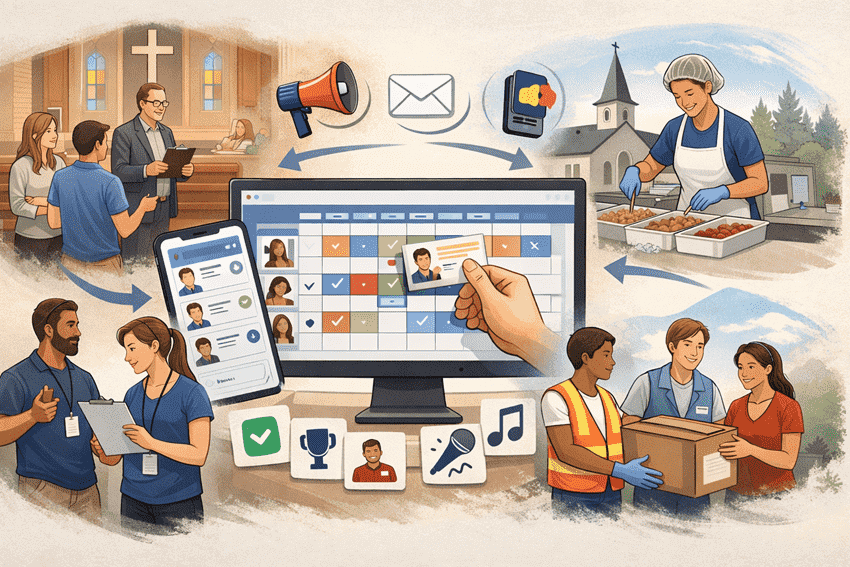
A single people database that holds profiles, families, tags, attendance, giving history, and notes is the foundation. Events and registrations, volunteer scheduling, child check‑in, and simple reporting turn everyday admin into ministry capability. Mobile access and member portals let leaders and volunteers do their work without hunting through spreadsheets. Pick a cloud church management software that handles security, data export, and consent so your systems scale as the congregation grows. A church management app can move tasks from reactive to repeatable, freeing staff to focus on relationships.
Communication And Giving Tools
Segmented email, SMS, and push messaging let you reach the right people with the right ask, without blasting the whole church. Online giving with recurring options, pledge tracking, and contribution statements makes stewardship easier to join and easier to manage. Link communication to giving and attendance data so follow up is informed, not guesswork. Clear receipt workflows and simple donor reporting save time at tax season and build trust.
Integrations And Automation To Save Time
Connect your website forms, calendar, accounting, and worship planning so data flows once, then shows up everywhere it needs to. Automation handles routine work, like welcome sequences, payment receipts, reminders, and volunteer confirmations, so nothing falls through the cracks. Use rules to escalate pastoral alerts when someone stops attending or a background check flags an issue. Integrations reduce duplicate entry, improve accuracy, and make small teams feel larger.
Comparing Platforms Versus DIY Tools
Spreadsheets and single‑purpose apps can work at first, but they fragment data and increase manual work as you grow. All‑in‑one platforms cost more up front, but they centralize profiles, automation, and reporting, which saves staff hours long term. Evaluate by features you use daily, data ownership, security, support, and predictable pricing. Choose a path that lets your church move from firefighting to intentional ministry delivery.

Managing Volunteers Without The Chaos
Recruit And Onboard Volunteers
Start with clear role descriptions and a short online application, so people know what they’re signing up for. Collect availability, skills, and any required compliance info during onboarding, then assign a mentor to guide the first few shifts. A standard new‑volunteer flow, including a welcome, training resources, and a check‑in at 30 and 90 days, improves retention. Track completion of onboarding steps so leaders can trust volunteers in ministry.
Schedule And Communicate Efficiently
Use a shared schedule that shows roles, shift details, and conflict rules, with built‑in swap requests and confirmations. Automated reminders, calendar sync, and group messaging reduce no‑shows and last minute chaos. Make it easy for volunteers to update availability from their phone, so schedules reflect reality. When communication is simple, volunteers stay engaged.
Train Leaders For Retention
Short, practical leader trainings beat long seminars, especially when paired with written session guides and video demos. Create a resource library leaders can access anytime, and run regular coaching huddles to solve problems together. Track training completion and offer micro‑credentials or recognition for milestones, which encourages investment in leadership. Well‑trained leaders multiply healthy groups.
Recognize And Prevent Volunteer Burnout
Watch hours and role frequency, not just attendance, so you can spot overload early. Rotate teams, create backup lists, and limit single volunteers to demanding roles without rest periods. Say thank you often, celebrate wins publicly, and provide spiritual care for leaders who carry heavy burdens. Regular one‑on‑one check‑ins reveal stress before it becomes attrition.
Turn Visitors Into Committed Members
Run A Convert Friendly Welcome Sequence
Reach out quickly, ideally within 48 hours, with a warm, personal message and clear next options. Use a mix of channels, but prioritize a phone call or face‑to‑face invite when possible, backed by email and SMS follow up. Offer a simple welcome pack, relevant resources, and an invitation to a newcomers event that has low friction to join. Automate the sequence so every visitor gets the same consistent, timely welcome.
Host Next Steps That Stick
Next steps should be concrete, short term, and easy to say yes to, like a two‑hour newcomers class, a baby step volunteer role, or a short group series. Give clear outcomes and timelines so people know what joining will look like. Capture signups on the spot and connect newcomers to a volunteer or leader who will follow through. Follow up after the event to convert interest into ongoing involvement.
Track Conversion And Follow Up
Measure how many visitors get the welcome sequence, attend a next step, join a group, and give in the first 90 days. Use an engagement scorecard that combines those touchpoints to prioritize pastoral outreach. Automated reminders and task assignments make follow up consistent, while dashboards show conversion time and drop off points. Your church management app should let you see the whole journey, so you can turn good first impressions into lasting belonging.
Strengthen Small Groups And Discipleship
Launch Groups With Clear Outcomes
Define the group’s purpose, target demographic, expected meeting cadence, and what success looks like after three months. Keep launch cohorts small, recruit leaders from those already engaged, and set a simple curriculum or discussion guide. Measure outcomes like average attendance, newcomer integration, and service involvement, then iterate. Clear outcomes help groups stay focused and sustainable.
Equip Group Leaders
Provide short leader trainings, session outlines, icebreakers, and a shared resource hub. Offer pastoral coaching and a peer network so leaders can swap ideas and avoid isolation. Track leader readiness and offer refresher training regularly, so new challenges don’t become reasons to step down. Supported leaders keep groups healthy.
Link Groups To Service Opportunities
Make service a natural next step by mapping group interests to ministry needs and promoting targeted opportunities. Let groups adopt a ministry for a season, report impact, and celebrate outcomes together. Simple sign‑up flows and shared reporting make it easy for groups to contribute and see the fruits of their service. When discipleship connects to serving, commitment deepens.
Build Community Impact Through Outreach
Identify Local Needs And Partners
Start by listening. Run a short community survey, meet with school leaders, social workers, and neighborhood groups, and walk the blocks where your members live. Map recurring needs you can meet sustainably, for example food support, tutoring, or senior visits. Look for partners who already have credibility and infrastructure, then design a partnership with clear roles, timelines, and expected outcomes. Treat partnerships like ministry teams, not one-off events, so relationships deepen and trust grows.
Mobilize Congregation For Service
Make serving low friction and highly visible. Publish clear role descriptions, shift lengths, and expected outcomes so people know what they’re signing up for. Use short campaigns that match seasons and life rhythms, recruit within small groups, and let leaders own team rosters. Offer quick trainings, shadow opportunities for new volunteers, and a coordinator who handles logistics like transportation and childcare. When serving is simple and social, participation rises and volunteers stay longer.
Measure Outreach Outcomes And Stories
Track both numbers and narratives. Count people served, volunteer hours, repeat participants, and referrals, but also capture photos, testimonies, and partner feedback that show transformation. Set three simple metrics for each initiative, for example regular attendance at a tutoring program, volunteer retention rate, and a community satisfaction score. Use your church management app, like ChMeetings church management software, to record registrations, hours, and follow up tasks so data and stories live in one place. Share concise reports with partners and use real stories to fuel recruitment and funding.
Increase Giving Through Better Engagement
Communicate Stewardship Clearly
Talk about stewardship as participation in mission, not just a financial ask. Connect budget items to real outcomes, using short stories and one or two measurable goals for each campaign. Run brief teaching moments in services and small groups that explain why regular giving matters and how to start a recurring gift. Use consistent language across channels so the message feels familiar, not jarring.
Make Giving Easy And Transparent
Offer multiple, simple ways to give, including mobile, web, text, and recurring options, and make forms short. Provide immediate receipts and easy access to contribution statements so donors trust the process. Be upfront about fees, processing timelines, and how restricted gifts are handled. Where possible, automate gift confirmations and year-end statements so staff time goes to pastoral conversations instead of paperwork.
Celebrate Impact To Build Trust
Show donors what their gifts accomplish. Publish short impact snapshots after campaigns, highlight volunteers and beneficiaries, and post quarterly summaries of progress toward key ministry goals. Thank donors publicly when appropriate, and offer private conversations for major donors who want more detail. Visible, regular celebration turns one-time givers into committed partners.
Church Engagement Playbook And Templates
90 Day Newcomer Playbook
Day 0–2, send a personal welcome message and a basic connect form. Day 3–14, invite them to a low-bar next step, such as a welcome lunch or short newcomers class. Week 3–6, assign a connector from a small group or volunteer team and follow up with a pastoral check. Week 7–12, invite to serve or join a group and offer a membership conversation. Automate reminders and task assignments so every newcomer has an owner and nothing falls through the cracks.
Volunteer Onboarding Checklist
Create a checklist that includes role description, application, background check if needed, availability capture, training resources, first shift shadowing, safety briefing, mentor assignment, and 30/90 day check-ins. Track completion so leaders know when a volunteer is ready to lead. Keep the checklist digital and portable so onboarding is consistent across teams and sites.
Seasonal Campaign Calendar Template
Build a 12-month calendar that marks planning windows, promotion periods, volunteer recruitment, training sessions, and reporting deadlines. Block time for Easter, Christmas, back-to-school, a midyear outreach push, and an annual stewardship campaign. For each season, note target audiences, key metrics, and who owns the work. A shared calendar keeps teams aligned and reduces last minute scrambles.
Sample Communication Sequences
Newcomer sequence, example: welcome email within 48 hours, SMS invite to next step at day 7, phone check from a connector at day 14, pastoral check at day 45. Volunteer recruitment, example: announcement, sign-up page, confirmation email with role details, reminder 72 hours before first shift, thank you note 24 hours after shift. Giving ask, example: impact story, clear ask, easy donation link, receipt, and a short impact update two months later. Keep messages short, personal, and consistent.
Key Metrics To Track
Leading Versus Lagging Indicators
Leading indicators predict momentum, for example newcomer follow-up rate, first-step attendance, volunteer sign-ups, and first giving within 90 days. Lagging indicators show results after the fact, like annual giving totals, membership counts, and long-term retention. Watch leading indicators weekly to catch problems early, and use lagging measures monthly or quarterly to evaluate strategy.
Benchmarks For Different Sized Churches
Use size-appropriate goals, not one standard for all. Small churches under 200 people often aim for 20 to 40 percent newcomer to next-step conversion, and 10 percent of the congregation volunteering regularly. Mid size churches, 200 to 1,000, can target 25 to 50 percent conversion and a volunteer base equal to 15 percent of average attendance. Larger churches over 1,000 should benchmark higher throughput, with systems that convert 30 to 60 percent of newcomers into a next step and maintain volunteer capacity around 10 to 20 percent of attendance. Treat these as starting points, then adapt to your context.
Dashboards To Share With Leadership
Build three dashboards: an engagement scorecard that shows newcomer flow, group participation, and volunteer capacity; a giving dashboard with recurring donor trends, campaign progress, and top revenue streams; and an operations dashboard for event registrations and staffing gaps. Share a short, annotated snapshot weekly and a fuller review monthly. Limit access to what leaders need and add action items to every report so numbers lead to specific next steps. Using a church management app that offers exportable reports speeds up this process and keeps everyone focused on what to do next.
Avoid Common Engagement Mistakes
Overrelying On Attendance Alone
Counting heads is easy, but attendance is only one signal. Someone can sit in a pew and still feel disconnected, and the weekly number won’t reveal service to service drop off, group isolation, or stopped giving. Treat attendance as a starting point, not a verdict. Combine it with group participation, volunteer activity, giving patterns, and personal notes to understand real connection. When you stop treating attendance as the whole story, you can target pastoral care where it actually matters.
Neglecting Follow Up And Personalization
A generic thank you email after someone visits feels like a missed opportunity. Timely, personalized follow up increases the chance a visitor becomes part of a group or a volunteer. Build short, repeatable follow up paths that mix personal contact, helpful resources, and next-step invitations. Use segmentation by life stage and interest so messages feel relevant. Automation can handle timing and basic touches, but real conversions still need a human voice, so assign ownership and deadlines for personal outreach.
Burning Out Volunteers And Staff
High expectations without rest erode goodwill fast. Watch role frequency, hours served, and the number of high‑demand assignments per person. Rotate responsibilities, create backup rosters, and cap consecutive service dates for demanding roles. Offer quick trainings, clear role descriptions, and regular one to ones so leaders can flag stress early. When leaders feel supported and rhythms include rest, volunteers stay longer and ministry quality improves.
FAQs
What Is The Best Way To Measure Engagement?
Mix signals, don’t chase a single number. Leading indicators like newcomer follow up rate, first-step attendance, volunteer sign-ups, and first giving within 90 days predict momentum. Lagging measures such as annual retention, total giving, and long-term group participation show outcomes. Build a simple scorecard that blends frequency of attendance, group involvement, service hours, and giving consistency, then act on low scores with defined workflows.
How Do Men Versus Women Attend Church Differently?
Patterns vary by context, but common differences show up in scheduling preferences and program types. Women often attend in consistent small group rhythms and take visible roles in care ministries, while men may engage more around purpose driven activities like service projects, sports, or leadership teams. Communication style matters too, men sometimes respond better to direct invites tied to specific roles. The fix is practical: offer varied entry points, ensure invitations match interests, and track who responds to which invitations so you can tailor next steps.
Why Are Young Men Returning To Church?
Young men who return often cite authentic community, mentoring, and practical formation, not just worship experiences. Opportunities that combine friendship, skill building, and service — for example mentoring programs, sports ministry, or leadership apprenticeships — resonate. Clear pathways into responsibility, short micro‑courses, and trusted male mentors make a big difference. Design a few low-bar, high-responsibility options and measure whether retention improves.
Are Women Leaving The Church In Significant Numbers?
Trends are mixed and local. When women disengage it’s often tied to unmet needs around vocation, pastoral care, theology that affects family life, or simply schedule and burnout. The response is to listen, create targeted pastoral support, and offer flexible ways to belong, such as daytime groups, caregiving support, and leadership tracks. Track exit reasons when possible and address patterns, not anecdotes.
How Can Small Churches Benchmark Engagement?
Use simple, meaningful ratios rather than big‑church metrics. Track newcomer to next-step conversion, percent volunteering regularly, average small group attendance, and percent giving recurrently. Benchmarks to aim for: convert 20 to 40 percent of newcomers into a next step, and maintain 10 percent of the congregation volunteering regularly. Compare your trends month to month more than comparing raw numbers to other churches.
Which Metrics Predict Long Term Growth?
Leading predictors are newcomer follow up and retention, volunteer growth and stability, and recurring giving trends. Newcomer conversion rates and the percent of attendees who join a group within 90 days are especially telling. If newcomers aren’t converting and volunteers are flat or shrinking, long term growth will stall. Use those early signals to adjust onboarding, recruitment, and follow up quickly.
How Do I Protect Member Data And Privacy?
Treat data as trust. Collect only what you need, record consent for communications, and limit access by role. Use secure, hosted solutions that offer encryption, audit logs, and export or delete capabilities. Train staff and volunteers on privacy basics, set retention schedules, and document who can see sensitive fields. Regularly review third party vendors for compliance and clarity about where data is stored and how it’s secured.
Which Software Features Increase Participation?
Look for an integrated people database, event registration with waitlists, volunteer scheduling and reminders, segmented messaging by email and SMS, online giving, and automation workflows for follow up. Mobile access and a member portal lower friction for signups and communication. Reporting and dashboards that show newcomer flow and volunteer capacity turn data into action. When these pieces live together in one system, follow up and coordination stop being manual chores and become consistent ministry.