
Is ChatGPT Useful For Pastors?
Practical Benefits For Ministry

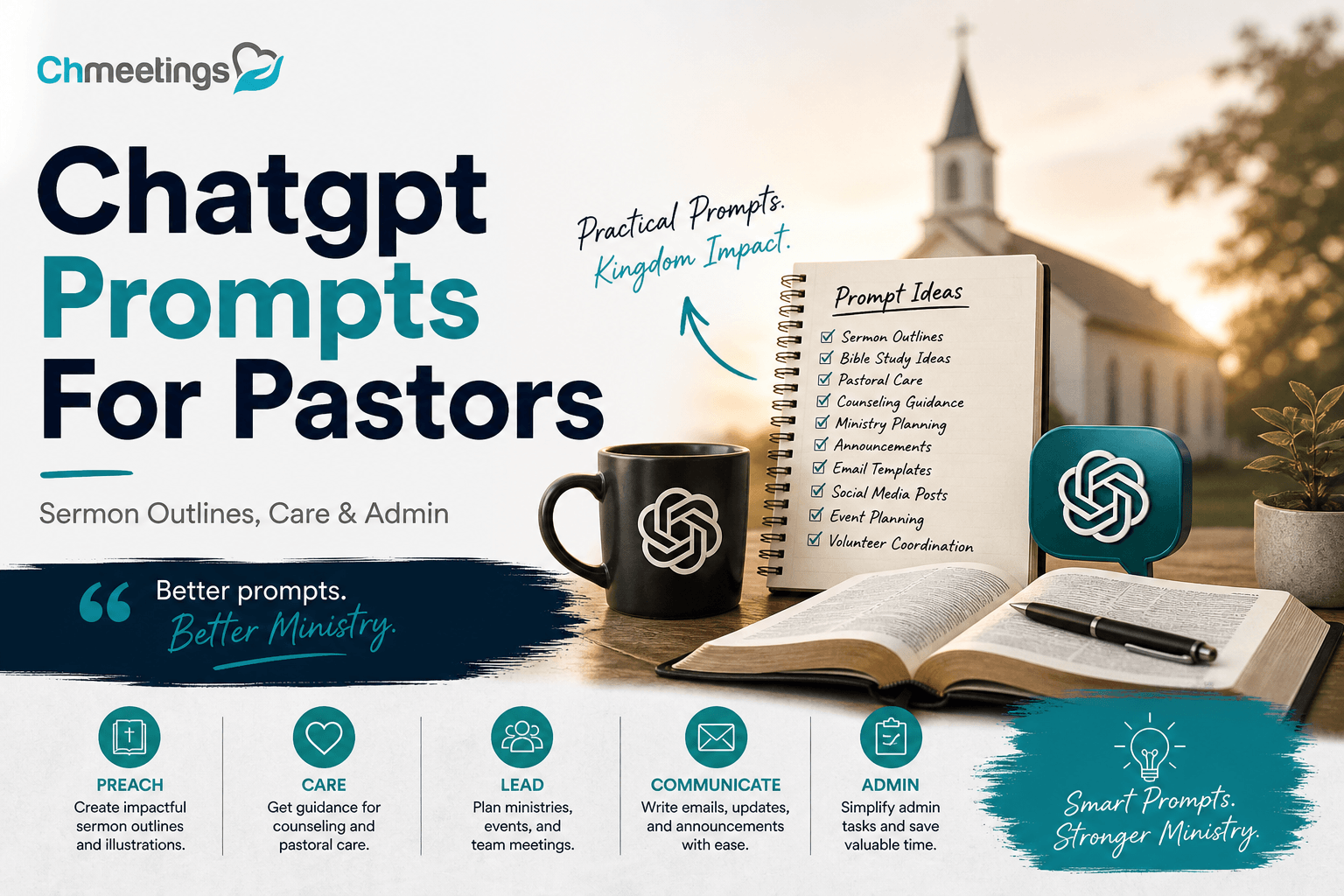
ChatGPT is a text-based AI assistant you can use to save time, spark ideas, and sharpen communication. Pastors use it to:
- Turn dense scripture or commentaries into plain-language summaries for sermons, small groups, or pastoral letters.
- Generate multiple sermon title options, sermon outlines, or service orders when you’re short on prep time.
- Draft pastoral communications like emails, follow-up messages, and volunteer instructions with consistent tone.
- Create teaching material, discussion questions, devotionals, and children’s lesson starters quickly.
Used well, it multiplies your capacity so you can focus on shepherding people rather than getting bogged down in first drafts.
Limits, Risks, And Best Uses

ChatGPT helps with ideas and drafting, not theology or final pastoral judgment. It can hallucinate facts, misstate historical context, or suggest weak theological claims. Treat outputs as research or first drafts, not final sermons. Key cautions:
- Don’t paste confidential pastoral counseling details into chat logs.
- Verify theological or historical claims against trusted sources and your tradition.
- Watch for cultural tone problems in illustrations or examples.
Best uses are idea generation, outlining, rewriting for clarity, and creating non-confidential communications you then vet and personalize.
Set Up Accounts And Safeguards
Choosing Tools And Access Levels

Decide who on staff can use AI and for what tasks. A simple model:
- Senior leaders get full access for sermon and teaching prep.
- Admins use it for communications and email drafts.
- Volunteers get restricted access, limited to non-confidential tasks.
Prefer paid plans from reputable providers when possible, they often include better security and admin controls. Keep one shared account for church-wide templates, and personal accounts for private prep when discretion is needed.
Data Privacy And Confidentiality Rules

AI chat history can be stored and reviewed by providers. Protect people by rule:
- Never paste identifiable pastoral counseling, financial, or health information into public or general AI chats.
- Use initials or pseudonyms when you need examples.
- Export and store any pastoral notes or final decisions into your church management app, not the chat history.
Make sure team members understand local data laws like GDPR if they apply, and choose vendor settings that minimize data retention.
Church Policy Template For AI Use
A short, practical policy pastors can adapt:
- Purpose: AI tools are for drafting, ideation, and administrative support only.
- Prohibited content: No identifiable personal data, counseling transcripts, or giving records in chat prompts.
- Verification: All AI-produced theological or factual claims must be checked by a pastor or designated theologian before use.
- Access: List who may use AI and at what permission level.
- Recordkeeping: Final documents and pastoral notes must be saved into the church’s secure systems.
Keep the policy one page, share it at staff meetings, and include it in onboarding.
Write Effective Prompts Fast
Role, Context, Task Framework

Start prompts by assigning a role, giving context, and stating the task. Example structure:
- Role: “You are a pastoral sermon coach.”
- Context: “I’m preaching on Luke 10:25-37 to a mixed adult congregation, 20 minutes.”
- Task: “Give me a three-point outline with one vivid application and a 30-second closing challenge.”
This frames responses, reduces back-and-forth, and yields usable drafts faster.
Specify Tone, Length, And Format
Tell the AI how you want output to sound and look. Be specific:
- Tone: “pastoral, conversational, slightly humorous”
- Length: “three points, 40–60 words per point”
- Format: “bullet outline, then a 25-word sermon hook”
Clear constraints cut revision time and help produce copy ready for minor edits.
Iteration And Refinement Techniques
Treat AI like a collaborator, not an oracle. Useful habits:
- Ask for three variations, pick the best, then request a tighter rewrite.
- Use targeted follow-ups: “Make point two more practical” or “Give a modern illustration about parenting.”
- Save prompt templates you like so you can repeat successful patterns across sermons and communications.
Sermon Preparation Toolkit
Exegesis And Context Prompts
Use prompts that force the AI to engage the text, then verify:
- Ask for historical and cultural context, then request primary source suggestions.
- Request concise lexical or verb studies, but double-check with commentaries.
- Ask for common interpretive objections and short responses you can expand on.
Always cross-check exegetical claims with trusted commentaries before teaching.
Drafting Outlines And Flow

Turn raw insights into a serviceable outline:
- Ask for a sermon skeleton: introduction, three main points with scriptures, illustrations, applications, and a conclusion.
- Request transitions between points, so flow feels natural.
- If time is short, ask for a “preaching sprint” 10-minute outline you can expand later.
Crafting Sermon Titles And Hooks
Use the AI to brainstorm attention-grabbing yet faithful titles:
- Give the theme, audience, and tone, then ask for 10 title options and three opening hooks.
- Test hooks against your congregation; what works for one church may not for another.
Keep titles short, clear, and promise a benefit or truth the sermon will deliver.
Finding Illustrations And Applications
Ask for contemporary or biblical illustrations tied to your points:
- Request short true stories, common cultural references, or object-lesson ideas.
- Ask the AI to tailor applications for specific demographics, like young families, retirees, or students.
Always vet illustrations for accuracy, appropriateness, and gospel-centeredness, then adapt language so it sounds like you.
Build Bible Study Materials
Creating Study Guides And Plans

Give ChatGPT the passage, target group, and desired length, then ask for a paced plan. Sample prompt:
- “You are a Bible study leader. Create a six-week study plan on Romans 12 for a small group of adults, 60 minutes per week. Include weekly focus, key verses, a 5-minute opener, a 30-minute discussion segment, and two take-home application questions.”
Use the output as a first draft, then tighten wording to match your voice. Ask for variations for youth, seniors, or young families when you need parallel tracks. For memorization or reading schedules, tell the AI exact dates and cadence so the plan fits your church calendar.
Generating Discussion Questions
Tell the AI the passage, group maturity, and depth of questions you want. Example prompts:
- “Write 8 discussion questions on Proverbs 3:1-12 for a mixed adult group, ranging from surface comprehension to personal application.”
- “Create five icebreaker questions that connect everyday work struggles to James 2 for a men’s group.”
Ask for “two follow-up prompts per question” to help group leaders pull deeper stories and keep the conversation moving. Save sets labeled by age and topic so volunteer leaders can pick appropriate versions.
Leader Notes And Session Scripts
Leaders want confidence and clarity, not long essays. Try prompts like:
- “Write a 10-minute leader script for week two of the Romans 12 study, including a 90-second prayer, a 2-minute recap, two transition sentences, and a 3-minute guided reflection.”
- “Give facilitator notes: common stumbling points, how to redirect off-topic sharing, and one quick illustrative story.”
Request short cue cards, time checks, and suggested language for sensitive topics so volunteers feel equipped. Export final leader notes into your church management software or shared drive for easy access by the whole team.
Equip Pastoral Care Conversations
Visit Scripts And Follow Ups
Provide context, the relationship, and purpose. Sample prompts:
- “You are a compassionate pastor visiting someone recently discharged from the hospital. Draft a 10-minute visiting script: greeting, two check-in questions, a short scripture and prayer, and suggested follow-up actions.”
- “Create three concise follow-up text templates for after a home visit, gentle in tone and suitable to send within 48 hours.”
Use scripts as guides, not scripts to read verbatim. Save approved follow-up templates in your communication library so staff can send consistent, caring messages.
Crisis Response And Referral Prompts
Crisis language must be clear and safe. Prompts to try:
- “Draft a calm, immediate-response script for a volunteer who receives a call about suicidal thoughts, including what to say, what questions to avoid, and emergency referral steps.”
- “Create a short referral note to hand a family, listing local mental health, addiction, and domestic violence resources, plus a pastoral offer to follow up.”
Add local resource names and phone numbers before using. Keep these templates offline if they include sensitive details, and train volunteers on the wording so responses are prompt and pastoral.
Confidential Note Templates
Consistent, secure notes help continuity of care. Ask the AI for structured templates:
- “Create a confidential pastoral note template with fields for date, person, concern, actions taken, next steps, and who was notified. Keep it brief and objective.”
- “Give three tagging examples for pastoral issues, like ‘visitation:hospital,’ ‘care:grief,’ and ‘referral:mental-health.'”
Store completed notes in your secure church management software rather than chat logs, and limit access to authorized staff only.
Improve Communications And Outreach
Newsletter And Email Templates
Be specific about audience, length, and tone. Prompts that work:
- “Write a 300-word congregational newsletter section announcing the holiday schedule, a brief devotional, and a call to volunteer, tone hopeful and concise.”
- “Draft three follow-up email variations after a first-time guest visit: warm, informational, and invitation to a newcomer lunch.”
Ask for subject line options and preheaders. Keep a folder of approved templates so admins can send segmented messages quickly and consistently.
Social Media Posts And Calendars
Give platform, audience, and posting cadence. Try:
- “Create a two-week social media calendar for Facebook and Instagram promoting the upcoming community outreach, with captions, image suggestions, and appropriate hashtags.”
- “Write five short, shareable devotion captions for Instagram from Psalm 23, each under 150 characters.”
Request alternative tones, like pastoral, conversational, or encouraging, so you have posts that fit different weeks. Schedule drafts into your posting tool or church management software’s communication features for easy publishing.
Giving Appeals And Thank-You Messages
Clarity and gratitude matter. Example prompts:
- “Draft a 150-word giving appeal for a building repair fund, explain the need, show impact, and include a clear call to give online.”
- “Create three brief thank-you email templates for recurring donors: immediate receipt, quarterly impact update, and year-end gratitude.”
Test the tone with a small internal group before sending. Link appeals to concrete outcomes so people understand how gifts are used, and save approved templates for finance and admin teams to use.
Coordinate Volunteers And Events
Role Descriptions And Recruitment Copy
Make expectations clear and inviting. Prompts to use:
- “Write a concise role description for a Sunday morning greeter, including purpose, responsibilities, time commitment, and required training.”
- “Create two recruitment blurbs for the bulletin and the website, one formal and one conversational.”
Include time commitment and contact steps so interested people know how to sign up. Add role descriptions into your volunteer module in your church management software to streamline onboarding.
Training Outlines And Onboarding
Structure short, practical training pieces. Try prompts like:
- “Provide a 45-minute training outline for new childcare volunteers: check-in process, safety procedures, behavior guidance, and emergency contacts.”
- “Create a one-page onboarding checklist for worship team volunteers with technical setup, rehearsal expectations, and communication norms.”
Ask the AI for quick quiz questions or role-play scenarios to include in training. Upload completed outlines and checklists to your volunteer hub so leaders can assign and track completion.
Event Run Sheets And Schedules
Clear timing keeps events calm. Use prompts such as:
- “Draft a detailed run sheet for a weekend outreach event from 8:00 AM to 2:00 PM, including setup tasks, volunteer call times, contact people, and contingency notes for bad weather.”
- “Create a compact 1-page schedule for volunteers with arrival time, station assignments, and a 15-minute break rotation.”
Share run sheets with volunteers in advance and post printed copies at the event. Where possible, link volunteer assignments to your church management software roster so reminders, check-ins, and substitutions are handled without scrambling.
Create Children’s And Youth Lessons
Age-Specific Lesson Plans
Use ChatGPT to draft lesson plans that match cognitive and spiritual stages. Give the AI the age range, time, learning objective, key verse, and any safety constraints. Example: “Create a 30-minute lesson for 4–5 year olds on Noah, include one simple Bible story retelling, a memory verse (10 words or fewer), and a 5-minute opening activity.” For older kids and teens ask for discussion prompts, small-group questions, and a brief_gateway_application that ties faith to everyday choices. Always review theological points, safety procedures, and wording so volunteers can lead confidently.
Games, Crafts, And Activity Ideas
Ask for short, low-prep activities that reinforce the main truth. Specify room size, materials budget, and group size. Example prompt: “Give three 10-minute relay games and one craft for 20 kids age 7–9 that illustrate the Good Samaritan, list materials, setup time, and one safety note per activity.” Request inclusive options for different abilities, allergy-safe craft substitutions, and alternatives if you have fewer adults. Save tested activities as one-page leader sheets volunteers can print or view on a tablet.
Family Follow-Up Communications
Turn lessons into family-facing follow-ups that extend learning at home. Ask for a 100-word email, a 2–3 sentence SMS, and a printable take-home card that includes the memory verse and one simple family discussion question. Example prompt: “Write a friendly parent email summarizing today’s lesson on kindness, include one suggested activity for the week and a link to the memory verse video.” Segment messages by age group so parents get relevant content. Store approved templates in your communication library so volunteer leaders can send consistent follow-ups.
Plan Worship And Liturgy
Service Orders And Transitions
Use ChatGPT to draft a clear order of service with timings and transition language volunteers can actually read aloud. Give the service length, style, and key components you want included. Example: “Draft a 60-minute contemporary service order with a 4-minute welcome, two songs, a 12-minute sermon, communion, and a 5-minute benediction, include short transition lines for the worship leader.” Include stage cues for tech, ushers, and children’s check-in to reduce surprise moments. Link finalized run sheets to your volunteer scheduling so people know when to arrive.
Writing Prayers And Responsive Readings
Ask for prayers that match the week’s theme and your congregation’s theological voice. Specify length, tone, and whether to include scripture. Example: “Write a 2-minute pastoral prayer for a Sunday focused on grief, include a short scripture tie-in and an invitation for silent prayer.” For responsive readings, request leader lines and congregational responses with simple formatting for projection. Vet every prayer and reading for theological fit and pastoral sensitivity before using in worship.
Song Suggestions And Thematic Picks
Have the AI propose songs tied to your sermon theme, suggesting tempo, feel, and scripture links. Ask for a mix of familiar congregational songs and one new piece to introduce. Example: “Suggest five songs for a service on hope that work well in keys suitable for piano or guitar, note which are congregationally friendly.” Always check congregational familiarity, licensing for projection or streaming, and arrange choices with your worship leader. Add final song lists to your worship planning tool so musicians can access charts and rehearsal tracks.
Ready-Made Templates And Playbooks
Weekly Sermon Prep Workflow
Create a repeatable week-by-week checklist to keep sermon prep predictable. A simple workflow might look like:
- Monday: passage study, context, and one-page exegetical notes.
- Wednesday: first full outline and three illustration options.
- Friday: write manuscript or speaker notes, prepare slides.
- Saturday: run-through and timing adjustments.
Ask ChatGPT to generate a weekly checklist tailored to your available hours and congregation length. Save the checklist in your shared planner so staff and interns can sync their prep with you.
Prompt Library By Ministry Area
Organize prompts by area, like children’s ministry, pastoral care, outreach, worship, and admin. Name prompts clearly, for example “Children: Preschool Lesson — Noah” or “Pastoral: Hospital Visit Script.” Keep versions and notes about what worked and what didn’t. Store the library in your church management app, for example ChMeetings church management software, so volunteers can pull approved prompts without reinventing the wheel.
Editable Prompt Templates For Copy/Paste
Keep a handful of ready-to-use prompt shells you can paste and tweak fast. Examples:
- Sermon outline: “You are a preaching coach. I’m preaching on [passage] to [audience], 20 minutes. Give me a three-point outline, one illustration per point, and a 30-second conclusion.”
- Children’s lesson: “Create a 25-minute lesson for ages [x–y] on [theme], include opener, story, activity, and memory verse.”
- Visit script: “Draft a 10-minute pastoral visit script for someone discharged from hospital, include two check-in questions, a scripture, and a brief prayer.”
Save edited templates in a shared folder so new staff and volunteers can use consistent language and approach.
Avoid Common Mistakes
Spotting Hallucinations And Errors
AI can invent quotes, misplace dates, or cite non-existent sources. Always ask the model to list sources and then verify each one against trusted references. When you see a surprising fact, prompt the AI to “show sources and confidence level” or run a quick cross-check in a reputable commentary. If a claim lacks a citation, treat it as unverified. Train your team to raise a simple red flag: anything unfamiliar goes to a secondary check before public use.
Protecting Theological Integrity
Keep doctrine and denominational distinctives front and center. Add a short instruction to prompts asking the AI to “align with [your tradition] theology and avoid statements that contradict [specific creedal or confessional point].” Have a designated reviewer for doctrinal content, and use the AI drafts as starting points rather than final statements. That way technology multiplies your capacity without reshaping your theology.
Legal, Copyright, And Attribution Tips
Don’t assume generated content is free of copyright issues. For song lyrics, devotionals, or published illustrations, get permission or use public domain material. If the AI supplies a quotation, verify the original source and attribute it correctly. Avoid pasting identifiable pastoral or donor data into public AI chats. When using AI to draft public-facing content, note internally that AI assisted the draft and keep the final, approved copy in your secure systems or church management app for accountability.
Track Impact And Improve
Measuring how your prompts perform keeps AI from being a one-off trick and turns it into a dependable ministry tool. Track results, collect honest feedback, and treat prompts like curriculum, not magic.
Metrics That Matter For Churches

Focus on outcomes that link to ministry goals, not raw novelty.
- Time saved, measured in hours per week for sermon prep or admin tasks, helps justify continued use.
- Draft-to-final ratio, the percentage of AI drafts you use with minimal edits, shows usefulness.
- Engagement signals, like email open and reply rates, event registrations, and volunteer sign-ups, reveal whether messaging lands.
- Pastoral care follow-up rates, for example how many hospital visits convert into ongoing support, show pastoral effectiveness.
- Qualitative indicators, such as leader confidence in using AI-produced scripts or small-group leader ratings of discussion guides.
Set a baseline, measure consistently (monthly or per project), and compare against the same activity before AI use.
Collecting Feedback From Congregation
Make feedback quick, low-friction, and anonymous when appropriate.
- Use single-question pulses after a sermon or event: one Likert question and one optional comment.
- Ask small-group leaders to rate study guides and note what sparked discussion.
- Run A/B tests for emails or social posts, then compare open, click, and reply rates.
- Hold occasional focus groups with a cross-section of members for deeper qualitative input.
Keep surveys under five questions, segment responses by audience, and store results in your central content folder or church management app so leaders can act on them.
Iterating Prompts Based On Results
Treat prompt changes like lab experiments, not guesses.
- Change one variable at a time, like tone or length, so you know what worked.
- Version prompts with clear names and dates, and log the outcome metrics alongside each version.
- If a message underperforms, tweak the framing, then rerun the test with a small segment before wider use.
- Capture winning prompts in a shared library and flag those that need doctrinal review.
- Schedule regular prompt reviews with your team so learnings become institutional knowledge, not a single person’s habit.
FAQs
What Are The Best Prompts For Churches?
The best prompts do one clear job and specify role, audience, and constraints. Examples:
- Sermon outline: “You are a preaching coach. I’m preaching on [passage] for a 20-minute adult service. Give a three-point outline, one illustration per point, and a 30-second conclusion.”
- Visitor follow-up: “Draft a warm 100-word email for a first-time guest, invite them to a newcomer lunch, and include a one-sentence call to reply.”
- Volunteer run sheet: “Create a 1-page schedule for Sunday greeters, include arrival time, duties, and a 2-line welcome script.”
Keep templates short, save what works, and label them by ministry area.
Can Pastors Use Free AI Tools Safely?
Yes, with limits. Free tools are fine for non-confidential drafts and ideation, but they often log chats and have weaker privacy. Rules to follow:
- Never paste identifiable counseling, financial, or health data into public chat.
- Prefer paid, enterprise, or privacy-focused options for anything sensitive.
- Keep an internal policy that spells out allowed uses and storage requirements.
How Do I Craft Prompts For Bible Study?
Be specific about passage, group, and desired outcome.
- Start: role, passage, target group, meeting length.
- Ask for leader notes, three levels of questions (comprehension, reflection, application), and one 2-minute opener.
Sample: “You are a Bible study facilitator. Create a 60-minute session on Romans 12 for mixed adults, include a 2-minute opener, five discussion questions with follow-ups, and one closing application.”
Is It Okay To Use AI In Sermons?
Yes, as a drafting partner, not a preacher. Use AI to generate outlines, illustrations, or transitions, then:
- Verify theological and exegetical claims.
- Rewrite in your voice and add pastoral warmth.
- Never present AI as the source of doctrine or a replacement for pastoral judgment.
How Should Scripture Be Cited When AI Helps?
Always show the translation and verify verse accuracy.
- Quote scripture directly from a trusted translation and note it, for example, “NIV” or “ESV.”
- If AI supplies commentary or historical claims, check sources and cite the original commentators or reference works.
- Keep a habit of running verse checks against a Bible app or printed text before publishing or preaching.
How Do I Protect Confidential Member Data?
Protect confidentiality with simple rules everyone follows.
- Never put names, phone numbers, medical details, or giving records into chat. Use initials or fictional placeholders for examples.
- Store pastoral notes and final records in your secure systems, not chat logs.
- Limit access to sensitive files, and train volunteers and staff on the policy.
Follow local privacy laws and document who can view pastoral records.
What If AI Gives Theologically Incorrect Advice?
Treat it as a draft error, not an indictment of the tool.
- Stop, flag the content, and correct it using doctrinal boundary instructions in the prompt.
- Escalate to the designated doctrinal reviewer or pastoral team for a fix.
- Update the prompt template to include theological guardrails so the mistake doesn’t repeat.
How Can I Integrate AI With Church Workflows?
Make AI a step in your existing workflow, not a separate silo.
- Put approved prompt templates and final copies in a shared folder or your church management app so volunteers use the vetted versions.
- Use AI for first drafts, then assign human review before sending or publishing.
- Automate repetitive tasks like draft emails or run sheets, then keep a human in the approval loop.
- Train volunteers on how to use approved prompts and where to store finished work so your backend supports front-line ministry.