
- What Is Zero Based Budgeting For Churches?
- Real Benefits For Churches
- Core Principles Every Church Needs
- When It Works And When It Doesn't
- Step By Step Implementation Playbook
- Budgeting By Program And Ministry
- Prioritizing Ministries And Positions
- Communicating The Change To Your Congregation
- Practical Templates And Tools
- Key Financial Metrics To Track
- Common Mistakes To Avoid
- Zero Based Budgeting Compared To Line Item Budgets
- FAQs
What Is Zero Based Budgeting For Churches?
Core Idea In Plain Terms
Zero based budgeting means you start every budgeting cycle with a blank page. Instead of assuming last year’s numbers carry forward, every program and line item must be justified from scratch. That forces you to ask, does this expense advance our mission, or is it a habit? For churches that want intentional spending, ZBB replaces roll-over thinking with purpose-driven choices.
Key Terms And Roles
- Base case or zero base: the starting point where nothing is assumed funded.
- Program budget: money requested and justified by ministry outcome rather than an account code.
- Justification packet: the short form or narrative a ministry leader fills out to request funds.
- Variance: the difference between approved budget and actual spending, tracked monthly.
- Finance team: the group that compiles requests and models scenarios.
- Program leaders: pastors or volunteers who submit justification packets and defend priorities.
- Governing board or elders: those who approve allocations and set decision criteria.
Clear roles cut confusion. Finance manages the numbers, program leaders provide ministry rationale, and leadership makes final trade-off calls.
Typical First-Year Timeline
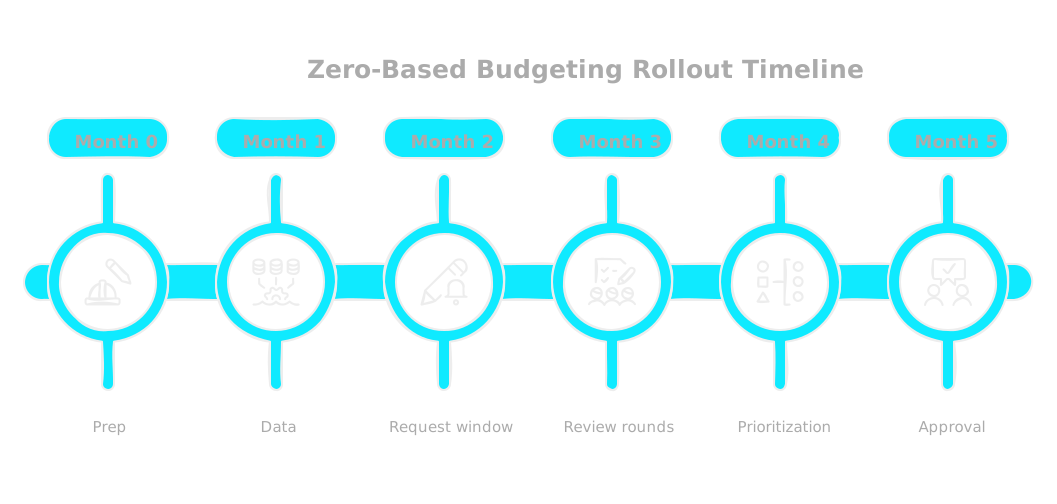
- Month 0, prep: leadership commits, defines mission-driven decision criteria, and trains program leaders.
- Month 1, data collection: gather last year’s actuals, attendance, volunteer hours, giving by program, and outcomes. A church management app helps pull clean reports for giving, attendance, and event registrations.
- Month 2, request window: program leaders submit justification packets and proposed scopes. Keep packets brief, focused on outcomes and measurable indicators.
- Month 3, review rounds: finance screens requests for completeness, then leadership meets with program owners for Q and A. Expect two review rounds.
- Month 4, prioritization and modeling: build scenarios that align spending with mission, show trade-offs and reserve impacts.
- Month 5, approval and communication: board adopts the budget, leadership announces changes and reasoning to the congregation.
- Month 6 onward, implementation and monitoring: track monthly variances, hold quarterly check-ins with program leaders, and adjust non-fixed items as needed.
Expect the first cycle to take longer than future cycles. Once you have templates, data, and a rhythm, preparation and review compress into a few weeks.
Real Benefits For Churches
Align Spending With Mission
ZBB forces explicit links between dollars and ministry outcomes. When each program must state what success looks like, leaders can move funds from low-impact activities into high-impact ministries. That means budget conversations become about mission choices, not protecting last year’s numbers.
Reduce Waste And Hidden Costs
Small recurring items add up, and so do parallel programs that duplicate work. ZBB uncovers subscriptions nobody uses, duplicate volunteer trainings, and hidden facility costs. When every expense needs a purpose, waste is easier to spot and stop.
Strengthen Donor Trust
Donors want to see their gifts used well. A transparent, mission-focused budgeting process lets you explain where money goes and why. Regular reporting that ties contributions to outcomes builds credibility and encourages sustained giving. Using clear categories and regular summaries makes stewardship conversations simpler.
Improve Ministry Accountability
Program leaders stop operating on autopilot. With budgets tied to outcomes and scheduled reviews, teams report on results and justify future requests. That creates natural checkpoints for celebration and course correction, and it scales pastoral oversight without adding admin burden.
Core Principles Every Church Needs
Start From Zero Each Cycle
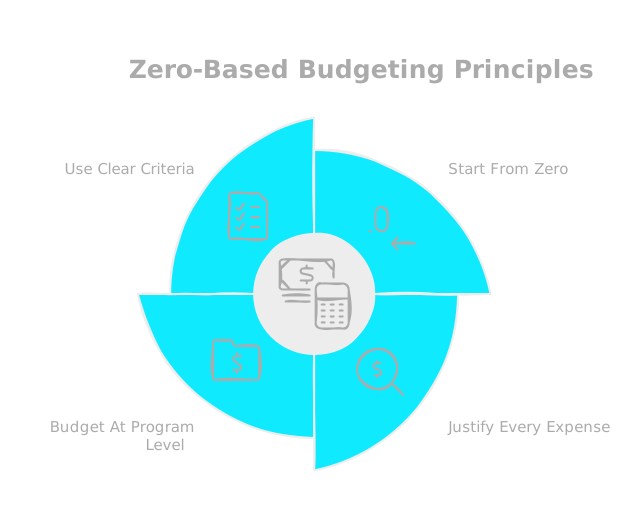
Treat every new budgeting cycle as a fresh decision. That mindset combats entitlement and complacency. It doesn’t mean firing every recurring expense, it means asking whether each one still deserves funding today.
Justify Every Expense
Require a short justification for each request: objective, target audience, expected outcome, measurable indicator, and cost per outcome. Keep forms simple so teams focus on substance not paperwork. Juries of leaders should evaluate submissions against agreed criteria.
Budget At The Program Level
Group expenses around ministries, not only accounts. For example, budget a youth ministry as one program that includes space, materials, and staffing. That reveals the total cost of running a ministry and makes trade-offs straightforward.
Use Clear Decision Criteria
Agree on objective criteria up front, such as mission alignment, reach, cost per participant, sustainability, legal requirements, and donor restrictions. Score requests consistently. Clear criteria keep discussions focused and reduce personal bias.
When It Works And When It Doesn’t
Ideal Church Situations
ZBB fits churches that want to reorient spending toward strategy, handle tight resources intentionally, or eliminate duplicated efforts across programs or sites. It also helps multi-site ministries and growing churches that need discipline to scale without waste.
Warning Signs To Stay Cautious
If your church is tiny, volunteer only, or lacks reliable data, a full ZBB rollout can be administratively heavy. High leadership turnover, an ongoing financial crisis, or a culture resistant to transparency also make ZBB painful. Don’t force it if basics like giving records and attendance tracking aren’t in place.
Hybrid Options To Consider
You don’t have to go all in. Try zero-based reviews for new programs, or run a full ZBB every 2 to 3 years while using an incremental approach for fixed costs like utilities, mortgages, and payroll. Another option is threshold-based ZBB, where only requests above a set dollar amount need full justification. These hybrids give the benefits of ZBB without overwhelming your team.
Step By Step Implementation Playbook
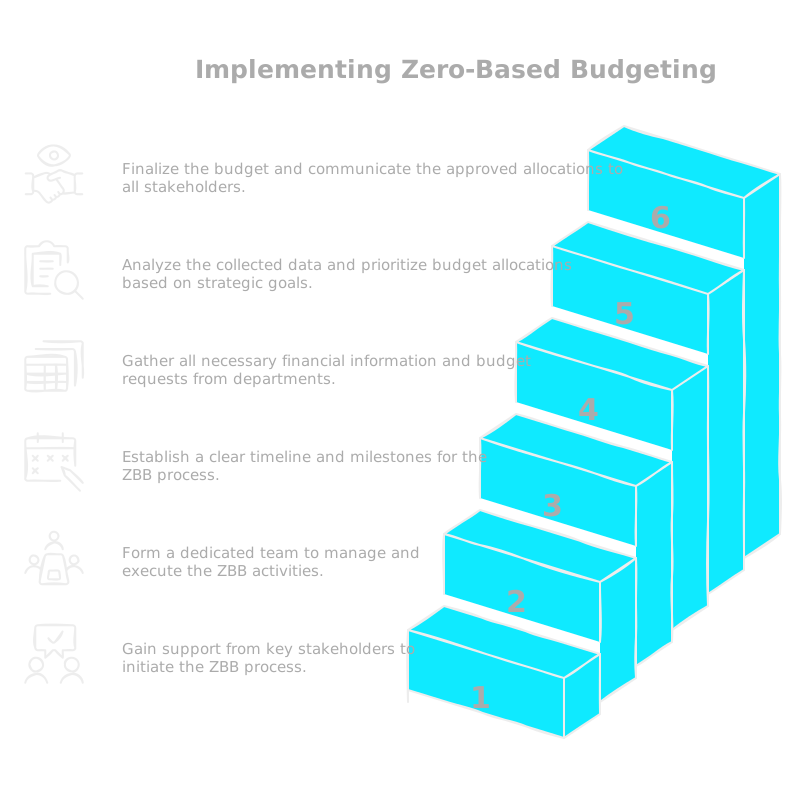
Secure Leadership Buy In
Start by framing ZBB as a stewardship tool that helps the church do more of what God has called you to do. Present a short, mission-focused case: expected benefits, estimated timeline, and one or two low-risk pilots. Ask leaders for two commitments, not one: time to participate in reviews, and permission to make trade-offs based on agreed criteria. Without both, the process stalls.
Assemble The Budget Team
Keep the core team small and cross-functional. Include a finance lead, 2 to 3 program leaders, an HR or staffing rep, a board or elder liaison, and someone who owns data and reporting. Give each person a clear deliverable, like scoring requests, modeling scenarios, or communicating decisions. A tight team moves faster and keeps the review process manageable.
Define Cycle, Roles, Deadlines
Put dates on a single-page calendar: request window, review rounds, model deadline, board review, and launch. Assign who collects requests, who scores them, who runs financial scenarios, and who signs off at each stage. Share the calendar churchwide so every ministry knows when decisions will be made.
Collect Program Requests And Data
Use a short justification packet for every program request: objective, target audience, measurable outcome, required resources, and cost breakdown. Pull historical data to ground requests, including attendance, registrations, volunteer hours, and giving tied to ministries. Where possible use your church management software to export consistent reports for giving and event participation, so requests aren’t guesswork.
Evaluate, Score, And Prioritize Requests
Score each request against preapproved criteria, like mission alignment, reach, cost per participant, sustainability, and legal or safety needs. Have at least two reviewers score independently to reduce bias. Translate scores into priority bands and run a few funding scenarios to see what combinations best serve mission with available resources.
Approve Budget And Launch Communication
Bring modeled scenarios to the board or elders with recommended trade-offs and the rationale. After approval, publish a concise summary for the congregation: what changed, why, and how it advances mission. Provide ministry-level detail to leaders and a high-level narrative to the whole church so people see stewardship in action.
Run A Pilot And Iterate
Pick one area for a pilot, like youth programming or events, and run ZBB for that program for one cycle. Track outcome metrics, admin burdens, and stakeholder feedback. Use what you learn to refine templates, scoring, and the timeline before scaling to the whole church.
Budgeting By Program And Ministry
Build Ministry Budget Templates
Create a one-page template for each ministry: ministry objective, key outcomes, fixed costs, variable costs, volunteer needs, and a short narrative on how dollars will be used. Keep it simple so leaders focus on outcomes, not bookkeeping. Templates make comparisons fair and streamline reviews.
Assign Program Owners And Accountability
Name a single owner for each program who signs the justification and reports on results. Make owners responsible for monthly variance updates and a short quarterly outcomes report. Clear ownership turns budget line items into accountable ministry plans.
Link Spending To Outcomes
Require at least one measurable indicator per budget line, like attendance per event, baptisms, small group retention, or new volunteer onboarding. Calculate a simple cost per outcome where practical. That exposes where money drives real ministry and where it doesn’t.
Allocate Shared And Overhead Costs
Decide an allocation method that’s simple and defensible, such as proportional by average attendance, FTE, or space usage. Put unavoidable central costs in a transparent overhead pool, then show how each ministry contributes. Transparency prevents surprise charges and helps ministries plan.
Budgeting Events, Small Groups, Volunteers
Treat events and small groups as programs with short justification packets for larger spends. Capture volunteer-related costs too, like background checks, training, meals, or leader stipends. For recurring small group expenses, consider a small annual per-group allowance rather than constant one-off approvals.
Prioritizing Ministries And Positions
Create A Simple Scoring Rubric
Use 4 to 6 criteria with clear scoring bands, for example: mission alignment (0–5), reach or people served (0–5), cost efficiency (0–5), sustainability (0–5), and compliance or safety (0–5). Weight criteria if one factor is nonnegotiable. Keep the rubric visible so decisions feel objective.
Rank Programs By Impact And Cost
Combine scores with total cost to produce a cost per impact indicator, then rank programs into tiers: invest, maintain, retool, or sunset. Use tiers in scenario planning so you can show how moving resources shifts impact across the ministry portfolio.
Review Staff Roles And Compensation
Map staff time to programs and ask whether roles are mission-critical, duplicated, or could be reoriented. Use market data for compensation but focus decisions on role impact, not only tenure. Where cuts are necessary, consider redeployment or part-time options before termination.
Make Hard Decisions With Grace
When roles or programs face reduction, lead with dignity. Offer clear timelines, pastoral support, and practical help with transitions. Explain decisions to the congregation in terms of mission priorities and stewardship, not just dollars. When possible, use phased reductions and reserves to ease change.
Communicating The Change To Your Congregation
Craft A Clear, Short Explanation
Write a one-paragraph explanation that answers three questions: why we changed the process, what will change, and how it helps our mission. Make it calm, honest, and focused on outcomes. Make this the core message for every conversation.
Train Leaders And Ministry Heads
Give ministry leaders talking points, a short FAQ, and a 30-minute rehearsal session. Equip them to explain specific program decisions and to redirect questions to stewardship conversations, not debate about every line item.
Host Budget Teaching Sessions
Run one or two public sessions that explain the process, show examples, and invite questions. Use real program comparisons to illustrate trade-offs. Keep sessions short, interactive, and focused on teaching stewardship, not on defending individual cuts.
Share Ongoing Visual Reports
Publish simple visual reports monthly, showing budget vs actuals, top program metrics, and any major changes. Visuals build trust faster than long narratives. Use your church management tools to pull consistent attendance and giving charts so numbers line up with what people see.
Invite Feedback And Stewardship Conversations
Provide channels for feedback, like a short online form, town hall slots, or scheduled stewardship meetings with donors and volunteers. Treat feedback as data, not drama. When people feel heard and see follow-up, trust grows and giving stabilizes.
Practical Templates And Tools
Zero Based Budget Template (Spreadsheet)
Provide a one-sheet workbook that starts with a blank budget, then organizes requests by program. Columns should include program name, objective, measurable outcome, detailed line items, quantity, unit cost, total cost, justification summary, priority score, and approved amount. Include a separate summary tab that rolls up totals by category, shows reserve impact, and displays a few prebuilt scenarios, such as full funding, partial funding, and a 5 percent cut. Lock formulas, leave input fields clearly highlighted, and include an instructions cell so nonfinancial leaders know what to fill in.
Program Request Form Template
Keep the request form brief so leaders focus on substance, not paperwork. Required fields: program name, owner, one sentence objective, target audience, expected measurable outcome, metric(s) to track, detailed cost breakdown, whether costs are fixed or variable, timeline, and alternative lower cost options. Add a short yes or no checklist for compliance and safety needs. Attach a one paragraph box for the ministry leader to state why this deserves funding this year, and include a signature line for accountability.
Annual Budget Checklist
Make a simple checklist to run at the start and end of the cycle. Items to include: confirm leadership commitment and calendar, export last year’s actuals for giving and attendance, open request window, confirm reviewers and scoring rubric, run two review rounds, model reserve scenarios, present to board, publish summary to congregation, and schedule quarterly monitoring meetings. At year end, add items to reconcile actuals, review program outcomes, retain documents for audits, and capture lessons learned for next cycle. A short checklist reduces missed steps and keeps momentum.
Recommended Software Features
Look for a church management platform that centralizes giving, attendance, event registration, and reporting so data used in ZBB is consistent. Key features, in order of usefulness: exportable giving and pledge reports, event and registration exports tied to ministries, simple custom forms for program requests, role based access for reviewers, and dashboards that show budget vs actual by program. Automation for recurring reports and the ability to attach request forms to program records saves time. If you use a cloud based church management app it should cut manual reconciliation and keep everyone working from the same data.
Integrating With Giving And Accounting Systems
Plan integrations early, especially between your giving platform and accounting software, so donations map to ministry categories used in budgets. Make sure giving data can be exported by date, fund, and campaign, and that accounting exports include actuals by GL code. Use periodic automated exports to populate your budget spreadsheet or dashboard, reducing transcription errors. Where possible, connect registration and attendance systems to attribute participation to specific programs, that way cost per participant numbers are accurate. If your church management app supports simple exports and custom fields, use those to tag income and expense items consistently.
Key Financial Metrics To Track
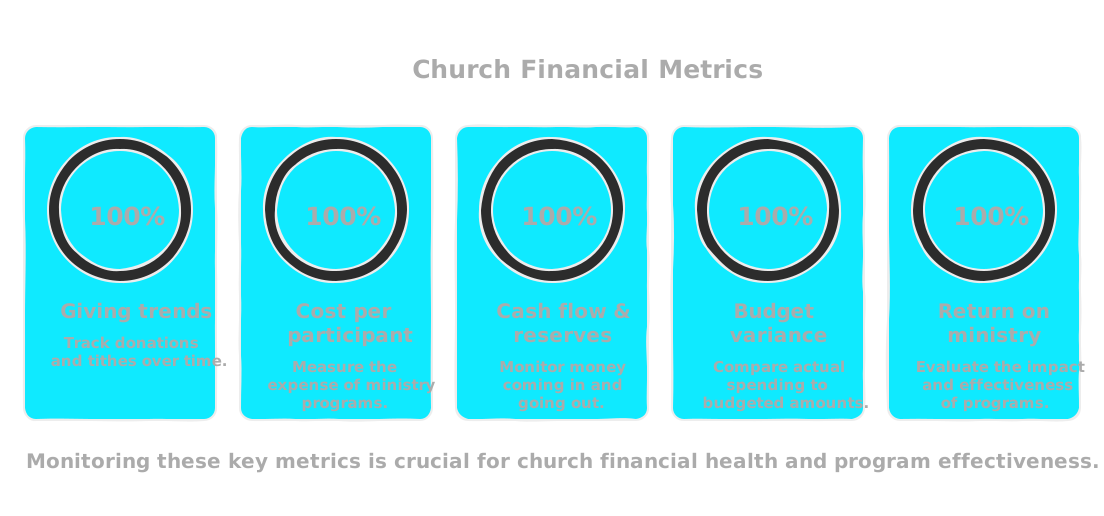
Giving And Revenue Trends
Track giving by fund, month, and program for at least 12 months so you see seasonality and donor trends. Monitor average gift size, number of recurring donors, and percent of revenue from large one time gifts. Use rolling 12 month charts to avoid overreacting to a single low month. These trends guide realistic revenue assumptions in your zero based scenarios.
Program Cost Per Participant
Divide the full program cost by a meaningful participation metric, like event attendees, active small groups, or baptized individuals. Include shared overhead allocated on a simple, defensible basis so you capture true cost. Use this metric to compare programs with similar objectives, and to flag high cost, low impact activities for retooling or sunsetting.
Cash Flow And Reserve Levels
Model monthly cash flow for the coming year, not just an annual total, and track your operating reserve measured in months of core expenses. Define a minimum reserve policy, for example two to three months of fixed expenses, and show how each funding scenario impacts that reserve. Monitoring reserves prevents short term decisions that jeopardize long term stability.
Budget Variance And Forecast Accuracy
Track approved vs actual spending monthly and calculate variance percentages by program. Also track how accurate your revenue forecasts proved to be, because underestimating giving changes what you can afford. Use variance reports to trigger corrective actions, like pausing discretionary spend or re-evaluating program scope.
Return On Ministry Investment
Estimate return on ministry investment by linking outputs or outcomes to dollars spent, for example cost per volunteer trained, cost per new attendee retained after 3 months, or cost per outreach contact converted. These are not purely financial returns, they’re ministry effectiveness measures. Use them to prioritize programs that produce the strongest mission outcomes for the dollars invested.
Common Mistakes To Avoid
Letting Politics Drive Cuts
Don’t let the loudest voices or internal relationships determine who keeps funding. Use your preset scoring rubric and documented criteria, and require decision notes when exceptions are made. Transparent, objective reasoning protects unity and stewardship.
Overlooking Small Recurring Costs
Small subscriptions, janitorial supplies, or recurring honoraria pile up. Include a line in your checklist to audit recurring charges and require justification for renewals. These small savings often add up to meaningful budget room.
Rushing The First Cycle
Expect the first full ZBB cycle to take longer and be messier. Allow extra review rounds, provide coaching to ministry leaders, and run a pilot first. Rushing leads to incomplete data, frustrated volunteers, and poor buy in.
Failing To Tie Budgets To Outcomes
Budgeting without clear, measurable outcomes turns ZBB into paper shuffling. Require at least one measurable indicator per program and make future funding contingent on reporting those results. That creates accountability and keeps budgets mission focused.
Neglecting Ongoing Training
ZBB is a new skill set for many volunteers and staff. Schedule short trainings on the template, scoring rubric, and how to read variance reports. Ongoing training reduces errors and builds a culture that understands budgets as ministry tools.
Zero Based Budgeting Compared To Line Item Budgets
Side By Side Feature Comparison
Zero based budgeting, program focused, forces justification for every request, highlights cost per outcome, and prioritizes mission impact. Line item budgets, account code focused, are simpler to maintain, good for fixed costs, and easier for accounting. ZBB excels at reallocation and strategic shifts, line item budgets excel at month to month control of routine expenses.
Time And Resource Tradeoffs
ZBB requires more upfront time, meetings, and data collection the first cycle, plus training for leaders. Line item budgets are less administratively heavy and faster when nothing major changes. After a few ZBB cycles the process gets quicker, but expect a higher initial resource investment that pays off through reduced waste and clearer priorities.
When To Use Each Approach
Use ZBB when you need to realign resources with mission, when redundancy is likely, or during financial constraint. Use line item budgeting for stable operations, especially where legal or contractual commitments dominate, like debt service or payroll. Many churches use a hybrid, running ZBB for ministries and strategic spending while keeping line item budgeting for fixed operational categories.
FAQs
How Long Does Implementation Take?
Expect the first full zero based budget cycle to take longer than later ones. Plan on roughly four to six months from kickoff to full congregation communication, because you need time for data collection, leader training, request windows, and two review rounds. Run a pilot first, a single ministry for one or two months, to work out templates and scoring without disrupting everything. After one full cycle, the process usually compresses to a 4 to 8 week rhythm each year, with routine data pulls and a single review round if your templates and reports are solid. Key variables that change timing are data quality, number of programs, and how available your leadership team is.
Will Small Ministries Lose Funding?
Possibly, but losing funding is not the goal. ZBB asks every ministry to justify its budget, so some lower impact or duplicate programs may be reduced, retooled, or combined. Protect small ministries by setting clear thresholds and minimums up front, offering phased reductions, and asking leaders to propose lower cost alternatives. Use the rubric to make trade-offs fair, and give short‑term support for transitions, like a one‑year grace period or coaching to improve outcomes. Framing decisions around mission outcomes and providing alternatives reduces resistance and preserves essential grassroots work.
How Do We Handle Restricted Funds?
Restricted or donor designated funds must be honored, and they should live separately in your budget and reporting. Tag restricted income and related expenses so reviewers see what is off limits before scoring requests. If a program holds restricted reserves but needs reworking, communicate with donors and seek consent before reallocating those dollars. For clarity, publish two views: an unrestricted operating budget where ZBB allocates mission dollars, and a restricted funds ledger that documents donor intent and spending. Doing this protects legal obligations and builds donor trust.
Can Multi Campus Churches Use This?
Yes, ZBB works well for multi campus churches and can even simplify resource allocation across sites. Use consistent program templates and a shared scoring rubric so requests from different campuses are comparable. Decide which costs are centralized, like platform subscriptions, and which are site specific, such as local outreach events, then allocate overhead with a simple rule, for example by average attendance or FTE. A central finance team can model cross‑site scenarios to reduce duplication and fund high impact programs across the network. Clear governance and shared dashboards make comparisons and trade-offs transparent.
Do We Need Special Software?
You don’t strictly need new software, but having a single system that centralizes giving, attendance, registrations, and custom request forms saves huge amounts of time and reduces errors. Look for a church management app that can export giving by fund, attach program request forms, and produce budget vs actual dashboards. A capable church management software helps you pull consistent reports for scoring, automate recurring exports, and keep everyone working from the same data set, which makes ZBB practical instead of painful. If your team is small, prioritize ease of use and exportable reports over overly complex features.
How Often Should We Reevaluate Budgets?
Full zero based budgeting is often done annually, but you should layer monitoring on top of that. Track monthly budget vs actuals and run quarterly program check‑ins so you catch drift early. For churches with limited capacity, consider a hybrid: run ZBB for major ministries annually and full ZBB for the entire organization every two to three years. Also build triggers for ad hoc reevaluation, like a sustained drop in giving, a major staffing change, or a new campus launch. Regular short reviews keep budgets responsive while reserving the heavy lift of full ZBB for planned cycles.