
What Is Church Cash Flow?
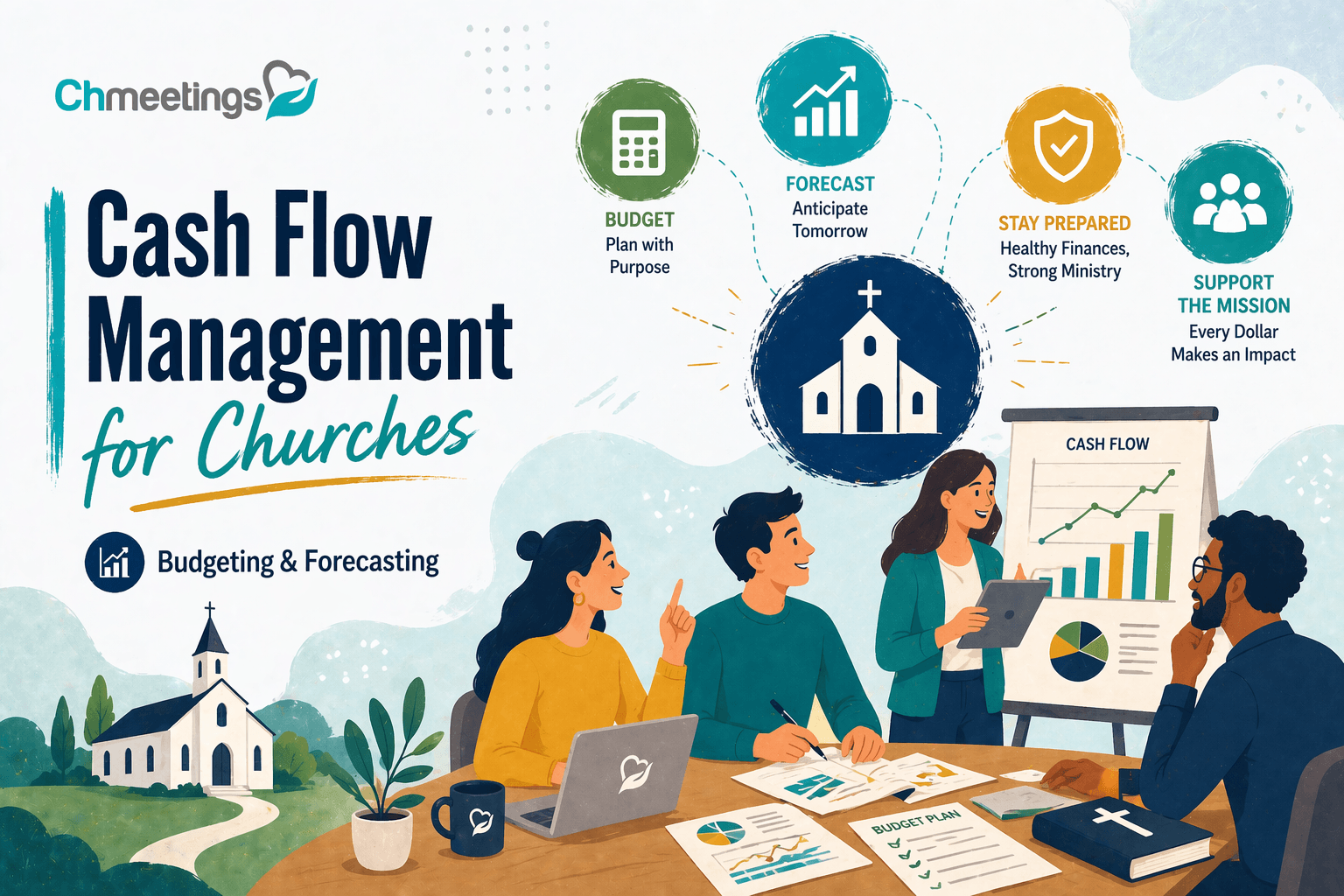
Cash flow is the timing of money coming into and going out of your church. It’s about liquidity, not profitability, so it answers the practical question, do we have cash on hand this week to pay staff, utilities, and program costs? Understanding cash flow keeps ministry operations steady and prevents surprises that stall mission work.
How Money Moves In A Congregation

Money enters through regular tithes, one-time gifts, online donations, event fees, rent, and grants. It leaves for payroll, building maintenance, program expenses, mission support, and debt service. Those inflows and outflows don’t line up neatly; offerings tend to spike on Sundays and holidays, while bills arrive on fixed schedules. Mapping those patterns makes timing visible, and timing determines whether you need reserves or short-term borrowing.
Why Cash Flow Matters For Ministries
Cash flow lets leaders make promises they can keep. You can’t launch a program, hire staff, or sign a building contract without knowing when funds will be available. Healthy cash flow protects payroll, safeguards ministries during slow seasons, and preserves credibility with vendors and donors. A predictable flow also frees leaders to focus on mission instead of firefighting financial surprises.
How Cash Flow Differs From Net Income
Net income shows whether you’re running in the black over a period, after counting noncash items and accruals. Cash flow cares only about cash movement, not accounting adjustments. You can report a surplus while still running out of cash, or show a deficit on paper while having plenty in the bank. For day-to-day ministry operations, cash flow is the practical measure you watch.
Build A Cash Flow Budget
A cash flow budget links expected receipts and scheduled payments over time. Unlike an annual budget that focuses on totals, a cash flow budget schedules amounts by week or month so you can see when shortfalls or surpluses will occur. Building one forces realistic planning and helps leaders decide when to hold, spend, or borrow.
Set Realistic Income Projections

Base projections on historical giving patterns, seasonal trends, and current pledge data. Use average weekly giving, but adjust for holidays, stewardship campaigns, and known one-time gifts. When in doubt, create a conservative case and an optimistic case, then plan around the conservative one so you’re prepared if income falls short.
Budget For Ministries And Programs
Assign cash timing to every ministry expense, not just line-item totals. Pay attention to upfront costs, recurring program expenses, and timing of grant disbursements. Prioritize mission-critical items like payroll and programming, and flag discretionary spending that can be delayed if cash tightens. This helps leaders make quick, informed cuts that protect core ministry.
Account For Restricted And Designated Funds
Separate restricted funds from operating cash in your budget and bank accounts. Restricted donations may look like income but aren’t available for general expenses until used for their purpose. Track them by fund so cash flow projections reflect only money you can legally and ethically spend. Clear reporting builds trust with donors and prevents accidental misuse.
Forecast Short-Term Cash Needs
Short-term forecasts bridge planning and action. They show the next 4 to 12 weeks of inflows and outflows so you can spot timing gaps and avoid bounced checks or last-minute borrowing. Forecasts also make it easier to decide whether to tap reserves or delay purchases.
Create Weekly And Monthly Forecasts
Weekly forecasts catch timing issues around payroll and weekly giving, monthly forecasts handle recurring bills and rent. Start with the cash balance, add committed receipts like pledges and recurring donations, subtract scheduled expenses, and note the ending balance. Update these forecasts at least once a week during tight periods.
Use Rolling Forecasts For Accuracy
A rolling forecast extends the horizon as time passes, keeping the forecast window constant, for example 12 weeks ahead. This method adapts to new information and prevents blind spots. Rolling forecasts make short-term planning a habit rather than a one-time exercise.
Run Scenario And Stress Tests

Model best case, expected case, and worst case scenarios to see how far reserves will stretch. Test sudden drops in giving, delayed grants, or unexpected repairs. Stress tests reveal trigger points for action, like when to pause hiring, call a stewardship campaign, or draw on a line of credit.
Manage Giving And Donations
Giving is the lifeblood of most churches, so make it easy, reliable, and transparent. Improving how you manage donations increases forecasting accuracy and strengthens donor trust. Integrated tools can help reduce admin work and give clear reporting to leadership and donors.
Increase Recurring And Pledge Giving
Recurring gifts smooth income volatility, making cash forecasts far more reliable. Encourage congregation members to set up weekly or monthly donations and promote pledge campaigns with clear, timebound goals. Offer simple ways to start recurring giving and celebrate milestones to reinforce commitment.
Track Restricted Gifts And Pledges
Record gift restrictions and pledge schedules at receipt, not later, so finance staff know what’s spendable. Reconcile pledged amounts against actual payments regularly to spot collection gaps. Transparent tracking avoids accidental use of restricted funds and supports donor stewardship communication.
Optimize Online And Mobile Giving Channels
Make online giving simple, mobile friendly, and well promoted before and after services. Multiple convenient channels increase overall giving and convert one-time donors into recurring supporters. Use a church management app with integrated giving to tie donations directly to member records, pledge tracking, and contribution statements, reducing manual reconciliation and improving reporting.
Stabilize Seasonal Fluctuations
Smooth Income With Reserve Smoothing
Seasonal giving spikes and lulls are normal, so treat the surplus months as intentional seed money, not free cash to spend. Calculate your congregation’s average weekly operating need, then set a portion of seasonal surpluses to move into a separate smoothing reserve. Automate transfers when possible so it’s not a manual afterthought, and tag those funds clearly in your accounting system so they don’t get mistaken for operating cash.
Use short rolling forecasts to size the reserve you need for the low months, and update the percentage you set aside as your forecast changes. An integrated church management app that links giving, pledges, and reports can speed this work, showing expected receipts by donor and fund so you know whether pledges will actually hit before you tap reserves.
Plan Year-End Appeals Strategically
Year-end is high yield, but timing and message matter. Plan appeals around cash shortfalls you’ve identified in your forecast, and be explicit about how funds will be used, whether for operations, building repair, or a one-time outreach. Segment appeals, target lapsed givers separately from regular givers, and offer recurring gift options to convert one-time responders into steady supporters.
Avoid overwhelming donors with constant asks. Space stewardship moments so they align with real needs, and report back quickly on impact, which builds trust and improves response rates next year.
Use Short-Term Credit Responsibly
Short-term credit is a timing tool, not a long-term fix. Keep a small, preapproved line of credit or a low-rate business card as a bridge when forecasts show a temporary gap, but require a repayment plan and a cap approved by leadership. Compare fees and terms, prefer lines with interest-only draw periods for short timing issues, and never use high cost cash advances.
Set clear rules for when credit is allowed, who approves it, and what triggers repayment from reserves or incoming pledges. Regular stress tests will reduce reliance on borrowing by showing how small changes in giving affect your need for credit.
Control Expenses And Vendors
Prioritize Essential Versus Discretionary Spending
Create a simple tier system that labels expenses as essential, mission critical, or discretionary. Essentials cover payroll, utilities, insurance, and debt service. Mission critical covers program costs tied to core ministry outcomes. Discretionary covers nonurgent upgrades, conferences, and nonessential subscriptions.
When cash tightens, pause or delay discretionary items first. Make approval thresholds explicit so ministry leaders know which purchases need finance committee signoff. Tie these tiers to your cash flow forecasts so cuts are surgical, not reactionary.
Negotiate Payment Terms And Discounts
Vendors expect negotiation, and many will extend terms or offer discounts for prompt payment or bundled services. Ask for net-30, net-45, or seasonal billing that aligns with your giving spikes. Offer to pay early in exchange for a small percentage discount when you have a short-term surplus.
Group purchasing with nearby churches or your diocese can unlock volume pricing. Treat vendor relationships as partnerships, not just transactions, because consistent, on-time payment is a leverage point during tight months.
Implement Purchase Orders And Vendor Reviews
A purchase order process prevents surprise spending and gives finance staff a paper trail to match invoices. Require POs above a modest dollar threshold, centralize approvals, and reconcile invoices against POs before payment.
Review vendors at least annually for price, reliability, and fit with your mission. Consolidate where it lowers cost and complexity. Track vendor performance metrics, and rotate bids on large contracts, so you’re not locked into poor value when cash is constrained.
Manage Payroll And Benevolence
Time Payroll To Match Cash Availability
Align pay dates with predictable income when you can, for instance scheduling payroll shortly after major giving Sundays. If you can’t shift pay dates, maintain a payroll reserve that covers 2 to 4 pay periods depending on congregation size and volatility.
Communicate any changes clearly to staff and build a simple payroll contingency plan, so salary advances, temporary reductions, and other measures aren’t ad hoc. Using a payroll provider that integrates with your accounting system reduces errors and helps you project tax liabilities.
Establish A Benevolence Fund Policy
Benevolence is a core ministry, but it needs guardrails. Create a written policy that defines eligibility, maximum disbursement amounts, approval steps, documentation required, and confidentiality standards. Decide whether benevolence funds are restricted gifts or part of general benevolence, and account for them separately.
Track requests and outcomes in a secure system so you can report usage to the board and donors, follow up on long term needs, and spot abuse or recurring patterns that need a programmatic response.
Plan For Benefits And Payroll Taxes
Benefits and payroll taxes are predictable but often underestimated. Calendar employer tax deposits and benefits payments so they’re treated like fixed bills, not surprises. Create a separate payroll tax account and sweep the estimated employer portion each pay period into it.
Budget for seasonal hires, stipends for short-term programs, and benefits renewals. Run monthly reconciliations so year-end filings aren’t a scramble, and involve your payroll provider when rules change to avoid penalties.
Maintain Reserves And Liquidity
Set Target Reserve Levels
Define reserve targets in concrete terms, like weeks or months of operating expenses. A small church might aim for 8 to 12 weeks, a larger or multi-site ministry might set 3 to 6 months depending on cash volatility and mission risk. Base targets on stress tests that show how long you can operate under different giving scenarios.
Revisit targets annually, and adjust for known upcoming expenses, like a major capital project or a pastoral transition.
Create An Operating Reserve Policy
Turn your reserve target into a short, clear policy that covers purpose, governance, funding sources, withdrawal rules, and replenishment plans. Name the accounts, set approval authorities, and require periodic reporting to the board.
A written policy removes ambiguity, protects leadership from pressure to raid reserves, and builds donor confidence when you report stewardship of funds.
Access Lines Of Credit And Liquid Assets
Keep liquidity options in place before you need them, including a modest bank line of credit, denominational loan programs, or a small pool of highly liquid investments. Maintain good banking relationships and update covenants annually so access remains steady.
Use these tools as a backstop, not a primary funding source. Compare costs, fees, and repayment terms, and run scenarios so you know exactly when to draw and how you will repay. Having preapproved options prevents desperate decisions during a cash pinch.
Monitor Key Cash Metrics
Days Cash On Hand Explained
Days cash on hand measures how many days your church can operate using available liquid cash, without any new income. Calculate it by dividing unrestricted cash and cash equivalents by average daily operating expenses. For churches that budget weekly, use average weekly operating expense divided by seven, or express the result in weeks for clarity.
Exclude restricted funds and designated reserves from the cash numerator so you don’t overstate spendable liquidity. Aim for a practical target based on size and volatility, for example 8 to 12 weeks for small churches, 12 to 24 weeks for more variable multisite ministries. Recalculate monthly and flag any falling trend, then run a short-term forecast to identify when actions like reserve transfers or temporary freezes are needed.
Liquidity And Coverage Ratios To Track
Track a handful of simple ratios to see liquidity at a glance:
- Current ratio, current assets over current liabilities, shows short-term solvency. A value above 1 is basic safety; higher targets make sense for mission risk.
- Payroll coverage, unrestricted cash divided by one pay period total, tells you how many paydays you can meet without new donations.
- Debt service coverage, operating cash available for debt divided by annual debt payments, shows breathing room for loans.
Keep ratios simple and consistent. Use the same definitions each month so leadership can spot trends, not noise. If a ratio slips, run scenarios to see which levers — reserves, expense cuts, or short-term borrowing — restore safety fastest.
Build A Cash Flow Dashboard

A compact dashboard turns numbers into clear decisions. Include current bank balances by account, days cash on hand, rolling 12-week ending balances, weekly giving trend, upcoming large payables, pledged receipts and restricted fund balances. Add simple traffic lights or trend arrows so busy leaders see risk at a glance.
Automate data where possible, pulling giving and deposit info directly from your giving platform and bank feeds. Schedule the dashboard to update weekly and assign one person to own it. If you use a church management app that integrates giving, member records, and reports, you can cut reconciliation time and keep the dashboard current with less manual work.
Strengthen Financial Controls
Segregate Duties And Approvals
Divide cash handling tasks so no single person can receive, record, and reconcile money alone. Typical splits include front‑end receipt, accounting entry, invoice approval, and bank reconciliation. Set approval thresholds, require dual signatures for larger disbursements, and limit petty cash usage with receipts and periodic audits.
Clear role separation reduces errors and temptation. Train volunteers and staff on the rules and rotate duties when possible to keep controls effective even with changing personnel.
Reconcile Accounts Regularly
Reconcile bank accounts, giving platforms, credit card statements, and payroll tax accounts every month, at minimum. Match deposits to donor records and pledge payments, investigate unexplained variances, and document who completed and reviewed each reconciliation.
Use a short checklist for each reconciliation: statement date, outstanding checks, unmatched deposits, and final sign‑off. Keep digital copies of statements and reconciliations for audit readiness.
Document Policies And Reporting Lines
Put key financial policies in writing: reserve policy, expenditure approvals, benevolence guidelines, petty cash rules, and when to draw on credit. Include who reports to whom and what frequency of reporting is expected.
A one‑page flowchart for reporting lines and approval authorities prevents confusion during transitions and emergencies. Update policies annually and make them available to staff and board members.
Run A Cash Flow Playbook
Monthly Close And Reporting Checklist

Create a short monthly close checklist that includes updating the cash forecast, reconciling all bank and giving accounts, posting payroll and benefits, reporting days cash on hand, and producing a variance summary vs budget. Package these items into a concise board or finance committee packet with a one‑page executive summary.
Set deadlines, assign owners, and keep the cycle tight so leaders get timely information and can act before problems compound.
Crisis Cash Response Steps
Predefine steps to follow when cash dips below a trigger. Typical response actions are: pause discretionary spending, run daily cash forecasts, notify key leaders, secure short-term liquidity if needed, and communicate transparently with staff and the board. Identify who can authorize emergency draws or spending cuts.
Practice the plan through tabletop exercises so decisions in a real crisis aren’t made from scratch.
Annual Cash Flow Review Process
Once a year, review assumptions behind your cash flow budget with the board: giving trends, pledge realization rates, payroll commitments, and reserve targets. Run stress tests for multiple downside scenarios and update reserve policy and contingency plans accordingly.
Document any changes and publish a short summary to stakeholders so everyone understands the church’s financial posture and priorities for the coming year.
Pick Tools And Templates
Choose Church Accounting Software
Pick software that supports fund accounting, integrates giving deposits, provides bank feeds, and has role based permissions. Look for clear reporting, exportable data, and the ability to tag restricted funds and pledges. A church management app that links member records to contributions reduces manual reconciliation and improves stewardship reporting.
Evaluate vendors by demos, reference churches of similar size, and ease of use for volunteer treasurers.
Use Forecasting And Budget Templates
Standardize on a few templates: a rolling 12-week cash flow forecast, a monthly cash flow budget, and scenario templates for stress tests. Key columns should show opening balance, expected receipts by source, scheduled disbursements, and ending balance.
Keep formulas simple and document assumptions. Where possible, link templates to live exports from your giving platform or accounting system so updates are faster and less error prone.
Compare Giving Platforms And Banks
When comparing giving processors, weigh fees, settlement timing, donor experience, integration with accounting tools, and support for recurring gifts and pledges. Faster deposit timing improves cash flow, so weigh that heavily.
For banks, compare online tools, ability to hold multiple sub‑accounts for restricted funds, sweep features, and lines of credit. Negotiate fees and ask about church‑friendly services. Test integrations with your accounting software and run a small trial before moving all deposits.
Common Mistakes And Fixes
Churches that struggle with cash flow usually do the same few things wrong. Below are the common missteps and clear fixes you can implement this week.
Ignoring Restricted Funds
Treating restricted gifts as general operating cash is a fast route to legal trouble and donor distrust. Fix it by recording restrictions the moment a gift arrives, isolating those dollars in a separate fund or account, and requiring approval before spending them. Produce a simple monthly report that shows restricted balances, inflows, and spend-downs, and share that report with the finance committee and donors when appropriate. Use a church management app to tag gifts on receipt so your reporting stays accurate and reconciliations are fast.
Overreliance On Seasonal Giving
Basing essential expenses on Christmas or year-end surges sets you up for panic in slower months. Build a smoothing reserve funded during high months, push recurring giving to reduce volatility, and diversify income with rentals, small program fees, or grants where possible. Model conservative, expected, and optimistic scenarios and plan operations around the conservative case. Automate transfers into your smoothing reserve so discipline happens without relying on memory.
Weak Controls And Poor Reporting
Loose approvals, single-person cash handling, and infrequent reconciliations create errors and risk fraud. Segregate duties so different people handle receipts, recording, and reconciliation. Reconcile bank accounts and giving platforms monthly, document who reviewed each step, and keep a short, consistent reporting pack for the board. Replace manual spreadsheets where they cause delays, and build a compact dashboard that shows days cash on hand, upcoming large payables, and pledged receipts so leaders can act before problems compound.
FAQs
How Much Reserve Should A Church Hold?
Express reserve targets in weeks or months of operating expenses. Small congregations often aim for 8 to 12 weeks, while larger or multi-site ministries may target 3 to 6 months depending on volatility and mission risk. Set the target using stress tests that simulate dips in giving and unexpected expenses, write a short reserve policy, and revisit the target annually or when a big change is coming, like a capital project or pastoral transition.
How Do I Forecast Income And Expenses?
Start with your opening cash balance, add committed receipts like pledges and recurring gifts, estimate weekly offerings, and subtract scheduled payroll and bills. Run a rolling 12-week forecast, update it weekly during tight periods, and model best, expected, and worst cases. Link your giving platform and accounting system where possible so deposits and pledges flow into the forecast automatically. A church management app that ties giving to member records trims reconciliation time and keeps forecasts current.
What Metrics Show Cash Health?
Watch a handful of simple metrics, not dozens:
- Days cash on hand, to see how long you can operate without new income.
- Payroll coverage, how many pay periods you can meet with unrestricted cash.
- Current ratio, short-term assets over liabilities.
- Debt service coverage, operating cash available versus annual debt payments.
- Rolling 12-week ending balances, to spot upcoming gaps.
Recalculate these monthly and flag trends so you act early.
Can A Church Use Lines Of Credit?
Yes, as a planned backstop, not a budget fix. Keep a modest preapproved line, compare terms and fees, and require a repayment plan and board approval for draws above a set threshold. Prefer shorter draws tied to predictable receipts, and avoid using credit for ongoing operating shortfalls. Run scenarios so you know exactly when and how you would tap a line, and update covenants and banking relationships annually.
How Should We Handle Restricted Donations?
Record restrictions at receipt, tag the donation in your ledger, and hold those funds separately until spent for the donor’s purpose. Report restricted fund activity regularly to the finance committee and donors, and never reclassify a restricted gift without documented donor consent or legal advice. Keep a clear trail linking the original gift, authorization to spend, and the final use, so audits and donor follow-ups are simple and transparent.
When Should We Update Our Forecasts?
Update forecasts weekly during tight or transitional periods, and at least monthly as an ongoing practice. Reforecast immediately after major events, like a stewardship campaign, a significant grant commitment, staff changes, or unexpected repairs. Also refresh the forecast any time actuals deviate materially from assumptions, for example a sustained drop in giving greater than 5 to 10 percent. Regular updates keep decisions proactive, not reactive.