
I have sat in more than a few church staff meetings where the conversation about a big event ends the same way: everyone is thrilled about attendance, and then nobody has a clear answer for what happens to the visitors next. That gap, between a great event and what comes after it, is where most churches quietly lose people. Follow-up is not an afterthought. It is the difference between a visitor who never comes back and someone who eventually calls the church home.
This guide covers what I have seen actually work, backed by research where it exists, and grounded in practical experience where the research runs thin.
- Understanding the Importance of Follow-Up
- Best Practices for Follow-Up After Events
- Creating a Follow-Up Plan
- Utilizing Technology for Effective Follow-Up
- Social Media and Follow-Up Engagement
- Evaluating Your Follow-Up Effectiveness
- Common Mistakes in Visitor Follow-Up
- Creating a Culture of Connection
- Real-Life Success Stories
-
Frequently Asked Questions
- How can churches effectively follow up with visitors?
- What are common follow-up mistakes to avoid?
- How important is timing in follow-up?
- What tools can churches use for follow-up?
- How do you personalize follow-up messages?
- What should be included in a follow-up plan?
- Can social media be used effectively for follow-up?
- What metrics should churches track for follow-up success?
- Understanding the Importance of Follow-Up
- Best Practices for Follow-Up After Events
- Creating a Follow-Up Plan
- Utilizing Technology for Effective Follow-Up
- Social Media and Follow-Up Engagement
- Evaluating Your Follow-Up Effectiveness
- Common Mistakes in Visitor Follow-Up
- Creating a Culture of Connection
- Real-Life Success Stories
-
Frequently Asked Questions
- How can churches effectively follow up with visitors?
- What are common follow-up mistakes to avoid?
- How important is timing in follow-up?
- What tools can churches use for follow-up?
- How do you personalize follow-up messages?
- What should be included in a follow-up plan?
- Can social media be used effectively for follow-up?
- What metrics should churches track for follow-up success?
Understanding the Importance of Follow-Up
Follow-up matters because the first visit is only ever a starting point. What happens in the days after determines whether that starting point leads anywhere.
Visitor Retention Statistics
The data on this is sobering. According to a Faith Perceptions study, only 24% of first-time visitors received any follow-up contact within 30 days of their visit. That means roughly three out of four first-time guests hear nothing from a church after walking through the door, which is a remarkable amount of missed opportunity.
The upside is just as striking. Research from the United Methodist Church of the Resurrection has found that approximately 20 to 25% of first-time guests end up joining the church after a successful follow-up process. When you put those two numbers side by side, the message is clear: follow-up is not a nice extra. It is one of the highest-leverage things a church can do.
Emotional Benefits of Follow-Up
Beyond the numbers, follow-up communicates something emotional. A visitor who receives a genuine, personal message after their first visit feels noticed. One who hears nothing often assumes the church did not care enough to reach out.
Danny Franks, a church leadership expert, has put this bluntly: if a church does not have a follow-up plan in place for its guests, it might as well reconsider even welcoming them to begin with. That line has stuck with me because it reframes follow-up as part of hospitality itself, not a separate administrative task tacked on afterward.
Aligning Follow-Up with Church Values
Good follow-up should feel like an extension of a church’s mission, not a sales funnel. If a church’s stated value is genuine community, its follow-up process needs to reflect that, warm and personal, rather than templated and transactional. Visitors can usually tell the difference.
For a deeper look at the research behind this, Following Up With Church Guests is a useful resource that expands on why timely outreach matters so much.
Best Practices for Follow-Up After Events
Once a church accepts that follow-up matters, the next question is how to actually do it well.
Ideal Timing for Follow-Ups
The general rule I recommend, and the one most church leadership research backs up, is reaching out within 48 hours of the visit. Momentum fades fast. A message sent within two days still feels connected to the actual experience the visitor had. A message sent two weeks later often feels like an afterthought, even when the intention behind it is genuine.
Personalization Techniques
Generic messages get generic results. Personalized, customized follow-up has been shown to produce a 40% higher engagement rate compared to generic outreach methods, according to research from One Church Software. In practice, this means referencing something specific from the visit, the sermon topic, the event they attended, or a conversation they had with a greeter, rather than sending a form letter that could apply to anyone.
A few personalization touches worth building into every message:
- Use the visitor’s first name, not a generic greeting
- Reference the specific event or service they attended
- Mention something a volunteer or staff member noted about the conversation
- Suggest one clear, low-pressure next step
Using Multiple Communication Channels
Not every visitor prefers the same communication method, which is why relying on a single channel limits reach. ChurchTech Today has found that communication methods such as texting and direct calls are preferred by over 60% of church guests surveyed, which suggests many churches are still over-relying on email alone.
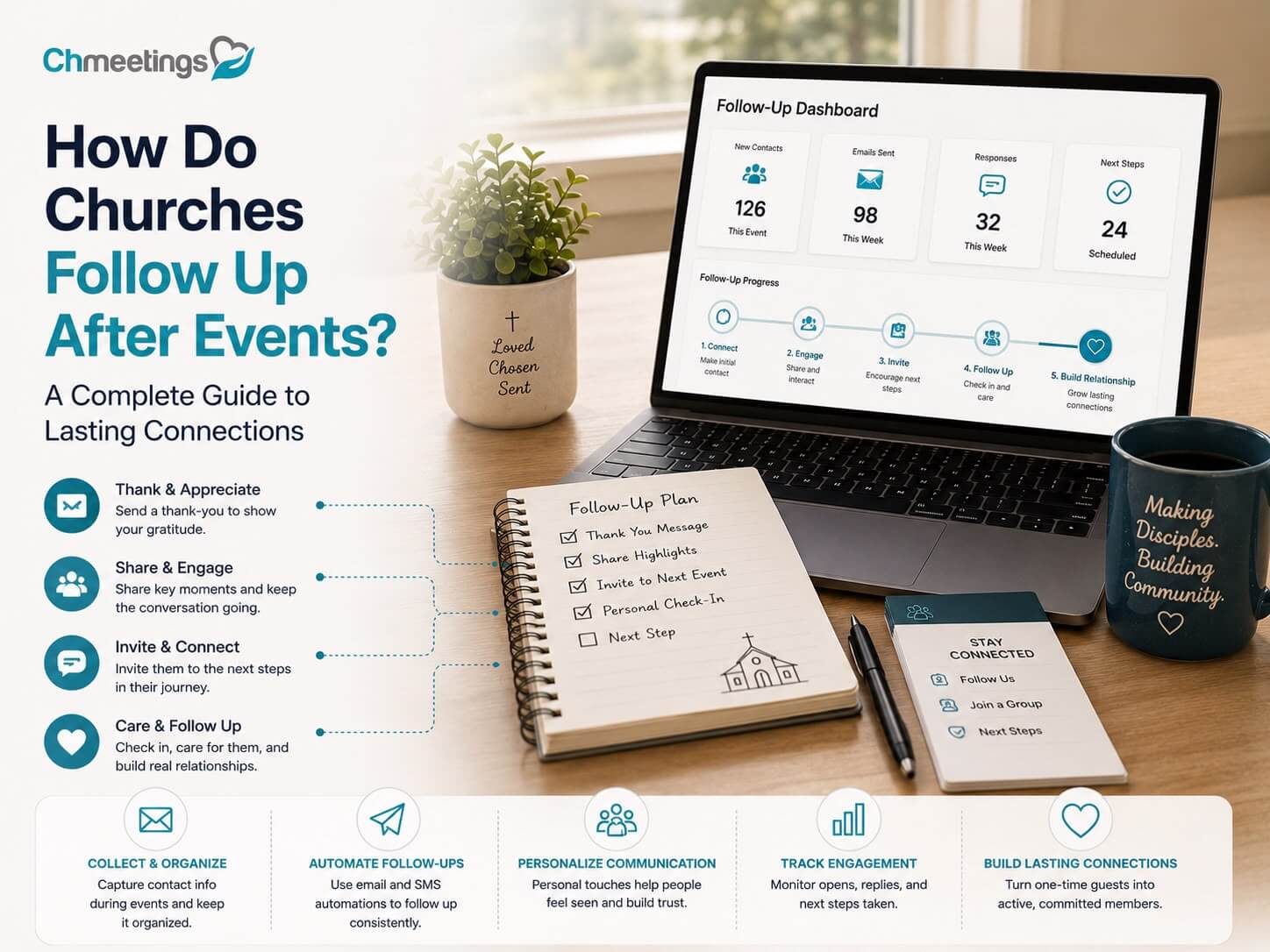
A simple multi-channel approach looks like this: a text message within 48 hours, a follow-up email later in the week with more detail about next steps, and, for visitors who show strong interest, a personal phone call from a staff member or volunteer. For more on structuring this kind of layered approach, 5 Church Guest Follow-Up Tools That Increase Return Visits breaks down several practical options.
Creating a Follow-Up Plan
A follow-up plan turns good intentions into something a church can actually execute consistently, week after week, regardless of who is on staff at the time.
Elements of a Successful Follow-Up Plan
A solid follow-up plan needs four basic elements: a defined timeline, assigned ownership for each step, a set of message templates, and a way to track who has been contacted and how they responded. Without ownership specifically, follow-up tends to fall through the cracks, since everyone assumes someone else is handling it.
As the Text In Church team has described it, a strong follow-up system builds trust, reinforces belonging, and keeps a church top of mind during the week. That framing is a useful test for any follow-up plan: does this actually make the visitor feel more connected, or does it just check a box?
Sample Follow-Up Templates
Templates should be flexible enough to personalize but structured enough that no one has to write from scratch every time. Here is a simple structure that has worked well in the churches I have supported:
Day 1 (text message): A short, warm thank-you for attending, sent same-day or next-day.
Day 3 (email): A slightly longer message with information about relevant next steps, such as a small group, upcoming event, or ways to connect further.
Day 10 (personal outreach): For visitors who engaged with the first two touches, a phone call or in-person conversation from a pastor, staff member, or trained volunteer.
Setting Engagement Goals
Every follow-up plan should have a defined goal beyond simply “reaching out.” Common goals include getting a visitor to a second service, connecting them to a small group, or securing a face-to-face conversation with a staff member. A specific goal gives the follow-up process direction instead of ending at a single message.
Utilizing Technology for Effective Follow-Up
Technology does not replace genuine follow-up, but it removes the friction that causes follow-up to fall apart in the first place.
Top Follow-Up Software for Churches
Church management platforms that combine visitor tracking, communication, and reminders in one system tend to produce far more consistent follow-up than manual processes spread across spreadsheets, sticky notes, and individual staff inboxes. Try ChMeetings Today if your church needs a single place to log visitor information, trigger automated first-touch messages, and assign follow-up tasks to the right staff or volunteer.
Benefits of Automation in Follow-Ups
Automation does not mean impersonal. It means the first message goes out reliably, every time, without depending on someone remembering to send it. A well-structured follow-up system can improve visitor return rates by as much as 30%, based on findings referenced by Smart Church Management, largely because automation closes the gap between a visitor leaving and the church actually reaching out.
Integrating CRM Systems
A CRM built for churches keeps a full history of each visitor’s interactions, so a second follow-up message can reference the first one instead of starting the conversation over. This matters especially for larger churches, where a visitor might interact with several different staff members or volunteers over the course of a few weeks.
For a closer look at building this kind of system, Secrets of a Successful Church Follow-Up Process covers the mechanics in more depth.
Social Media and Follow-Up Engagement
Social media has become a natural extension of in-person follow-up, particularly for visitors who are more comfortable engaging online before committing to another in-person visit.
Engaging Through Social Media
A direct message on Instagram or Facebook following an event can feel less formal than an email, which sometimes makes visitors more comfortable responding. This works best when it is treated as one part of a broader follow-up plan, not a replacement for a text or call.
Creating Community Groups
Private Facebook groups or similar online spaces built around a specific ministry, small group, or event series give visitors a low-pressure way to stay connected between in-person gatherings. These groups work best when someone is actively moderating and welcoming new members, rather than being left dormant.
Sharing Event Highlights on Social Media
Posting photos and short recaps from an event, and tagging or mentioning attendees where appropriate, reinforces that the visitor was part of something real. It also gives churches a natural, non-intrusive reason to re-engage a visitor who has not yet responded to a direct message.
Evaluating Your Follow-Up Effectiveness
A follow-up process only improves if a church actually measures whether it is working.
Defining Key Performance Indicators
Useful KPIs include response rates to initial outreach, the percentage of visitors who attend a second time, and the percentage who eventually connect with a small group or ministry. Broadly, research supports the underlying premise here directly: proactive follow-up meaningfully increases the likelihood of retaining visitors compared to no follow-up at all.
Collecting Visitor Feedback
Short, low-effort feedback mechanisms, a quick text survey or a two-question email, tend to get far better response rates than long forms. Asking specifically what made a visitor feel welcome, or what almost kept them from coming back, tends to surface more useful insight than generic satisfaction questions.
Improving Follow-Up Strategies
Treat the follow-up process itself as something to revisit quarterly. If response rates to the first-touch text message are dropping, that is worth investigating before assuming the problem is with visitors rather than the message itself.
How to Follow Up with Church Visitors offers additional practical guidance on refining this process over time.
Common Mistakes in Visitor Follow-Up
Even well-intentioned churches make predictable mistakes here, and most of them are avoidable once a church knows to watch for them.
Aggressive vs. Passive Follow-Ups
There is a real balance to strike. Multiple messages within the same day can feel pushy and transactional. On the other end, a single message with no follow-through can feel like the church lost interest entirely. The best approach sits in the middle: a clear, spaced-out sequence with a natural stopping point if the visitor does not respond.
Importance of Personalization
Generic, obviously templated messages are one of the fastest ways to undo the goodwill built during an actual visit. As One Church Software has put it, intentional follow-up matters most when it is consistent, personal, and pressure-free, helping people feel genuinely connected rather than processed.
Consequences of No Follow-Up
The cost of doing nothing is not neutral. It is a missed opportunity that, based on the retention research already discussed, likely represents a meaningful share of visitors who would have returned with even minimal outreach. Silence after a first visit is frequently read as disinterest, even when that was never the church’s intention.
Creating a Culture of Connection
Follow-up systems work best when they sit inside a broader church culture that already values noticing and welcoming new people.
Training for Guest Engagement
Volunteers on greeting and hospitality teams should be trained to gather basic visitor information naturally, not through an awkward interrogation, but through genuine conversation that makes note-taking feel like an afterthought rather than the point.
Strategies for Connection
Simple structural choices help here: a visible welcome table, a clear next-step card for visitors to fill out, and a staff member specifically tasked with checking in on new visitor follow-up each week so it does not depend entirely on volunteer memory.
Celebrating New Visitors
Publicly, but gently, acknowledging new visitors during a service, without singling anyone out uncomfortably, reinforces that a church actually notices when someone new walks in. This is a small touch, but it consistently shows up in the churches that retain the most first-time guests.
Real-Life Success Stories
Case Study 1: Innovative Follow-Up Strategy
A church I worked with restructured its follow-up process around a simple rule: every visitor got a personal text from a real staff member, not an automated system, within 24 hours. The message referenced something specific from the connection card the visitor filled out. It was a small change, but it made the first touchpoint feel human rather than automated.
Impact Measurement
Within a few months, the church saw a noticeable increase in second-visit attendance among guests who received this personalized first message compared to those on the church’s previous generic email-only system. The team also started tracking how many visitors moved from a first follow-up message into an actual small group within 60 days, which became their primary internal success metric.
Lessons from Successful Churches
The consistent thread across the churches that do this well is not a fancy tool or a large staff. It is consistency and ownership. A simple system that runs every single time beats an elaborate plan that only happens when someone remembers to execute it.
Frequently Asked Questions
How can churches effectively follow up with visitors?
Churches follow up effectively by using a multi-channel approach, text, email, and phone calls, within 48 hours of a visitor’s first attendance. Personalizing each message and offering one clear next step, rather than a long list of options, tends to produce the strongest engagement.
What are common follow-up mistakes to avoid?
The most common mistakes are being either too aggressive with repeated messages or too passive with no outreach at all, sending generic, unpersonalized communications, and failing to have any structured follow-up plan in the first place.
How important is timing in follow-up?
Timing is one of the most important factors in follow-up success. Reaching out within 48 hours takes advantage of the momentum from the initial visit and helps the visitor feel remembered while the experience is still fresh.
What tools can churches use for follow-up?
Churches commonly use CRM systems, church management platforms like ChMeetings, email marketing tools, and automated text messaging services to track visitor interactions and keep follow-up consistent across staff and volunteers.
How do you personalize follow-up messages?
Personalization means including the visitor’s name, referencing specific details from their visit such as the event or service they attended, and suggesting a next step that actually fits what they seemed interested in, rather than a generic invitation.
What should be included in a follow-up plan?
A complete follow-up plan should define the timing of each communication, the specific channels used, the message content or templates for each touchpoint, and a system for tracking who has been contacted and how they responded.
Can social media be used effectively for follow-up?
Yes. Social media works well as a supplementary follow-up channel through direct messages, community groups built around specific ministries, and shared event highlights that help visitors feel like part of the community even before their next in-person visit.
What metrics should churches track for follow-up success?
Churches should track response rates to initial outreach, the percentage of visitors who return for a second visit, and how many eventually connect with a small group or ministry. These metrics together give a much clearer picture of follow-up effectiveness than attendance alone.