
How can churches follow up with new visitors in a way that actually brings them back? That question sits at the intersection of pastoral care and organizational discipline, and getting the answer right makes an enormous difference to whether a first-time visitor ever becomes a second-time one.
The numbers make the problem vivid. Between October 2015 and September 2016, 1,321 people visited churches, and only 24 percent received any follow-up after their visit, according to research by Yvonne Gentile and Debi Nixon published through United Methodist Church leadership. That means roughly three out of four first-time visitors left and heard nothing. Not because the churches did not care. Because the churches did not have a system.
Churches that use a structured follow-up plan see upwards of 25 percent of visitors joining their congregation, according to church leadership research. The gap between 24 percent receiving any follow-up and 25 percent joining is not a coincidence. It is a direct consequence of whether the church treats visitor follow-up as a pastoral priority or an administrative afterthought.
In my experience working with congregations of different sizes, the churches that retain visitors most effectively are not necessarily the ones with the most polished services or the largest budgets. They are the ones that follow up consistently, personally, and quickly.
- The Importance of Following Up with New Visitors
- Crafting the Personal Touch: Strategies for Initial Contact
- Creating a Follow-Up Sequence: What to Include
- Leveraging Technology for Better Engagement
- In-Person Follow-Up Strategies: Building Relationships
- Evaluating the Effectiveness of Your Follow-Up Plan
-
Frequently Asked Questions
- What are effective follow-up strategies for first-time church visitors?
- How soon should churches follow up with new visitors?
- What methods can churches use to follow up?
- How can technology assist in church follow-up?
- What metrics should churches track for follow-up effectiveness?
- Are personal gifts effective in church visitor follow-up?
- How can I make follow-up feel less intrusive?
- What is the best way to collect visitor information for follow-up?
- Conclusion
- The Importance of Following Up with New Visitors
- Crafting the Personal Touch: Strategies for Initial Contact
- Creating a Follow-Up Sequence: What to Include
- Leveraging Technology for Better Engagement
- In-Person Follow-Up Strategies: Building Relationships
- Evaluating the Effectiveness of Your Follow-Up Plan
-
Frequently Asked Questions
- What are effective follow-up strategies for first-time church visitors?
- How soon should churches follow up with new visitors?
- What methods can churches use to follow up?
- How can technology assist in church follow-up?
- What metrics should churches track for follow-up effectiveness?
- Are personal gifts effective in church visitor follow-up?
- How can I make follow-up feel less intrusive?
- What is the best way to collect visitor information for follow-up?
- Conclusion
The Importance of Following Up with New Visitors
Statistics on Visitor Retention
When follow-up occurs within 48 hours of a first visit, the likelihood of a visitor returning is significantly increased, according to Lifeway Research. Organizing events such as welcome lunches can increase return visits by over 20 percent. And strategically structured follow-up can lead to a 30 percent increase in congregational integration for new members, according to Nucleus Church.
These numbers point in one direction: what a church does in the 48 hours after a first-time visit matters more to retention than almost anything that happened during the service itself. The sermon, the worship, the welcome at the door: all of these contribute to the first impression. The follow-up determines whether that impression leads anywhere.
Emotional Impact of Follow-Up
A first-time visitor to a church is in a particular kind of emotional position. They made a decision that required some courage, whether they are exploring faith for the first time, returning after years away, newly moved to the area, or going through a life transition that sent them looking for community. Visiting a church as a stranger is not a casual act for most people.
When that person receives a personal follow-up contact within 48 hours, the message received is: we noticed you were here. That experience of being noticed by a community they have not yet joined is disproportionately powerful. Its absence is equally powerful in the opposite direction.
Building a Welcoming Church Culture
Follow-up is not just a tactic. It is a cultural signal. A church that follows up consistently with every first-time visitor communicates through that practice that it actually values the people who walk through its door, not just the people who have been there for years. That culture, when it becomes consistent, becomes part of what the church is known for in the community it serves.
“Branding is not your logo on a mug. It’s what others think and say about your church.” — Brady Shearer, Church Strategist
Crafting the Personal Touch: Strategies for Initial Contact
Welcome Emails: Best Practices
A welcome email sent within 24 hours of a first visit should accomplish three things: acknowledge the visit by name, express genuine appreciation without being performative, and offer one clear and simple next step. It should not include twelve links, a ministry directory, a donation request, or a membership packet.
The subject line matters. “It was great to have you with us on Sunday, [Name]” outperforms “Welcome to [Church Name]” because it is specific and personal rather than generic and institutional. The email should feel like it came from a human being, not a marketing department.
Personal Gesture Ideas
The handwritten note from the senior pastor, mailed within 48 hours, remains one of the highest-impact follow-up practices I have observed. In a world of automated communications, a physical card with a personal sentence or two creates an impression that no email can replicate.
Other effective personal gestures include a phone call from a lay leader rather than a staff member, which communicates that the congregation itself is welcoming rather than just the paid team, and a personally delivered welcome gift within the first week.
The Charity Connection: A Unique Approach
One distinctive follow-up approach worth considering is pledging a small donation to a charity in the visitor’s name rather than giving a generic welcome gift. As Brady Shearer suggests: “Choose several registered charities your church proudly supports and allow your guest to select from that list.”
This approach works on multiple levels. It introduces the visitor to the church’s values and mission areas. It creates a sense of participation before they have officially joined anything. And it generates a memory associated with the church that no coffee mug or branded pen can produce.
Creating a Follow-Up Sequence: What to Include
Optimal Timing for Follow-Ups
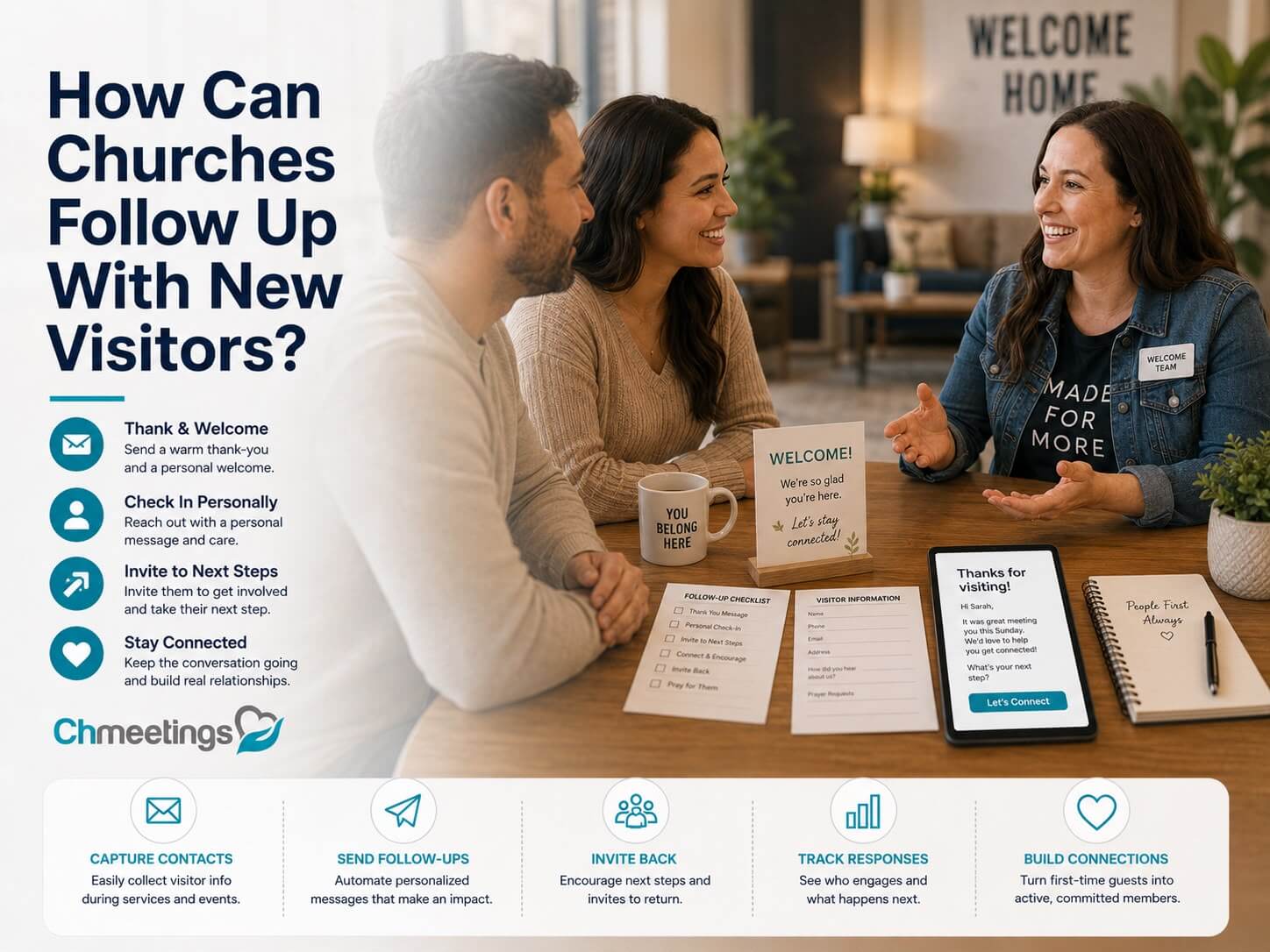
A structured follow-up sequence for first-time visitors typically looks like this:
- Within 24 hours: Text message or handwritten note acknowledging the visit
- Within 48 hours: Personal phone call from a lay leader or pastor
- Within one week: Welcome email with a single clear next step
- Week two: Invitation to a specific event or small group
- Week four: Final check-in if no response received, then transfer to general community outreach
The sequence should feel like a series of genuine invitations, not a sales funnel. Each contact should provide value and one clear next step rather than multiple asks.
Multi-Channel Communication
Text messages have a 98 percent open rate, making them one of the most effective follow-up tools available to churches, according to Text In Church. Email allows for richer content and is more appropriate for follow-ups that include links or detailed information. Phone calls create relational warmth that neither text nor email can replicate. A well-designed follow-up sequence uses all three for different purposes rather than relying on any single channel.
| Method | Open Rate | Best Use | Optimal Timing |
|---|---|---|---|
| Text message | 98% | Immediate personal contact | Within 24 hours |
| Handwritten note | High perceived warmth | Pastoral touch, first impression | Within 48 hours |
| Phone call | High conversion | Relational warmth, personal invitation | Within 48 hours |
| 20-30% average | Information, links, next steps | Within 72 hours | |
| In-person event | Highest retention impact | Deep integration | Within 2 weeks |
Collecting Visitor Feedback
A brief feedback mechanism at the 30-day mark, whether a simple digital survey or an informal coffee conversation, provides two kinds of value: it tells the church what is working and what is not in the visitor experience, and it signals to the visitor that the church is genuinely interested in their perspective rather than just their attendance.
Questions worth asking: What made you decide to visit? What made you feel most welcomed? What would have helped you feel more connected sooner? What almost prevented you from coming back?
Leveraging Technology for Better Engagement
Choosing the Right Software
Church management software transforms visitor follow-up from a memory-dependent, person-dependent process into a systematic one. When a visitor’s contact information is captured and enters a follow-up workflow automatically, the quality and consistency of follow-up no longer depends on whether the right volunteer happened to be working that Sunday.
The key features to look for in follow-up technology are automated task creation when a new visitor record is entered, multi-channel communication capability from a single platform, attendance tracking that connects visitor records to return visits, and integration with small group and event management so invitations can be personalized based on expressed interests.
ChMeetings integrates visitor tracking, follow-up communication, attendance records, and group management in one platform, which means the person doing follow-up has the full context of every interaction rather than working from a disconnected spreadsheet. Try ChMeetings Today to see how integrated visitor management changes the consistency and quality of your follow-up process.
Utilizing QR Codes Effectively
A QR code placed prominently at the entrance, in the bulletin, and on the screen during announcements allows first-time visitors to self-register with their phones, dramatically reducing the friction of information collection compared to paper connection cards. The QR code should link to a mobile-optimized form that asks for name, email, phone, and one or two preference questions, nothing more.
The data goes directly into the church management system, triggering the follow-up sequence automatically. This means follow-up begins before the visitor has left the parking lot.
Automation in Follow-Up
Automation in church follow-up is valuable precisely because it ensures consistency: every visitor receives the same quality of initial contact regardless of how busy the staff week was. The automation should handle the timing and delivery of contacts while the personal quality of those contacts, the handwritten note, the genuine phone conversation, the specific invitation to the group that fits this person, remains human.
In-Person Follow-Up Strategies: Building Relationships
Hosting Welcome Events
Organizing a monthly or quarterly welcome event, a lunch with the pastor, a new member dinner, a church tour with Q&A, produces retention outcomes that digital follow-up alone cannot match. Organizing events such as welcome lunches increases return visits by over 20 percent. The investment in a simple shared meal with senior leadership communicates value in a way that cannot be replicated by email.
The welcome event should have a clear purpose, a relaxed format, and a single intended outcome: that every person who attends leaves with at least one personal connection to the church and one clear next step for deeper involvement.
Congregational Outreach
The most credible follow-up a first-time visitor can receive is not from a staff member but from a peer: a congregation member who sits in the same section, is in a similar life stage, or shares an obvious common interest. Training regular attendees to notice visitors, introduce themselves, and invite them to a specific small group or event multiplies the follow-up capacity of any church beyond what a staff team alone can provide.
This is not about assigning people to be “visitor stalkers.” It is about cultivating a congregation-wide culture of genuine welcome where noticing and connecting with new faces is understood as everyone’s responsibility, not just the greeters’.
Creating Small Group Opportunities
The bridge between a first-time visit and genuine membership is almost always a smaller community: a small group, a ministry team, a shared interest gathering. The follow-up sequence should include a specific invitation to a specific group rather than a general suggestion to “check out our small groups.”
“There is a group for young families that meets on Tuesday evenings near where you live. Would you be interested in visiting?” is an invitation. “We have lots of small groups, check the website” is not.
Evaluating the Effectiveness of Your Follow-Up Plan
Key Metrics for Success
The metrics worth tracking are: the percentage of first-time visitors who receive follow-up within 48 hours, the percentage of followed-up visitors who return for a second visit, the percentage of second-time visitors who connect to a small group within 30 days, and the percentage of small group connections that result in formal membership or sustained engagement.
Each of these metrics reveals a different potential weakness in the follow-up sequence. A low rate of 48-hour follow-up is a process problem. A high follow-up rate but low second-visit rate suggests the follow-up quality or message needs adjustment. A high second-visit rate but low small group connection rate points to a gap in the integration pathway.
Reporting Techniques
A monthly review of visitor follow-up metrics in a leadership meeting, taking no more than ten minutes, is sufficient to identify trends and flag individuals who have slipped through the cracks. The review should answer three questions: How many first-time visitors did we receive this month? How many received follow-up within 48 hours? How many returned?
Improving Through Visitor Feedback
The churches that improve their follow-up most consistently are those that ask visitors directly what the experience was like. Not in a formal survey that feels like a compliance exercise, but in genuine conversation during a welcome event or a follow-up call. The feedback gathered this way produces the specific, actionable intelligence that general metrics cannot provide.
Frequently Asked Questions
What are effective follow-up strategies for first-time church visitors?
The most effective strategies combine timeliness, personalization, and a clear next step. Follow up within 48 hours using a personal phone call or text. Send a handwritten note from the pastor within the same window. Within the first week, send an email with a single clear invitation to a specific next step: an event, a small group, or a welcome gathering. Unique approaches like pledging a small donation to a charity in the visitor’s name can make the follow-up genuinely memorable.
How soon should churches follow up with new visitors?
Within 48 hours. That is the window within which follow-up has the highest impact on whether a visitor returns. The longer the gap between the visit and the follow-up contact, the lower the probability of return. A follow-up made the same day is even more effective but requires a same-day information capture process that many churches have not yet implemented.
What methods can churches use to follow up?
Text messages for immediate, personal contact. Phone calls for relational warmth and personal invitation. Handwritten notes for pastoral touch and lasting impression. Email for information-rich communication that includes links and event details. In-person welcome events for the deepest level of integration. The most effective follow-up plans use multiple methods in sequence rather than relying on any single channel.
How can technology assist in church follow-up?
Church management software automates the timing and tracking of follow-up contacts, ensures no visitor falls through the cracks due to a busy week, and connects visitor records to attendance history and group membership so follow-up can be personalized and contextualized. QR code registration captures visitor information immediately and triggers follow-up sequences automatically. Text message platforms with 98 percent open rates ensure initial contacts are actually seen.
What metrics should churches track for follow-up effectiveness?
Track the percentage of visitors who receive follow-up within 48 hours, the percentage who return for a second visit, the percentage who connect to a small group within 30 days, and the overall visitor-to-member conversion rate. Each metric reveals a different potential gap in the follow-up process and points toward specific improvements.
Are personal gifts effective in church visitor follow-up?
Yes, when the gift is thoughtful rather than generic. A welcome pack with church-branded merchandise is less impactful than a pledge to donate to a charity in the visitor’s name or a personally selected book that matches an interest the visitor expressed. The goal of a follow-up gift is not to give something away; it is to communicate that the church paid enough attention to make something personal.
How can I make follow-up feel less intrusive?
Focus every follow-up contact on providing value rather than requesting something. An invitation to a specific event the person would genuinely enjoy is not intrusive. A request to join, give, or volunteer before the person has decided whether they belong is. Keep the frequency reasonable: two to three contacts in the first two weeks, tapering to one check-in after 30 days if no response has been received.
What is the best way to collect visitor information for follow-up?
A QR code linked to a mobile-optimized form is the least friction option for digital-comfortable visitors. A simple paper connection card with space for name, email, phone, and one preference question works for those who prefer analog. The form or card should ask for the minimum necessary information and make it clear how the information will be used. Asking for too much information on a first visit reduces completion rates significantly.
Conclusion
How churches follow up with new visitors is one of the clearest expressions of whether a congregation actually values the people it invites in or just the idea of them. The gap between the 24 percent of visitors who currently receive follow-up and the churches that convert 25 percent of visitors into members is not a gap in intention. It is a gap in system.
Build the system. Train the people. Track the metrics. And follow up within 48 hours, every time, with every person, with something personal enough to feel like it came from a community that genuinely noticed they were there.