

Texas is not just the fastest-growing state in America. Religiously, it is also one with the largest number of churches in the USA, with over 27,848 churches. But does that mean that Texas no longer needs new churches?
Not really.
Despite having one of the largest congregations in America, there are still tons of communities in Texas that lack a church they can call their own. That’s probably why you’ve considered starting one in this state.
In this article, we’ll show you how to start a church in Texas, and how the same core steps can apply wherever you plan to launch your ministry.
Starting a church is one of the most significant decisions a person of faith can make. It requires spiritual clarity, practical preparation, legal knowledge, and a genuine commitment to serving a community. According to 501c3.org, there are an estimated 156 million unchurched people in the United States, and nearly half of them are open to being invited to a church. That represents an enormous opportunity for founders who are ready to answer the call faithfully and build something that lasts.
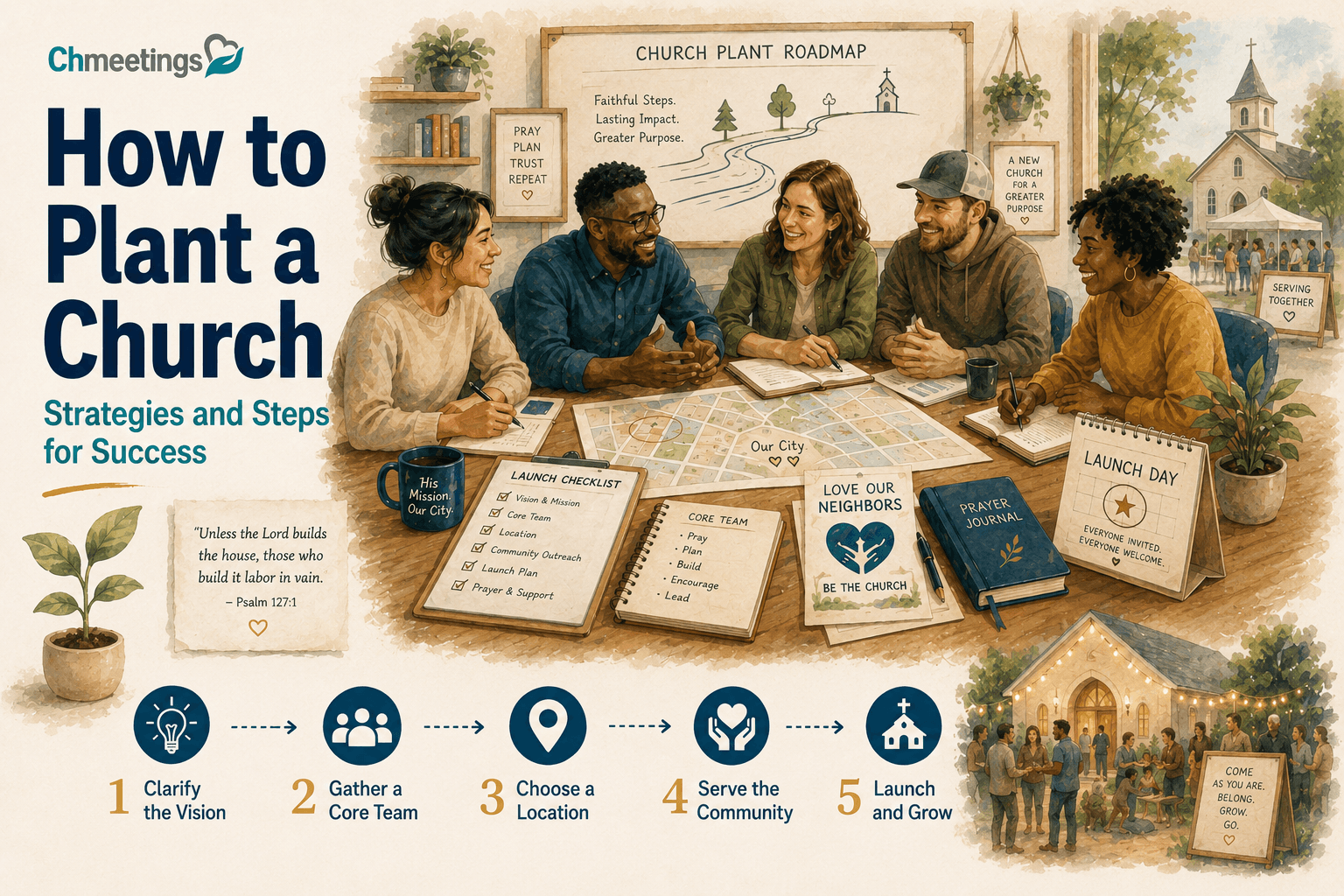
This guide walks you through every essential step of how to start a church, from understanding your calling to launching your doors, staying legally compliant, and growing a healthy congregation over time.
“Successful churches identify and address community needs right from the start.” — Greg McRay, EA
- Understanding Your Calling: The Foundation of Your Church
- Legal Steps to How to Start a Church
- Establishing Governance: Structure of Your Church Leadership
- Funding Your New Church: Financial Strategies
- Creating Your Church's Mission Statement and Values
- Launching Your Church: Practical First Steps
- Ongoing Compliance and Growth Strategies
- Frequently Asked Questions
- Conclusion
- Understanding Your Calling: The Foundation of Your Church
- Legal Steps to How to Start a Church
- Establishing Governance: Structure of Your Church Leadership
- Funding Your New Church: Financial Strategies
- Creating Your Church's Mission Statement and Values
- Launching Your Church: Practical First Steps
- Ongoing Compliance and Growth Strategies
- Frequently Asked Questions
- Conclusion
Understanding Your Calling: The Foundation of Your Church
Before filing a single document or booking a venue, the most important question to answer is whether you are genuinely called to plant a church. Many founders ask: what does it take to start a church? The honest answer begins not with logistics but with conviction. A church built on unclear or borrowed vision rarely survives its first difficult season.
Articulating Your Vision
Your vision is the answer to the question: why does this church need to exist? It should be specific enough to guide decisions and compelling enough to attract others who share it. A vision statement is not a mission statement. It is a picture of the future your church is working toward.
To articulate your vision clearly, spend dedicated time in prayer and reflection. Write down what you believe God is calling you to build, who it is for, and what will be different about this community compared to what already exists in your area. Share it with a trusted mentor or pastor and refine it through honest conversation.
“Every church needs to start with a clear vision and a commitment to serve the community.” — Steve King, Legal Advisor for Nonprofits
Finding Your Community’s Need
A calling without a community is incomplete. Before launching, research the area where you intend to plant. What are the demographics? What spiritual needs are unmet? Are there underserved populations, language communities, or generational groups that existing churches are not reaching effectively?
Talk to people. Walk the neighborhood. Attend community meetings. The founder who understands their community’s real needs before launch is far better positioned than one who assumes what people want. Many successful church planters report that this listening phase was the most formative part of their preparation.
Establishing Spiritual Goals
Spiritual goals are distinct from attendance targets or budget projections. They answer questions like: what kind of disciples does this church intend to form? What does a spiritually healthy member of this congregation look like in five years? How will the church measure growth in ways that go beyond numbers?
Establishing these goals early gives your leadership team a shared framework for decision-making and a way to evaluate whether the church is actually fulfilling its calling rather than simply growing in size.
Legal Steps to How to Start a Church
One of the most common questions founders ask is: how do you legally start a church? The legal process is more straightforward than many expect, but it requires careful attention to detail. Skipping or delaying these steps can create significant problems later, particularly around tax status, fundraising, and financial accountability.
Choosing a Name for Your Church
Your church name is a legal identifier as well as a ministry brand. Before settling on a name, search your state’s business registry to confirm it is not already in use. Also check for trademark conflicts and domain name availability if you plan to establish a web presence, which virtually every church today should.
Choose a name that reflects your vision and is easy for your community to remember, spell, and share. Avoid names so generic they fail to distinguish your church or so complex they create confusion.
Filing Articles of Incorporation
Filing Articles of Incorporation with your state formally establishes your church as a legal entity. This document typically includes the church’s name, address, purpose, and the names of its initial directors or trustees.
Most states process Articles of Incorporation within a few weeks and charge a modest filing fee. Once filed, your church exists as a recognized nonprofit corporation under state law. For detailed guidance on the legal considerations for starting a church, consulting a nonprofit attorney before filing is strongly recommended.
Drafting Your Church Bylaws
Bylaws are the internal governing document of your church. They define how leadership is structured, how decisions are made, how members join and leave, how finances are managed, and how the bylaws themselves can be amended.
Strong bylaws prevent future conflicts by establishing clear processes before disagreements arise. They should be drafted with care, reviewed by a legal professional familiar with nonprofit and religious organization law, and approved by your founding leadership team before your church holds its first public service.
Establishing Governance: Structure of Your Church Leadership
How a church is governed shapes almost every aspect of its culture and decision-making. Understanding the different governance models before you launch allows you to choose the structure that best fits your theology, your community, and your leadership style.
Common Governance Models
The three most common church governance models each carry distinct advantages and trade-offs:
| Governance Model | Description | Best For | Key Consideration |
|---|---|---|---|
| Senior Pastor Led | Final authority rests with the senior pastor, often with an advisory board | Visionary founders with strong leadership gifts | Requires high trust in the pastor; succession planning is critical |
| Elder Led | A team of elders shares authority and accountability | Churches emphasizing shared leadership and theological depth | Decision-making can be slower; requires strong relational trust among elders |
| Congregational | Major decisions are made by a vote of the full membership | Communities that value broad participation and transparency | Can slow urgent decisions; requires a well-informed, engaged membership |
According to legal advisors who work with church founders, each denomination carries unique requirements for church formation that can affect which governance model is legally and theologically appropriate for your context.
Defining Roles and Responsibilities
Beyond the governance model, every church needs clearly defined roles for its key leaders. At minimum, document the responsibilities of the senior pastor, any associate pastors, elders or deacons, board members, and ministry team leaders.
Written role descriptions protect both the organization and the individuals in those roles. They set clear expectations, reduce the risk of scope creep, and provide a foundation for healthy accountability.
Creating Leadership Policies
Leadership policies cover areas such as how leaders are appointed and removed, what qualifications are required for each role, how conflicts of interest are handled, and what ethical standards leaders are held to.
These policies should be included in or appended to your bylaws. Churches that operate without them frequently face governance crises when leadership transitions or interpersonal conflicts arise without any agreed framework for resolution.
Funding Your New Church: Financial Strategies
How to start a church with no money, or very little, is one of the most searched questions among church planters. The honest answer is that it is possible, but it requires creative thinking, patient relationship-building, and disciplined financial management from the very beginning.
According to some estimates, church planters spend an average of around three years raising funds before launching formally. While not every plant follows this timeline, the principle holds: sustainable funding rarely materializes overnight.
Community Fundraising Ideas
Effective community fundraising for a new church goes beyond passing a plate. Consider:
- Hosting vision dinners where potential supporters hear your calling and ask questions directly
- Partnering with an established church that can provide seed funding and accountability
- Launching a crowdfunding campaign with a clear, compelling story about the community you are serving
- Organizing fundraising events that simultaneously introduce your church to the broader community
The goal is not just to raise money but to build a network of people who are invested in your success before your doors open.
Developing a Sustainable Budget
A sustainable budget for a new church typically covers personnel, venue, ministry materials, technology, outreach, and a reserve fund. New church planters frequently underestimate venue and technology costs and overestimate early giving.
Build your budget conservatively. Project giving at 70 to 80 percent of what you expect in your first year. Identify which expenses are fixed and which are variable so you can adjust quickly if circumstances change.
Grants and Sponsorships
Denominational bodies, mission organizations, and some faith-based foundations offer grants to church planters who meet their criteria. Research what is available within your denominational network and beyond it. Many grants require a formal application, a ministry plan, and evidence of community need, all of which your planning process should already be generating.
Sponsorships from local businesses or community organizations are less common for churches but not unheard of, particularly for community service events or outreach programming that benefits the wider public.
Once your church is up and running, managing giving records, budgets, and financial reporting becomes significantly easier with purpose-built tools. Try ChMeetings Today to keep your church’s financial administration organized from day one.
Creating Your Church’s Mission Statement and Values
A mission statement answers a different question than a vision statement. Where vision asks where you are going, mission asks why you exist and how you fulfill that purpose day to day. Every church needs both, and both should be formed with care.
Crafting Effective Mission Statements
An effective church mission statement is short enough to memorize, specific enough to guide decisions, and broad enough to encompass the full scope of the church’s ministry. It should answer three questions: who are we serving, what are we doing, and why does it matter?
Avoid mission statements that could apply to any organization. “Loving God and loving people” is a biblical value, not a mission statement. Aim for something that reflects your particular community, context, and calling.
Key Values That Reflect Your Church
Core values are the non-negotiable principles that shape how your church operates. They are not aspirational qualities but actual commitments that your leadership is willing to be held accountable to.
Common church values include hospitality, biblical faithfulness, community, generosity, and justice. The most effective values statements name three to five values and briefly explain what each one means in practice for this specific church.
Engagement and Consensus Building
Involving your founding congregation in the mission and values formation process produces two important outcomes: better content, because more perspectives are represented, and deeper ownership, because people support what they help create.
Facilitated discussions, surveys, and small group conversations can all feed into the drafting process. The leadership team makes the final call, but the input from the broader founding community shapes the result in meaningful ways.
Launching Your Church: Practical First Steps
The launch phase is where preparation becomes reality. A well-executed launch creates momentum that can carry a new church through its first difficult months. A poorly executed one can undermine confidence before the church has had a chance to find its footing.
“Church is not a meeting; it is a way of life.” — Wolfgang Simson, Church Planter
Many founders also ask: do you need a building to start a church? The answer is no. Many thriving churches began in homes, school auditoriums, community centers, or rented storefronts. The building is a tool, not a prerequisite. Focus first on building the community. The space will follow.
Steps for a Successful Launch Day
A successful launch day is the result of months of preparation compressed into a single morning or evening. Key elements include:
- A clear, compelling first service that reflects your vision and values authentically
- A welcoming environment that makes first-time visitors feel genuinely seen and included
- A simple, clear next step for anyone who wants to get more involved
- A follow-up plan for every person who attends, including a personal contact within 48 hours
Rehearse every element. Brief every volunteer. Anticipate what could go wrong and prepare for it. The first impression your church makes on guests is the hardest one to change.
Marketing Your Church Effectively
Marketing a new church is primarily about helping the right people find you. Digital tools are essential. Establish a simple, clear website before your launch. Create social media profiles on the platforms your target community actually uses. Post consistently in the weeks leading up to launch with content that tells your story and invites people to attend.
Word of mouth remains the most effective marketing channel for new churches. Equip your founding members with clear, simple language to explain who your church is and who it is for, and encourage them to invite people from their existing networks personally.
Building Community Partnerships
Community partnerships establish your church as a contributor to the neighborhood rather than simply a new institution asking for attention. Identify local organizations, schools, nonprofits, or civic groups whose work aligns with your values and explore how you can serve alongside them before and after your launch.
Partnerships built before launch day generate goodwill, expand your network, and often bring new people through your doors who would never have found you through advertising alone.
Ongoing Compliance and Growth Strategies
Starting a church is a milestone. Sustaining one requires ongoing attention to both legal compliance and community health. Many church plants that launch successfully struggle in years two and three when the initial energy fades and structural weaknesses become visible.
Sustaining Compliance with State and Federal Laws
Maintaining your church’s 501(c)(3) tax-exempt status requires annual filings, financial transparency, and adherence to the restrictions that govern tax-exempt religious organizations. The IRS definition of a church outlines the criteria your organization must continue to meet to retain its status.
Key ongoing compliance requirements include filing Form 990 or the appropriate variant annually, maintaining accurate records of all financial transactions, ensuring that no part of the church’s net earnings benefits private individuals, and avoiding prohibited political activity.
Obtaining and maintaining an EIN is foundational to all of this. As the IRS notes, an Employer Identification Number is crucial for legal church operation, covering everything from opening a bank account to filing tax documents to hiring staff.
Health Checks for Your Church Community
A growing church is not automatically a healthy church. Build regular health checks into your leadership rhythm. These might include annual surveys of congregational engagement and satisfaction, regular pastoral conversations with key leaders about the culture and climate of the church, and honest reviews of whether the church’s programs are actually producing the spiritual outcomes your mission statement promises.
According to some reports, over 70 percent of successful church plants cite community engagement as a key strategy for sustained growth. Churches that remain deeply embedded in their neighborhoods, serving real needs and building genuine relationships, tend to retain members and attract new ones far more effectively than those that focus primarily on internal programming.
Growth Strategies and Metrics to Watch
Growth in a healthy church is measured in more dimensions than Sunday attendance. Metrics worth tracking include:
- Weekly attendance and attendance trends over rolling 12-month periods
- First-time visitor return rate, ideally tracked over a 6-week window
- Small group or community group participation as a percentage of total attendance
- Giving per household as an indicator of congregational investment and ownership
- Volunteer engagement rates across ministry teams
- Community outreach participation and impact
Digital tools, social media reach, and online giving platforms are increasingly important growth levers for new churches. A church with a strong digital presence can serve and stay connected with members between Sundays and reach people in its community who may not yet be ready to attend in person.
Frequently Asked Questions
What are the first steps in starting a church?
The first steps are understanding your personal calling, defining a clear vision for the community you intend to serve, and assembling a small founding team that shares that vision. Once those foundations are in place, begin the legal registration process: choose a name, file Articles of Incorporation with your state, draft bylaws, obtain an EIN, and apply for 501(c)(3) tax-exempt status. Do not skip the legal steps or delay them. Getting them right early protects everything you build afterward.
What legal requirements must I meet to start a church?
You must register as a nonprofit organization with your state, obtain an Employer Identification Number from the IRS, and apply for 501(c)(3) tax-exempt status if you want donations to be tax-deductible for your members. You also need to draft and adopt bylaws, and depending on your state, you may need additional licenses or registrations. For a thorough breakdown of what is involved, reviewing the 5 steps to legally start a church from legal specialists in this field is a practical starting point.
How can I fund my new church?
Funding typically comes from a combination of tithes and offerings from founding members, vision dinners with potential supporters, denominational or mission organization grants, and community fundraising events. Some planters also receive sponsorship from a sending church. The key is to develop a realistic, conservative budget early, build relationships with supporters before you launch, and manage finances transparently from day one. Many successful church plants also explore the model outlined in guides on starting churches with minimal financial backing, which can reduce overhead significantly in the early stages.
What is a church mission statement?
A church mission statement articulates why the church exists and what it does to fulfill that purpose day to day. It is distinct from a vision statement, which describes the future the church is working toward. A good mission statement is short, specific, and memorable. It guides leadership decisions, helps new members understand what the church stands for, and provides a benchmark against which the church can evaluate its own faithfulness to its calling.
How do I legally incorporate my church?
Incorporating your church involves filing Articles of Incorporation with your state’s business or nonprofit registration office, adopting bylaws at a founding leadership meeting, and obtaining an EIN from the IRS. Once incorporated, you can open a bank account in the church’s name, enter into contracts, and apply for 501(c)(3) tax-exempt status. The process varies slightly by state, so reviewing your state’s specific requirements for nonprofit religious organizations is an important early step.
What strategies can help grow my church?
The most consistently effective growth strategies for new churches are deep community engagement, strong personal invitation cultures among existing members, and digital presence that makes the church easy to find and follow online. Regular health checks on congregational culture, small group participation rates, and first-time visitor retention are all useful metrics to track. Growth that is sustainable over years tends to come from churches that are genuinely serving their communities rather than primarily focused on growing their own attendance numbers.
Do I need to have a building to start a church?
No. Many churches begin in homes, rented community spaces, school auditoriums, or shared facilities with other organizations. Starting without a permanent building reduces overhead significantly and allows founders to invest resources in people and ministry rather than real estate. The priority in the early stage is building a community with a clear identity and a genuine mission. The right space for that community will become clearer, and more financially achievable, once the congregation has established itself.
Conclusion
Learning how to start a church is ultimately learning how to hold two things in balance: spiritual faithfulness and practical wisdom. The calling matters deeply, but so does the legal structure, the governance model, the financial plan, and the launch strategy. Churches that thrive over decades are almost always those that took both seriously from the beginning.
Whether you are asking what it takes to start a church from scratch, how to start a church with no money, or simply where to begin, the answer in every case is the same: start with clarity about your calling, build the right foundation, and take each step with the community you are serving in mind.
For ongoing help managing your congregation, tracking attendance, communicating with members, and organizing your church’s operations as you grow, Try ChMeetings Today.