
When I started working with youth ministry, I quickly learned one thing: teenagers don’t check out because they’ve lost interest in faith. They check out because no one gave them a meaningful reason to stay. The activities we design, the communities we build, and the spaces we create for reflection either draw young people deeper into their faith or push them toward the door.
Over the years, I’ve seen youth activities for spiritual growth do exactly what they’re designed to do, but only when they’re intentional, inclusive, and grounded in real community. This guide covers the full picture, from interactive workshops to mentorship programs to creative worship, so you can build a ministry that actually moves young people forward.
- Understanding Spiritual Growth in Youth
- Interactive Workshops for Youth Engagement
- Service Projects That Make a Difference
- Spiritual Retreats: A Pathway to Deeper Connections
- Use of Technology in Spiritual Practices
- Creative Worship Ideas for Youth Groups
- Mentorship Programs for Spiritual Growth
- Building Community Through Group Activities
- Evaluating Spiritual Growth Activities
-
Frequently Asked Questions
- What are some effective youth activities for spiritual growth?
- How can community service impact spiritual growth?
- What role do retreats play in spiritual development?
- How can technology support spiritual activities?
- What are some creative worship ideas?
- How can mentorship help youth in their spiritual journey?
- What types of group activities help build community?
- Understanding Spiritual Growth in Youth
- Interactive Workshops for Youth Engagement
- Service Projects That Make a Difference
- Spiritual Retreats: A Pathway to Deeper Connections
- Use of Technology in Spiritual Practices
- Creative Worship Ideas for Youth Groups
- Mentorship Programs for Spiritual Growth
- Building Community Through Group Activities
- Evaluating Spiritual Growth Activities
-
Frequently Asked Questions
- What are some effective youth activities for spiritual growth?
- How can community service impact spiritual growth?
- What role do retreats play in spiritual development?
- How can technology support spiritual activities?
- What are some creative worship ideas?
- How can mentorship help youth in their spiritual journey?
- What types of group activities help build community?
Understanding Spiritual Growth in Youth
The Role of Spirituality in Development
Adolescence is one of the most identity-defining seasons of life. Young people are asking foundational questions about who they are, what they believe, and where they belong. Spirituality gives those questions a framework. It connects personal experience to something larger, offers moral grounding when pressure builds, and provides a community that holds teens accountable with grace.
From what I’ve observed across years of youth ministry, the teens who develop a strong spiritual foundation during these years carry it into adulthood in visible ways. They tend to navigate difficult decisions with more intention and lean on community rather than isolating when things get hard.
Benefits of Early Faith Engagement
Research consistently points to the value of early spiritual engagement. According to data referenced by youth ministry organizations, active participation in church youth programs can significantly impact spiritual formation during the formative years. Teens who engage in faith-based community are more likely to develop empathy, practice service, and maintain a sense of purpose through difficult transitions like moving schools, family changes, and cultural pressure.
Research suggests that 81% of youth express a desire for spiritual growth opportunities with their peers. That’s not a small number. It tells me that the desire is already there. Our job is to meet it with something worth showing up for.
Creating a Supportive Environment
The environment matters as much as the activity itself. I’ve watched excellent programming fall flat because the space felt cold or unwelcoming. Creating a supportive environment means physical warmth, yes, but more importantly it means psychological safety. Youth need to know they can ask honest questions without judgment, share doubts without being corrected before they’re heard, and show up imperfectly without losing their place in the group.
This starts with leadership that models vulnerability and doesn’t confuse certainty with spiritual maturity.
Interactive Workshops for Youth Engagement
Self-Discovery Through Creative Expression
Workshops built around themes like personal identity, values, and belief give teens permission to think out loud. I’ve facilitated sessions where young people painted what faith meant to them before they could put it into words, and the conversations that followed were some of the richest I’ve experienced in ministry.
Creative expression, whether through music, visual art, writing, or movement, bypasses the self-consciousness teens often bring to traditional group settings. When a student is holding a paintbrush, they’re less focused on saying the right thing and more focused on expressing something true.
“Workshops provide a gateway for youth to explore their beliefs and values in a safe space.” — Peter J. Wu, Youth Workshop Coordinator
Step-by-step approach for a self-discovery workshop:
- Open with a low-pressure prompt, such as “draw or write one word that describes where you are spiritually right now”
- Allow 10 to 15 minutes of quiet individual work
- Invite voluntary sharing with no obligation to explain
- Facilitate a guided group discussion around themes that emerge
- Close with a short prayer or reflection tied to what surfaced
Storytelling Techniques for Faith-Based Learning
Story is the oldest spiritual teaching tool there is. Looking at Bible characters who navigated fear, failure, and doubt gives youth concrete figures to relate to. When a teenager hears that Moses argued with God, or that Peter denied Jesus and was still restored, it changes how they understand their own faith struggles.
I encourage youth leaders to build workshops around narrative. Ask teens to share a moment when they felt God close or when they felt distant. Then pair it with a biblical story that mirrors that tension. The connection between personal story and scripture is what makes faith feel real rather than theoretical.
Collaborative Faith Engagement Activities
Collaboration deepens investment. When young people create something together, whether a mural, a worship set, or a short film about their community, they build shared identity around faith. I’ve seen collaborative projects become reference points teens return to for years. “Remember when we made that video” becomes a thread of belonging that keeps them connected.
Service Projects That Make a Difference
Organizing Community Clean-Up Events
Service projects are one of the most effective youth activities for spiritual growth because they move faith from idea into action. A community clean-up event is accessible, scalable, and visible. It also generates natural conversation about why we serve, what it means to steward the world we’ve been given, and how small acts connect to something larger.
To organize a community clean-up:
- Choose a specific location, such as a local park, school grounds, or neighborhood block
- Partner with a local organization or city office for coordination and supplies
- Brief youth on the spiritual significance of service beforehand
- Assign teams with a mix of ages and personalities
- Schedule a 20 to 30 minute debrief immediately after
- Document the day with photos to share with the congregation
According to one survey, 67% of youth felt more spiritually connected after participating in community service. That tracks with what I’ve seen firsthand.
Volunteering at Local Shelters
Shelter volunteering introduces teens to realities outside their immediate experience. Serving meals, sorting donations, or simply being present with people who are marginalized builds empathy in ways that no lesson plan can replicate. It also raises honest theological questions worth sitting with: Why does poverty exist? What does justice require? How does our faith respond?
I always prepare youth before shelter visits with context and clear behavioral expectations, and I always debrief afterward. The debrief is where the spiritual growth actually happens.
Reflection Practices Post-Service
Service without reflection is just activity. Structured reflection is what turns a community service day into a spiritual formation experience. After any service project, I use a simple three-question format:
- What did you notice?
- What surprised you?
- What do you want to do differently because of today?
These questions are simple enough to lower the barrier to participation and rich enough to surface genuine insight.
Spiritual Retreats: A Pathway to Deeper Connections
How to Plan an Effective Retreat
A well-planned spiritual retreat gives youth something rare: uninterrupted time to focus on their faith without the usual distractions of school, social media, and family noise. Communities with active youth mentoring show a 35% increase in youth participation in spiritual retreats, which reflects how much relationship drives engagement.
Planning an effective retreat means:
- Setting a clear spiritual theme or question for the weekend
- Balancing structured sessions with free time for rest and conversation
- Preparing leaders with session guides, not just agendas
- Building in solo reflection time alongside group activities
- Creating space for response, whether through journaling, prayer, or symbolic action
Engaging Activities for Spiritual Growth
The best retreat activities hold the tension between individual reflection and community. Small group discussions about faith, worship nights with open mic testimony, creative prayer stations, and even structured silence all create conditions for genuine encounter.
I’ve found that mixing high-energy activities with quiet ones keeps teens engaged over a full weekend without burning anyone out. A morning hike followed by an afternoon journaling session followed by an evening of worship hits different registers and serves different temperaments.
Nature Walks and Reflection
There is something about being outside that opens people up. Nature has a way of quieting internal noise and creating a kind of receptivity that’s hard to manufacture in a classroom. I regularly build nature walks into retreat schedules with a simple reflective prompt for youth to carry with them, such as “look for something that represents where your faith is right now.”
When they return, the objects and observations they bring back generate conversations that go far deeper than most structured discussions.
Use of Technology in Spiritual Practices
Building Online Faith Communities
Technology is not the enemy of spiritual depth. Used intentionally, it extends community beyond Sunday and midweek gatherings. Private groups on messaging platforms allow youth to share prayer requests, celebrate each other’s wins, and stay connected between in-person gatherings.
Research suggests that 78% of youth say they lack opportunities for building meaningful spiritual connections. Online community does not replace in-person community, but it can fill the gaps between gatherings in meaningful ways.
Apps That Encourage Spiritual Reflection
There are a growing number of apps designed for spiritual practice, including daily prayer guides, scripture reading plans, gratitude journals, and meditation tools rooted in faith. I recommend that youth leaders explore these tools together with teens rather than simply prescribing them, because the most effective digital tools are the ones teens actually want to use.
Some questions worth exploring with your group:
- Which apps help you slow down rather than speed up?
- What would a “digital sabbath” look like for you?
- How can you use your phone as a tool for spiritual growth rather than distraction?
Using Social Media for Good
Social media is a significant part of how teens construct identity and community. Youth ministries that ignore it miss an opportunity. Encourage young people to share what their faith community is doing, not to perform spirituality but to bear witness to it. A photo from a service project, a short reflection posted to a story, or a kind comment on a peer’s post are all small acts of digital witness.
The key is helping teens develop discernment about how they use these platforms rather than simply treating them as neutral tools.
Creative Worship Ideas for Youth Groups
Music as a Medium for Worship
Music is the entry point for many young people into genuine worship. I’ve watched teens who seemed disengaged come alive during a worship set, not because the music was professionally produced but because it was real. Youth-led worship is especially powerful. When teenagers plan, lead, and perform worship, the room shifts.
If your youth group has musicians, give them ownership of a worship night. Provide guidance and a theme, but let them shape the set. The investment teens make in something they’ve created pays back in engagement and ownership of their faith community.
Interactive Prayer Sessions
Traditional prayer formats can feel passive for teens who are accustomed to participation. Interactive prayer stations allow individuals to move through different prayer postures, such as confession, thanksgiving, intercession, and listening, at their own pace. Each station can include a prompt, a scripture, and a physical element like writing a prayer on a piece of paper, placing a stone, or lighting a candle.
I’ve seen interactive prayer nights become some of the most spiritually significant evenings a youth group has shared. The physical movement creates engagement, and the variety of formats accommodates different personalities and learning styles.
Multimedia Worship Experiences
Incorporating film clips, spoken word poetry, visual art, and short documentary segments into worship creates a multi-sensory experience that resonates with how teens already engage with the world. A well-chosen three-minute video clip can frame a message more effectively than a lengthy introduction.
The goal is not entertainment. It is resonance. When a teen sees something on a screen that names an experience they’ve had, and then hears it connected to scripture and faith, the integration is powerful.
Mentorship Programs for Spiritual Growth
Creating a Peer Mentoring Program
Peer mentoring, where slightly older teens or young adults walk alongside younger ones, is one of the most effective structures for sustained spiritual growth. Studies suggest that mentorship can increase spiritual engagement by 48% among teens, which aligns with what I’ve seen when programs are well-matched and consistently supported.
A peer mentoring program works best when:
- Mentors receive clear training and a simple framework for their conversations
- Pairs are matched based on shared interests or life experience, not just availability
- Regular check-ins from program leaders keep mentors accountable and supported
- The program has a defined duration with built-in evaluation points
Building Strong Mentor-Mentee Relationships
“Mentorship not only guides youth spiritually but also builds a network of support through community.” — Jordan P. Lee, Youth Mentor
The quality of the relationship is everything. I’ve seen mentoring programs that had excellent structure fail because the pairs had nothing in common and meetings felt forced. Invest time in matching. Create early activities that build rapport before diving into spiritual content. Give pairs shared experiences, like attending a service event together, that create natural conversation.
Strong mentors don’t have all the answers. They ask good questions, show up consistently, and model what it looks like to keep growing.
Evaluating Spiritual Development
Track progress through simple, consistent touchpoints. At the start of a mentoring relationship, establish what the mentee is hoping to grow in. Revisit those hopes at the midpoint and the close of the program cycle. Qualitative reflection, how does the mentee describe their faith now compared to before, is often more revealing than any metric.
“Community engagement is a critical part of spiritual growth for youth, building relationships that last a lifetime.” — Dr. Emily S. Rhodes, PhD, Youth Ministry Expert
This kind of longitudinal reflection builds self-awareness in teens and gives program leaders real data about what’s working.
Building Community Through Group Activities
Group Retreats and Campfires
There is something about a campfire that creates natural community. It gathers people in a circle, slows the pace, and invites story. Group retreats that include campfire nights consistently produce some of the most open and honest conversations I’ve facilitated in youth ministry.
The informal setting removes hierarchy. A student who barely speaks during a Sunday small group will often share something significant around a fire. Build these moments in deliberately, not as fillers between the “real” programming but as programming in their own right.
Sport and Competition as Team-Building
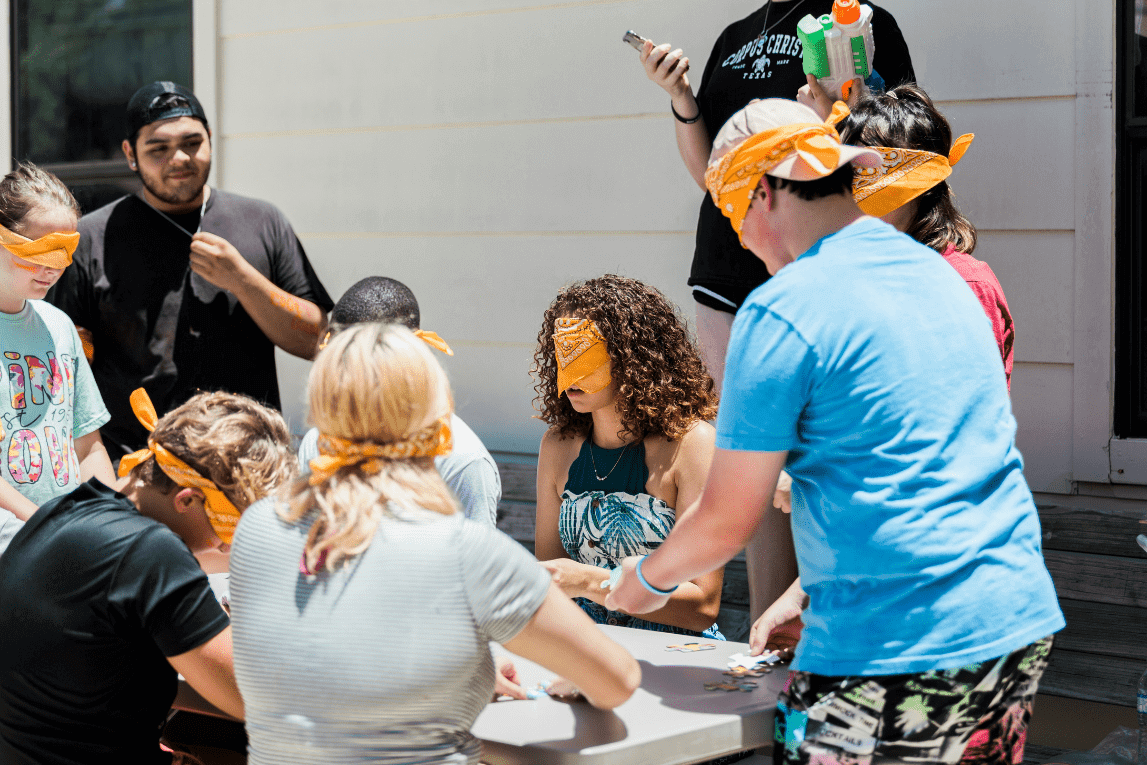
Healthy competition builds community when it’s structured well. Team sports, relay challenges, and group games create shared stakes, celebrate diverse contributions, and build trust through the experience of working toward a common goal.
I use sports and games strategically, not as entertainment at the beginning of a session but as genuine community-building activities that are then connected back to themes of teamwork, humility, and grace. A post-game debrief that draws a connection to faith is more effective than any standalone lesson.
Creating Inclusive Group Dynamics
A youth group that only works for a certain type of teen is leaving people behind. Inclusive group dynamics require intentional design. That means programming that accommodates introverts and extroverts, activities that don’t assume athletic ability or musical skill, and spaces where teens from different backgrounds, including socioeconomic, cultural, and family backgrounds, can find genuine belonging.
I regularly audit our activities by asking: who is this designed for, and who might feel excluded by default? The answer shapes what we change.
If you’re looking for practical tools to manage group rosters, track attendance at youth events, and communicate with participants and parents in one place, Try ChMeetings Today. It’s church management software built to support the operational side of ministry so leaders can focus on the people.
Evaluating Spiritual Growth Activities
Creating Evaluation Metrics
Evaluation is not about quantifying faith. It is about assessing whether your activities are doing what you designed them to do. Useful metrics include attendance trends, participant retention over a program cycle, and qualitative feedback gathered through simple surveys or guided conversations.
I recommend setting three to five clear objectives before any new initiative launches. What do you want participants to know, feel, or do differently as a result? Those objectives become your evaluation criteria.
| Activity Type | Suggested Metric | Collection Method |
|---|---|---|
| Service projects | Participation rate, post-event reflection depth | Attendance log, debrief notes |
| Workshops | Engagement level, repeat attendance | Observation, sign-in sheets |
| Mentorship programs | Mentee-reported spiritual growth | End-of-cycle reflection survey |
| Retreats | Connection quality, openness in group settings | Leader debrief, participant feedback |
| Creative worship | Participation level, voluntary engagement | Observation |
Incorporating Feedback Loops
The most effective feedback loops are short and regular rather than long and infrequent. A five-question anonymous survey after each major event gives you actionable data while it’s still fresh. Ask what worked, what felt flat, and what participants wish had been different.
I also build informal feedback into the rhythm of leadership team meetings. What are youth leaders noticing in one-on-one conversations? What are teens asking for more of? That qualitative intelligence is often more useful than survey data.
Adjusting Activities Based on Feedback
Feedback is only valuable if it changes something. I keep a simple running document of what we’ve tried, what feedback we received, and what we adjusted as a result. That record serves two purposes: it prevents us from repeating mistakes, and it shows teens and parents that their input actually shapes the program.
When a major activity consistently underperforms, I don’t simply repeat it harder. I ask whether the format, the timing, the leadership, or the content needs to change, and I make one specific adjustment at a time so I can see what’s working.
Frequently Asked Questions
What are some effective youth activities for spiritual growth?
Effective youth activities for spiritual growth include interactive workshops built around self-discovery, service projects that ground faith in action, and spiritual retreats that give teens dedicated time for reflection. Peer mentoring programs, creative worship sessions, and structured group discussions about faith are also consistently impactful. The most effective activities combine genuine community with space for personal reflection.
How can community service impact spiritual growth?
Community service moves faith from belief into practice. When teens volunteer at local shelters, organize neighborhood clean-ups, or engage in hands-on giving, they encounter real human need and experience what it means to live out their values. The empathy and perspective that service builds are difficult to develop in any other context. Structured reflection after service is what converts the experience into lasting spiritual growth.
What role do retreats play in spiritual development?
Retreats remove the daily distractions that make it hard for young people to sit with their faith. They create extended time for worship, honest conversation, and personal reflection that a Sunday session simply cannot provide. The combination of community, nature, intentional programming, and rest makes retreats one of the most significant investments a youth ministry can make. Many teens describe retreat weekends as turning points in their spiritual journey.
How can technology support spiritual activities?
Technology supports spiritual growth when it extends community rather than replacing it. Private messaging groups allow teens to share prayer requests between gatherings. Devotional apps support daily reflection habits. Social media, used intentionally, can help youth bear witness to their faith and stay connected to their ministry community. The key is teaching teens to use these tools with discernment rather than defaulting to passive consumption.
What are some creative worship ideas?
Creative worship ideas include youth-led music nights where teens plan and perform the set, interactive prayer stations that allow movement through different prayer postures, and multimedia worship experiences that incorporate film, spoken word, or visual art. The goal is to create worship that invites genuine participation rather than passive attendance. When teens help design the worship experience, their investment in it goes significantly deeper.
How can mentorship help youth in their spiritual journey?
A good mentor offers something no curriculum can: consistent, personal, invested relationship. Mentors provide accountability, ask the questions teens are afraid to raise in a group, and model what a maturing faith actually looks like in daily life. Research suggests mentorship can increase spiritual engagement by 48% among teens, and in my experience that figure reflects a real dynamic. Being known and accompanied by someone slightly further down the same road is one of the most powerful catalysts for spiritual growth.
What types of group activities help build community?
Group retreats, campfire nights, team sports, collaborative service projects, and creative workshops all build genuine community when structured with intention. The most effective activities create shared stakes and shared memory. Teens who build something together, face a challenge together, or serve side by side develop bonds that sustain their engagement with the faith community over time. Inclusive design matters: the best group activities are accessible to a range of personalities, abilities, and backgrounds.
Spiritual growth in youth does not happen by accident. It happens through consistent investment in relationship, intentional programming, and the kind of community that gives teenagers a reason to stay and a space to genuinely become. The activities in this guide are not a checklist. They are a toolkit, and the most effective ministries are the ones that keep adapting them to the specific young people in front of them.
For further reading, explore resources from Youth Ministry Ideas for Spiritual Growth, the Fuller Youth Institute’s guidance on summer activities, and practical programming ideas at Small Church Ministry.