
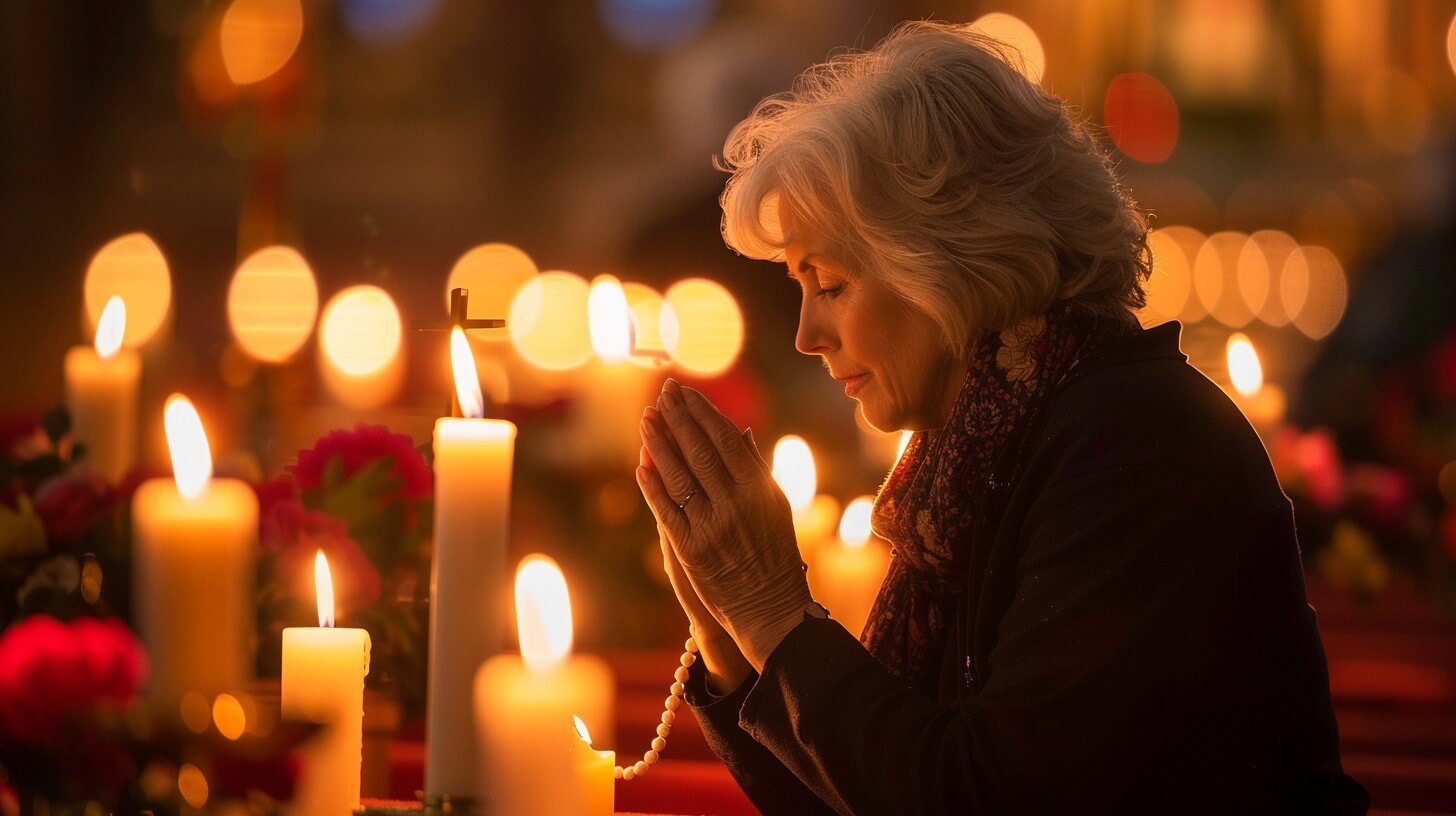

I first heard the Serenity Prayer recited in a church basement, in a room full of people fighting battles I knew nothing about. A man with shaking hands said the words slowly, and the whole room said them back. I have never forgotten the weight in that moment. The Serenity Prayer is short enough to memorize in a minute, yet people spend lifetimes learning to live it. This guide walks through where it came from, what its words actually mean, how it anchors recovery, and how you can carry it into your own daily life.
The Origins of the Serenity Prayer
For a prayer this famous, its history is surprisingly tangled. The familiar lines have traveled through sermons, columns, and church groups for nearly a century, picking up small changes along the way.
Reinhold Niebuhr: The Man Behind the Prayer
The prayer is most widely credited to the American theologian Reinhold Niebuhr, who used it in his sermons in the early 1940s. Niebuhr was a serious thinker wrestling with how people live faithfully in a world they cannot control, and the prayer distills that lifelong question into three short requests. One religious scholar framed Niebuhr’s heart behind it well.
“For Niebuhr, it is God’s grace that determines the final course of history, rather than our own actions, enabling us to accept the reality that the outcomes of our actions are often out of our hands.” – Scott Paeth, Religious Scholar
Conflicting Attributions: Who Really Wrote It?
The exact origin is debated. Some accounts note that Niebuhr first published it in a column in 1951, though he had used it in sermons years earlier, as far back as 1943 by several reports. Over the decades similar phrasings have surfaced, and a few have been wrongly attributed to ancient sources. What scholars largely agree on is that Niebuhr gave us the version the world now knows.
The Prayer’s Rise in Popularity
The prayer spread through community groups before it became a household text. It began circulating through the YWCA and other organizations in the 1930s and 1940s, and was later popularized through Alcoholics Anonymous around 1941. From there its reach exploded. Today the Serenity Prayer is regarded as one of the most popular prayers in the English-speaking world, sometimes mentioned alongside the Lord’s Prayer in cultural reach.
Meaning and Structure of the Serenity Prayer
The genius of the prayer is its economy. In one sentence it names three of the hardest spiritual tasks we face. Here is the version most people know.
“God grant me the serenity to accept the things I cannot change, the courage to change the things I can, and the wisdom to know the difference.” – Reinhold Niebuhr, Theologian
Understanding ‘Serenity’
Serenity here is not passive resignation. It is the hard-won peace of releasing what was never yours to control. I have learned that most of my anxiety lives in the gap between what I want to control and what I actually can. Acceptance is what closes that gap, and it is the first thing the prayer asks for.
The Role of ‘Courage’ in Change
If serenity guards against despair, courage guards against passivity. The prayer does not ask us to accept everything. It asks for the boldness to change what genuinely can be changed. Niebuhr captured this active edge elsewhere too.
“The victorious man in the day of crisis is the man who has the serenity to accept what he cannot help and the courage to change what must be altered.” – Reinhold Niebuhr, Theologian
Finding ‘Wisdom’ in Everyday Life
The final request is the hinge the whole prayer turns on. Wisdom is the discernment to tell acceptance and action apart, and it is the rarest of the three. Most of my own mistakes came from confusing the two, fighting what I should have accepted or accepting what I should have fought. This pursuit of wisdom connects the prayer to a long tradition of wise quotes in Christianity that prize discernment above mere knowledge.
The Serenity Prayer in Recovery Programs
Nowhere has the prayer found a deeper home than in addiction recovery. For millions, it is not a poster on the wall but a daily lifeline.
Alcoholics Anonymous: A Historical Overview
Alcoholics Anonymous adopted the prayer in its early years, and it has been woven into recovery culture ever since. Its appeal in this setting makes sense. Addiction is, at its core, a battle over control, and the prayer speaks directly to surrender and responsibility in the same breath. Other twelve-step and recovery groups soon embraced it too.
Personal Stories: Transformation through the Prayer
I think back to that church basement and the man with the shaking hands. For him, the prayer was a way to start each morning by handing over what he could not carry. Many in recovery describe the same thing, that reciting it reorders their day around acceptance and small, brave choices. The message of surrender and growth resonates so strongly that it has become almost synonymous with the recovery journey itself.
Psychological Insights: The Effectiveness of the Prayer
There is a practical logic underneath the spiritual one. By some accounts, more than sixty percent of individuals in recovery use the prayer as part of their daily routine to maintain focus and discipline. Psychologically, the prayer functions a bit like a grounding exercise, narrowing a flood of overwhelming feelings into three clear, manageable questions. That focus is part of why it endures.
A quick note here, since this is sensitive ground. If you or someone you love is struggling with addiction or mental health, the prayer can be a comfort, but it works best alongside real support from professionals and community, not in place of it.
Variations of the Serenity Prayer
The prayer has never been frozen in a single form. As it spread across faiths and cultures, people adapted it while keeping its core intact.
Catholic Versions and Interpretations
Within Catholic settings, the prayer is often prayed with a fuller second half that extends the petition into trusting God’s will and finding happiness in the next life. The Archdiocese of Saint Paul and Minneapolis offers a reflection on the prayer that situates it within this richer devotional context.
Similar Prayers in Other Traditions
The prayer’s themes are not unique to Christianity. The instinct to accept what cannot be changed echoes in Stoic philosophy, in certain Jewish and Islamic reflections on submission to God’s will, and in mindfulness traditions that teach non-attachment. That overlap is part of why the prayer travels so easily across belief systems.
| Version | Emphasis |
|---|---|
| Standard Niebuhr | Acceptance, courage, wisdom |
| Full Catholic form | Trust in God’s will and eternal hope |
| Recovery adaptation | Daily surrender and discipline |
| Secular mindfulness | Non-attachment and present focus |
Modern Adaptations and Their Meanings
Multiple accounts suggest the wording has shifted slightly over the decades, reflecting changing cultural contexts since the 1940s. Modern versions sometimes soften the explicitly religious language for broader settings, yet the three-part structure of acceptance, courage, and wisdom almost always survives. That durability says something about how well it was built.
Practical Applications of the Serenity Prayer
You do not need to be in recovery to put the prayer to work. I use it as a tool for sorting through ordinary stress, and it has reshaped how I respond to hard days.
Mindfulness and Meditation Techniques
The prayer works beautifully as a breath prayer. I breathe in on “God grant me the serenity,” hold the line in my mind, and let the rest unfold slowly. Used this way it becomes a short meditation that steadies the body and the mind together, pairing naturally with mindfulness practices many people already use.
Applying the Prayer in Daily Challenges
In a tense moment, I run a quick mental sort. What here can I actually change, and what do I need to release? Naming which bucket a worry belongs in often dissolves half its power. The prayer gives me a framework to do that in seconds, whether I am stuck in traffic or facing a real crisis.
Personal Reflection Exercises
For deeper growth, I sometimes journal the prayer in three columns: things I cannot change, things I can, and the wisdom I am asking for to tell them apart. It turns an abstract prayer into a concrete inventory of my life. Praying through it within a group or community deepens it further, much as a shared prayer requests practice helps a congregation carry burdens together rather than alone.
Personal Stories: Transformative Experiences with the Serenity Prayer
Beyond definitions and history, the prayer’s real power shows up in changed lives. These are the kinds of stories that keep it alive.
Recovery Stories
The most dramatic transformations I have witnessed came through recovery. People who once felt powerless describe the prayer as the moment each day when they stop fighting reality and start working with it. The acceptance it asks for is not defeat. For them it is the doorway to genuine change.
Everyday Triumphs: Finding Peace
Not every story is dramatic, and that is the point. A parent praying it through a sleepless night, a caregiver reciting it beside a hospital bed, a worker steadying herself before a hard meeting. These quiet victories are where most of us meet the prayer, and they matter just as much.
Cultural Perspectives on the Prayer
Part of the prayer’s beauty is how universally it lands. People from many faiths and no particular faith have found themselves carried by the same three requests. That shared resonance, across cultures and circumstances, is exactly why it has endured for nearly a century and shows no sign of fading.
Frequently Asked Questions
What is the Serenity Prayer?
The Serenity Prayer is a short, widely loved prayer asking for serenity to accept what cannot be changed, courage to change what can, and wisdom to know the difference. It is used in recovery programs, churches, and personal devotion as a simple guide for facing life’s challenges with peace and purpose.
Who wrote the Serenity Prayer?
It is attributed to the theologian Reinhold Niebuhr, who used it in sermons in the early 1940s and later published it. While the precise date of composition is still debated and similar phrasings have appeared elsewhere, Niebuhr is widely recognized as the author of the version known today.
How is the Serenity Prayer used in addiction recovery?
In recovery, especially within Alcoholics Anonymous, the prayer is recited as a daily reminder to surrender what lies outside one’s control while taking responsibility for what can change. Many people use it each morning to reset their focus and steady themselves for the day ahead.
Are there different versions of the Serenity Prayer?
Yes. There are Catholic forms with a fuller second half, recovery-focused adaptations, and more secular mindfulness versions. Despite the differences in wording and length, nearly every version preserves the core themes of acceptance, courage, and wisdom that make the prayer so enduring.
Can anyone use the Serenity Prayer?
Absolutely. While rooted in Christian theology, the prayer speaks to anyone seeking peace in difficult circumstances. Its themes of acceptance and courage are universal, and people across many faiths, and none, have found real comfort and direction in its words.
How can I apply the Serenity Prayer in my daily life?
Use it as a breath prayer during stress, recite it when facing a tough decision, or journal it by sorting your worries into what you can and cannot change. Returning to its three simple requests regularly turns the prayer from a memorized phrase into a practical habit of peace.
I still hear that basement room when I pray these words. The Serenity Prayer endures because it tells the truth about being human, that we cannot control everything, that some things truly can change, and that the wisdom to tell the two apart is worth asking for every single day. Sit with it, pray it slowly, and let it do its quiet work in you.