Churches are managing more people, more data, and more ways to connect than ever before. In 2026, relying on spreadsheets or scattered tools makes ministry harder than it needs to be. Church membership software has become a core system for keeping people seen, supported, and engaged.
As congregations grow and attendance patterns change, leaders need a clear picture of who’s involved and how. Organized member data helps churches follow up with visitors, care for members, and spot gaps before people quietly slip away. It turns guesswork into clarity.
At the same time, staff and volunteers are stretched thin. Administrative work can easily consume hours that should be spent on ministry. The right membership software reduces that load by automating routine tasks, centralizing information, and giving everyone better tools to work with.
This guide breaks down the best church membership software in 2026, the features that matter most, and how to choose a platform that actually fits your church.
Why church membership software matters in 2026

Growing need for organized member data and engagement
Church data used to be simple. Names, phone numbers, maybe a mailing list. That world is gone. Today, engagement happens across services, small groups, events, online streams, and volunteer teams. When that data lives in different places, leaders lose the full picture.
Membership software brings everything together. Attendance history, group involvement, communication logs, and notes all sit in one profile. You’re not guessing who’s connected or who’s fading out. You can see it.
That visibility changes how ministry happens. Instead of reacting when someone disappears, churches can step in earlier. A missed few weeks triggers a follow up. A new family gets a clear next step. Engagement becomes intentional, not accidental.
Reducing administrative workload for staff and volunteers
Let’s be real. Most churches are understaffed. Admin work often falls on pastors or volunteers who already have full plates. Every manual task adds friction.
Church membership software removes a lot of that friction. Attendance check ins sync automatically. Member updates don’t require emails back and forth. Reports generate without late nights and spreadsheets.
When admin work gets lighter, people don’t burn out as fast. Staff can focus on care and leadership. Volunteers can serve without feeling overwhelmed. The system works quietly in the background instead of becoming another job.
Supporting hybrid and multi channel church communities
Church isn’t confined to a building anymore. Members attend in person, online, or both. Some serve on campus. Others join groups virtually. Tracking that without the right tools is almost impossible.
Modern membership software is built for this reality. It tracks engagement across channels and locations. It doesn’t matter where someone shows up. Their involvement still counts.
That matters because connection leads to discipleship. When churches understand how people are engaging, they can meet them where they are instead of forcing outdated models. In 2026, software isn’t about control. It’s about clarity and care.
What Is Church Membership Software?
Definition and purpose
Church membership software is a digital tool designed to help churches organize, track, and engage the people in their congregation. At its core, it keeps member information in one central place so nothing important gets lost.
But it goes beyond a simple directory. Modern platforms track attendance, group involvement, communication history, and personal notes. The purpose isn’t just record keeping. It’s helping church leaders understand relationships, spot patterns, and respond with care.
When used well, membership software becomes a behind the scenes partner. It supports ministry decisions without getting in the way of them.
How it differs from full church management systems (ChMS)
This is where things often get confusing. Church membership software focuses primarily on people and engagement. Who attended. Who joined a group. Who needs a follow up.
A full church management system usually includes broader tools like online giving, accounting, event planning, scheduling, and sometimes payroll. Membership features are often part of that larger package.
Some churches only need strong membership tools. Others want an all in one system. Knowing the difference helps avoid paying for features you won’t use or missing ones you actually need.
Common use cases for churches of all sizes
Small churches often use membership software to replace spreadsheets and paper lists. It gives them a clean way to track members, visitors, and attendance without complexity.
Mid sized churches rely on it for coordination. Small groups, volunteer teams, and follow ups become manageable instead of chaotic.
Large or multi campus churches use membership software to maintain consistency. Leaders can see engagement across locations and ministries while still empowering local teams.
No matter the size, the goal is the same. Keep people connected and cared for without drowning in admin work.
Key Features to Look For in 2026
Member Database & Profiles
A strong member database is the foundation of any church membership software. If this part is clunky, everything else feels harder than it should.
Centralized member records matter because they eliminate duplication and confusion. One person equals one profile, with everything attached to it. Contact details, involvement, notes from pastors, and communication history all live together.
Custom fields, tags, and notes let churches track what actually matters to them. Maybe that’s baptism status, serving interests, or care needs. Every church is different, and the software should flex with that reality.
Family and household management is another must. Churches don’t serve isolated individuals. They serve families. Being able to group members correctly saves time and prevents awkward communication mistakes.
Member engagement history ties it all together. When leaders can see attendance patterns and involvement at a glance, conversations become more meaningful and follow ups feel personal instead of generic.
Attendance & Check In Tracking
Attendance tracking isn’t about counting heads. It’s about understanding commitment and care.
Worship service and event attendance helps churches spot trends. Who’s consistent. Who’s drifting. Who just started showing up. That insight guides pastoral care and outreach.
Group and class tracking adds another layer. Small groups, classes, and ministries often show deeper engagement than weekend services alone. Tracking participation here reveals where real connection is happening.
Child and volunteer check in systems protect safety and save time. Parents move faster. Volunteers know where they’re needed. Staff aren’t stuck managing paper lists after every service.
Communication Tools
Communication breaks down quickly without the right tools. Membership software should make it easier, not more complicated.
Email and SMS messaging allow churches to reach people where they already are. Urgent updates, reminders, and encouragements don’t get buried.
Group based communication keeps messages relevant. Volunteers get volunteer updates. Small group members hear from their leaders. No one feels spammed.
Automated follow ups are a quiet game changer. First time guests, missed attendance, or completed classes can trigger timely messages without manual work. It feels personal, even when it’s automated.
Member Portal & Self Service Access
Self service access reduces admin load and empowers members.
Allowing members to update their own profiles keeps data accurate. People move, change numbers, and update preferences. Letting them handle it saves staff hours.
Event registration through a portal simplifies sign ups and planning. Leaders know who’s coming. Members know where they’re going.
Giving and contribution history access builds trust. Members can see their records anytime without emailing the office, which lightens admin work and improves transparency.
Reporting & Analytics
Data only helps if it’s easy to understand.
Attendance and engagement reports show what’s working and what isn’t. Leaders can make decisions based on reality, not assumptions.
Member growth trends reveal long term patterns. Are new people sticking around. Are certain ministries growing faster than others. These insights shape strategy.
Custom dashboards and exports let churches focus on the numbers that matter most to them. No digging through cluttered reports or exporting data just to make sense of it.
Integrations & Mobile Access
In 2026, software that doesn’t connect well creates friction.
Integration with online giving platforms keeps financial and member data aligned. No double entry. No mismatched records.
Accounting and finance integrations help larger churches maintain accuracy without complex workarounds.
Mobile apps for staff and members are no longer optional. Leaders need access on the go. Members expect to engage from their phones. If it’s not mobile friendly, it won’t get used.
Best Church Membership Software in 2026
ChMeetings

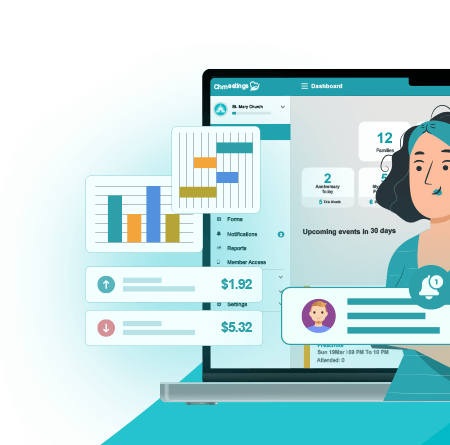
ChMeetings stands out as one of the best church membership software platforms in 2026, especially for churches that want powerful features without unnecessary complexity.
Where ChMeetings really wins is member tracking and engagement visibility. Every interaction matters, and the platform connects attendance, events, groups, and communication directly to each member profile. That makes it easy to see who’s active, who’s new, and who might need a personal follow up. Nothing feels scattered.
It’s also one of the strongest options for attendance and event management. Churches can track worship services, classes, volunteers, and special events without juggling multiple tools. Check ins are smooth, reports are clear, and the data actually helps leaders make decisions instead of just filling dashboards.
Another major advantage is ease of onboarding. The interface feels modern and intuitive, which reduces resistance from staff and volunteers. Churches don’t need weeks of training or outside consultants just to get started. Most teams are up and running quickly.
For churches looking for a balance between depth and simplicity, ChMeetings delivers. It’s especially well suited for churches that want an all in one system focused on people, engagement, and growth, without paying for bloated features they’ll never use.
Planning Center

Planning Center takes a modular approach. Churches can use only the parts they need, such as People for membership, Services for worship planning, and Groups for small group management.
This structure works especially well for growing churches and multi location setups. Teams can scale features over time without switching platforms.
Volunteer scheduling and team coordination are standout areas. If your church relies heavily on rotating volunteers, Planning Center makes organization feel almost effortless once it’s configured.
Faith Teams

Faith Teams focuses on simplicity. It’s built for churches that want clean membership management without unnecessary complexity.
The platform includes member tracking, communication tools, and attendance features that cover the basics well. The learning curve is gentle, which is a big plus for churches with limited tech support.
Faith Teams is often a strong fit for small to mid sized churches that want functionality without feeling overwhelmed by options they won’t use.
Realm

Realm is known for its depth in attendance and engagement tracking. It provides detailed tools for monitoring participation and following up with members over time.
Communication and follow up features are tightly integrated, making it easier to keep conversations connected to real engagement data.
Realm tends to work best for medium to large congregations that need structured workflows and more robust reporting capabilities.
Breeze ChMS

Breeze ChMS has built a strong reputation around ease of use. The dashboard is clean, intuitive, and friendly for both staff and volunteers.
Membership and people management features are simple but effective. Attendance, notes, and communication are easy to access without digging through menus.
Small churches often choose Breeze because it feels manageable. It doesn’t try to do everything, but what it does, it does well.
How to Choose the Right Software for Your Church
Assess Your Church’s Size and Needs
Start with reality, not ambition. A church with 80 members doesn’t need the same system as a multi campus congregation with full time admin staff.
Look at how many members you actively track, how many staff or volunteers will use the software, and how complex your ministries are. Small churches often need clarity and simplicity. Larger churches need structure, permissions, and deeper reporting.
Also think about workflows. Do you run lots of events. Are small groups central to your ministry. Do you rely heavily on volunteers. The right software should support what you already do well, not force you into a new way of operating.
Budget & Pricing Considerations
Pricing models vary more than many churches expect. Some platforms charge per member. Others use flat monthly subscriptions. Both can work, but the long term cost matters more than the starting price.
Check what’s included and what costs extra. Features like SMS messaging, advanced reporting, or additional users sometimes sit behind add ons.
Free trials and demos are essential. A tool that looks affordable on paper can become expensive if it slows your team down or requires outside help to manage.
Ease of Use & Support
Software only works if people actually use it. Ease of use should be a top priority, not an afterthought.
Pay attention to setup and data migration. Moving member data is often the hardest part. Strong support during this phase saves frustration and mistakes.
Training resources matter too. Clear documentation, tutorials, and responsive customer support make a huge difference, especially for churches without technical staff.
Scalability & Long Term Fit
Think beyond this year. The software you choose should grow with your church, not box you in.
Look for platforms that allow feature expansion without forcing a full system switch later. Optional add ons, flexible user permissions, and support for additional locations all matter over time.
The best choice isn’t the most powerful system available. It’s the one that still fits your church three or five years from now.
Church Membership Software Trends in 2026
Church membership software has matured. In 2026, the focus isn’t on adding more features just to check boxes. It’s about making tools feel natural, fast, and genuinely helpful for ministry.
Increased focus on mobile first experiences
Mobile access is no longer optional. Staff check attendance from their phones. Volunteers manage check ins on tablets. Members expect to update profiles or register for events without opening a laptop.
The best platforms are designed mobile first, not just mobile friendly. Screens load fast. Navigation feels intuitive. Important actions take a few taps, not a learning curve.
If a system struggles on mobile, adoption drops quickly, no matter how powerful it is on desktop.
Automation for follow up and engagement
Automation has moved from convenience to necessity.
Churches are using automated workflows to follow up with first time guests, remind members about events, and check in when attendance drops. These messages still feel personal because they’re triggered by real behavior, not mass blasts.
This trend helps churches stay consistent. No one forgets to follow up because the system quietly handles it in the background.
Deeper integrations with digital giving tools
Giving data and membership data are becoming more connected.
In 2026, churches expect their membership software to sync smoothly with online giving platforms. This alignment helps leaders understand generosity patterns alongside engagement, without mixing spreadsheets or systems.
The goal isn’t financial pressure. It’s insight. When giving tools integrate cleanly, admin work drops and reporting becomes clearer.
Improved data security and privacy features
With more data comes more responsibility.
Modern church software is placing heavier emphasis on security, access controls, and privacy compliance. Role based permissions limit who can see sensitive information. Secure cloud infrastructure protects member data from loss or breaches.
Churches are more aware now. Trust matters. Platforms that take data protection seriously stand out, especially as regulations and expectations continue to evolve.
Frequently Asked Questions (FAQ)
What’s the difference between church membership software and church management software?
Church membership software focuses on people and engagement. It tracks member profiles, attendance, group involvement, and communication history so churches can care for individuals more intentionally.
Church management software usually includes broader operational tools like online giving, event management, scheduling, and financial features. Many platforms combine both, but the core difference is focus. Membership software centers on relationships, while management systems cover the full administrative picture.
Is cloud based church software better than on premise solutions?
For most churches, yes.
Cloud based software allows access from anywhere, which matters for remote staff, volunteers, and multi location churches. Updates happen automatically, so churches don’t have to manage servers or manual upgrades.
On premise systems often come with higher upfront costs and ongoing maintenance. Cloud platforms reduce that burden and scale more easily as churches grow.
What features are most important for small churches?
Small churches benefit most from tools that simplify, not overwhelm.
Member profiles keep information organized. Attendance tracking helps leaders notice patterns early. Communication tools make it easy to stay connected without juggling multiple platforms.
Ease of use often matters more than advanced features. A simple system that everyone uses beats a powerful one that no one touches.
Can church membership software support multiple locations?
Many modern platforms support multi campus setups.
They allow churches to track members by location while still maintaining a central database. Permissions can be set so local leaders see what they need without losing overall visibility.
This makes it easier to grow without losing consistency or clarity across campuses.