

Strong youth group lessons do more than fill time on a church calendar. They help teenagers connect Scripture with real life, build honest friendships, ask difficult questions, and grow in faith in a way that feels meaningful.
In my experience, teens rarely disengage because the Bible is irrelevant. They disengage when lessons feel disconnected from their world. They want truth, but they also want space to talk, think, move, create, question, and be heard.
A good youth lesson gives them both: biblical depth and practical interaction.
This guide gives youth leaders a clear framework for planning lessons, interactive activity ideas, technology tips, evaluation methods, and ways to build a stronger youth ministry community around every lesson.
- Importance of Engaging Youth Group Lessons
- Top Interactive Lesson Ideas for Youth Groups
- Integrating Technology Into Lessons
- Crafting Lessons With Purpose
- A Complete Youth Group Lesson Plan Template
- Methods of Evaluation in Youth Group Lessons
- Creating a Community Around Youth Ministry
- Technology, Media, and Visual Learning in Youth Lessons
- Common Mistakes in Youth Group Lessons
- Helping Your Church Organize Youth Ministry Better
-
FAQs About Youth Group Lessons
- What are youth group lessons?
- How can I make youth group lessons engaging?
- What themes should youth group lessons cover?
- How can I evaluate the success of my youth lessons?
- What makes an effective youth ministry leader?
- How do I incorporate technology into youth group lessons?
- What resources can I use for youth group lessons?
- Final Thoughts
- Importance of Engaging Youth Group Lessons
- Top Interactive Lesson Ideas for Youth Groups
- Integrating Technology Into Lessons
- Crafting Lessons With Purpose
- A Complete Youth Group Lesson Plan Template
- Methods of Evaluation in Youth Group Lessons
- Creating a Community Around Youth Ministry
- Technology, Media, and Visual Learning in Youth Lessons
- Common Mistakes in Youth Group Lessons
- Helping Your Church Organize Youth Ministry Better
-
FAQs About Youth Group Lessons
- What are youth group lessons?
- How can I make youth group lessons engaging?
- What themes should youth group lessons cover?
- How can I evaluate the success of my youth lessons?
- What makes an effective youth ministry leader?
- How do I incorporate technology into youth group lessons?
- What resources can I use for youth group lessons?
- Final Thoughts
Importance of Engaging Youth Group Lessons
Youth ministry is not only about keeping teens entertained. It is about helping them form a faith that can survive real pressure: school stress, friendship drama, family challenges, social media comparison, identity questions, temptation, doubt, and fear about the future.
Engaging youth group lessons matter because teenagers often learn best when they participate. A lecture may communicate information, but discussion, activities, reflection, and real-life application help students internalize the message.
The Current State of Youth Ministry
Many youth leaders are working with students who are busy, distracted, and emotionally stretched. Teens may arrive at church after a long school day, sports practice, family stress, or hours online. If the lesson begins with a long talk and no interaction, attention can fade quickly.
This does not mean lessons should become shallow. It means spiritual depth needs thoughtful delivery.
A youth group lesson should answer three questions:
| Question | Why It Matters |
|---|---|
| What does Scripture say? | Keeps the lesson biblically grounded |
| Why does this matter to teens? | Connects truth to real life |
| What can students do with it? | Moves the lesson toward practice |
When these three questions are clear, the lesson has a better chance of reaching both the mind and the heart.
Retention Challenges Among Teens
One of the biggest challenges in youth ministry is helping students stay connected as they grow older. Some teens drift because they never felt known. Others leave because faith felt like rules without relationship. Some heard Bible lessons for years but never learned how to ask honest questions.
Engaging lessons can help prevent that disconnect. They give students a place to belong, not just attend.
A teenager who participates in discussion, serves with a group, shares a prayer request, or sees their questions treated seriously is more likely to feel that church is part of their life, not just a place their parents take them.
Benefits of Engagement in Learning
Interactive learning helps students remember more because they are not only listening. They are processing, responding, and applying.
Engagement can look like a group discussion, a role-play, a Bible study game, a creative reflection, a service project, or a short personal journaling moment.
The best engagement is not random fun. It supports the spiritual goal of the lesson.
For example, if the lesson is about forgiveness, a game about teamwork may help, but a guided reflection on conflict and reconciliation will likely go deeper. If the lesson is about identity in Christ, a social media comparison activity may make the topic feel more real.
Top Interactive Lesson Ideas for Youth Groups
Interactive youth lessons should be simple enough to run, flexible enough to adapt, and deep enough to matter.
Below are lesson ideas youth leaders can use right away.
| Lesson Idea | Main Theme | Materials | Time Needed | Best Age Group |
|---|---|---|---|---|
| Identity Wall | Identity in Christ | Sticky notes, markers, wall space | 30 to 45 minutes | Middle and high school |
| Pressure Points | Peer pressure | Scenario cards | 30 minutes | Middle school |
| Faith Questions Box | Doubt and curiosity | Box, paper, pens | Ongoing or 45 minutes | All teens |
| Digital Discipleship | Social media and faith | Phones, printed prompts | 45 minutes | High school |
| Service Challenge | Loving others | Planning sheet | 60 minutes plus service time | All teens |
| Forgiveness Path | Conflict and grace | Tape, paper signs | 40 minutes | Middle and high school |
| Prayer Stations | Prayer and reflection | Stations, cards, music | 45 minutes | All teens |
Lessons on Modern Issues
Teenagers need help applying Scripture to the world they actually live in. Strong youth group lessons can address modern issues without turning the Bible into a self-help tool.
Helpful lesson themes include identity, anxiety, friendship, dating, digital habits, comparison, loneliness, purpose, justice, forgiveness, temptation, and spiritual disciplines.
For example, a lesson on identity could begin with a simple question: “What labels do people try to put on you?” Students can write answers anonymously, then compare those labels with what Scripture says about being made in God’s image, loved by God, and called to follow Christ.
A lesson on anxiety could include Psalm 46:10, Philippians 4:6-7, and a short guided prayer. The goal is not to pretend anxiety disappears instantly. The goal is to teach students how to bring fear to God honestly.
Games That Teach Biblical Principles
Games work best when they connect naturally to the lesson.
A teamwork game can introduce a lesson on the body of Christ. A trust activity can lead into a discussion about faith. A communication challenge can open a lesson on listening, gossip, or conflict.
Here is one example:
Lesson theme: The body of Christ
Activity: Give each small group a simple task, but assign each person a limitation. One person can see but not speak. One can speak but not touch the materials. One can move the items but cannot see the instructions.
Debrief: Ask, “What happened when one person tried to do everything alone?” Then connect the activity to 1 Corinthians 12 and the need for every member in the church.
The game becomes more than entertainment because it helps students feel the lesson before discussing it.
Customizable Lessons for Diverse Groups
Not every youth group is the same. A lesson that works for a group of 50 may not work for a group of 6. A high school group may need deeper discussion, while younger teens may need shorter teaching and more movement.
A flexible lesson plan should include:
| Lesson Element | Small Group Adaptation | Large Group Adaptation |
|---|---|---|
| Opening question | Discuss as one circle | Discuss in pairs |
| Bible reading | Read aloud together | Assign readers |
| Activity | One shared activity | Split into teams |
| Discussion | Open group conversation | Small group leaders guide |
| Prayer | Group prayer | Prayer stations or written prayers |
This keeps the same lesson usable in different settings.
Integrating Technology Into Lessons
Technology can either distract students or help them engage. The difference is how intentionally it is used.
Teens already live in a digital world. Youth leaders do not need to compete with that world, but they do need to understand it. A phone can be a distraction, but it can also be used for Bible reading, polls, quizzes, reflection forms, and follow-up.
Digital Tools for Lesson Preparation
Technology can help youth leaders plan lessons faster and organize better. A shared calendar, lesson outline folder, volunteer notes, attendance tracking, and parent communication system can save hours over time.
For lesson preparation, digital tools can help you create slides, collect anonymous questions, build quizzes, share Bible passages, or send follow-up reflections during the week.
The key is to use tools that support discipleship, not tools that make the lesson feel overproduced.
A simple digital rhythm could look like this:
| Tool Use | Purpose |
|---|---|
| Online form | Collect anonymous questions |
| Presentation slides | Keep the lesson visually clear |
| Group message | Send weekly reflection prompts |
| Quiz tool | Review key lesson points |
| Shared document | Help volunteers prepare |
Engaging Students Through Social Media
Social media can extend the lesson beyond the youth room. A youth leader might post a weekly reflection question, a memory verse, a short devotional thought, or a recap from the lesson.
For example, after a lesson on courage, the group could post a simple prompt: “Where do you need courage this week?” Students can respond privately, in small groups, or during the next gathering.
Leaders should be careful with privacy, consent, and safety. Never pressure teens to share personal stories publicly. Use social media to encourage, not expose.
Using Apps for Interactive Learning
Bible apps, quiz apps, group messaging tools, and digital devotionals can help students stay connected to Scripture during the week.
A good app-based activity might ask students to read one passage each morning and answer one question: “What does this show me about God?” At the next youth group, students can share one insight.
Technology should never replace spiritual relationship. It should support it.
Crafting Lessons With Purpose
A youth group lesson should not start with, “What activity would be fun?” It should start with, “What spiritual outcome are we praying for?”
Fun matters, but purpose matters more.
Goal-Oriented Lesson Planning
Every lesson needs a clear spiritual goal. Without a goal, the teaching can drift.
A strong lesson goal sounds like this:
| Weak Goal | Strong Goal |
|---|---|
| Talk about prayer | Help students practice honest prayer when they feel anxious |
| Teach about friendship | Help students identify what a Christ-centered friendship looks like |
| Discuss identity | Help students compare cultural labels with biblical identity |
| Talk about serving | Help students choose one practical way to serve this week |
The stronger goal gives the lesson direction.
Scripture Integration in Activities
Scripture should not feel like an add-on at the end of the activity. It should anchor the lesson from the beginning.
A simple structure works well:
| Step | Purpose |
|---|---|
| Start with a real-life question | Connect with students’ world |
| Read the Bible passage | Ground the lesson in Scripture |
| Explain the context | Help students understand the passage |
| Use an activity | Help them process the truth |
| Discuss application | Move toward real life |
| Pray or respond | Invite spiritual reflection |
For example, if the passage is James 1:19 about being quick to listen and slow to speak, the activity could involve practicing active listening in pairs. Then students discuss why listening is hard and how it changes relationships.
Faith-Based Engagement Techniques
Faith-based engagement does not need to be complicated. It can include reflective questions, Scripture journaling, role-play, prayer stations, creative writing, service planning, or group problem-solving.
One effective technique is the “What, So What, Now What” method.
| Question | Meaning |
|---|---|
| What? | What does the passage say? |
| So what? | Why does it matter? |
| Now what? | What should I do this week? |
This method helps students move from Bible knowledge to spiritual practice.
A Complete Youth Group Lesson Plan Template
Youth leaders often need something practical they can reuse. This template can work for most topics.
| Lesson Part | Time | What to Do |
|---|---|---|
| Welcome and connection | 5 minutes | Greet students and ask a light opening question |
| Icebreaker | 10 minutes | Use an activity connected to the lesson theme |
| Scripture reading | 5 minutes | Read the main Bible passage together |
| Teaching | 10 minutes | Explain the passage clearly and practically |
| Group activity | 15 minutes | Let students process the theme through interaction |
| Discussion | 15 minutes | Ask open-ended questions in small groups |
| Application | 5 minutes | Invite each student to choose one next step |
| Prayer | 5 minutes | Close with guided prayer or prayer partners |
Sample Lesson: Identity in Christ
Main passage: Ephesians 2:10
Big idea: Your worth is not built by popularity, performance, or appearance. You are created by God for a purpose.
Start by asking students to write down labels teenagers often hear at school or online. They might write words like smart, awkward, popular, failure, athletic, pretty, invisible, dramatic, or not enough.
Then read Ephesians 2:10 and discuss what it means to be God’s workmanship. Ask students to compare cultural labels with God’s truth.
Close with a reflection: “Which label do you need to stop believing, and what truth from Scripture do you need to remember?”
Sample Lesson: Peer Pressure and Courage
Main passage: Daniel 1
Big idea: Faithfulness often begins with small decisions.
Begin with real-life scenarios about cheating, gossip, parties, online behavior, or standing up for someone being mocked. Let students discuss what makes each situation hard.
Then study Daniel’s decision not to compromise. Focus on courage, wisdom, and respectful conviction.
End by asking students to name one situation where they need courage this week.
Sample Lesson: Forgiveness and Conflict
Main passage: Ephesians 4:32
Big idea: Forgiveness is not pretending hurt did not happen. It is choosing to respond with grace because Christ has shown grace to us.
Use a simple object lesson with a backpack. Add books or stones to represent bitterness, anger, pride, and hurt. Ask students how carrying that weight affects a person.
Then discuss what forgiveness is and what it is not. Make room for sensitivity, especially for serious harm. Explain that forgiveness does not always mean immediate trust or ignoring boundaries.
Close with silent prayer, giving students space to talk to God about a relationship that needs wisdom.
Methods of Evaluation in Youth Group Lessons
Youth leaders often ask, “How do I know if the lesson worked?” The answer is not always immediate. Spiritual growth takes time.
Still, evaluation matters. It helps leaders understand what students are hearing, where they are confused, and how future lessons can improve.
Collecting Feedback Effectively
Feedback should be simple and safe. Students may not always speak honestly in front of the whole group, so anonymous feedback can help.
Ask questions like:
| Feedback Question | What It Reveals |
|---|---|
| What part of the lesson helped you most? | Shows what connected |
| What question do you still have? | Reveals confusion or curiosity |
| What felt hard to apply? | Shows real-life barriers |
| What should we discuss more? | Helps plan future lessons |
You do not need a long survey every week. A short check-in once a month can be enough.
Tools for Evaluating Engagement
Engagement is not only noise or excitement. A loud group is not always a learning group, and a quiet group is not always disengaged.
Look for deeper signs: students asking honest questions, participating in prayer, remembering past lessons, applying Scripture, inviting friends, serving others, or opening up in small groups.
Leaders can also review attendance, small group participation, parent feedback, and volunteer observations.
Adjusting Lessons for Better Outcomes
Good leaders adapt. If students are not responding to long teaching, shorten the teaching and increase discussion. If activities feel shallow, connect them more clearly to Scripture. If students are asking deeper questions, build lessons that give them space.
After each lesson, ask yourself:
| Reflection Question | Why It Helps |
|---|---|
| Did students understand the main idea? | Checks clarity |
| Did the activity support the Scripture? | Checks purpose |
| Did students get a chance to respond? | Checks engagement |
| What would I change next time? | Builds improvement |
This turns every lesson into a learning process for the leader too.
Creating a Community Around Youth Ministry
Youth group lessons work best inside a larger culture of care. A strong lesson on Wednesday night matters, but students also need relationships, mentors, parents, and church support.
Engaging Parents in Youth Activities
Parents should not feel disconnected from youth ministry. They need to know what students are learning and how to continue the conversation at home.
After a lesson, send parents a short summary: the theme, Bible passage, one discussion question, and one prayer focus. This helps families reinforce the lesson without turning home into another classroom.
For example:
| Parent Update | Example |
|---|---|
| Lesson theme | Identity in Christ |
| Scripture | Ephesians 2:10 |
| Question | What labels do teens feel pressured by today? |
| Prayer | Pray that students remember their worth in God |
Simple parent communication can multiply the impact of a lesson.
Mentorship Programs Within Youth Groups
Teenagers need older believers who know their names and care about their lives. Mentorship does not need to be formal at first. It can begin with consistent small group leaders, prayer partners, or older church members supporting students.
A mentor helps a teen process faith beyond the lesson. They can ask follow-up questions, pray with them, and encourage them during difficult seasons.
Mentorship is especially important for students who do not have strong spiritual support at home.
Building a Church Support Network
Youth ministry should not be isolated from the wider church. Teens need to see that they belong to the whole body, not just a youth room.
Churches can support youth ministry by inviting teens to serve, including them in worship, pairing them with mentors, praying for them publicly, and celebrating their growth.
When the whole church invests in teenagers, youth group lessons become part of a larger discipleship ecosystem.
Technology, Media, and Visual Learning in Youth Lessons
Some students learn best through words. Others need visuals, movement, sound, or hands-on experience. Using media wisely can help more students connect.
A short teaching video can introduce a topic. A simple infographic can summarize a lesson. A visual timeline can help explain a Bible story. A quiz can help review key points.
The key is moderation. Media should clarify the lesson, not compete with it.
A useful multimedia plan might include:
| Media Type | Best Use |
|---|---|
| Short video | Introduce a theme or testimony |
| Infographic | Summarize key points |
| Slides | Keep teaching organized |
| Poll | Start discussion |
| Quiz | Review learning |
| Image prompt | Invite reflection |
For example, in a lesson on prayer, you could show a simple infographic with four parts: praise, honesty, request, listening. Then students create their own short prayer using that structure.
Common Mistakes in Youth Group Lessons
Even sincere youth leaders can fall into patterns that weaken lessons.
One common mistake is trying too hard to be entertaining. Teens can tell when a lesson is all energy and no substance. Fun is helpful, but it cannot replace spiritual depth.
Another mistake is giving answers to questions students are not asking. Pay attention to what your group is actually facing. A lesson on faith and anxiety may be more urgent than a lesson that simply follows a curriculum order.
A third mistake is asking shallow discussion questions. “What do you think?” is not always enough. Better questions are specific: “Why is forgiveness hard when the other person never apologizes?” or “What makes it difficult to trust God at school?”
Finally, avoid measuring success only by attendance. A smaller group with honest conversation can be spiritually healthier than a large group with little depth.
Helping Your Church Organize Youth Ministry Better
Strong youth group lessons require planning, communication, attendance tracking, event coordination, volunteer support, and follow-up. Without structure, even good ideas can become inconsistent.
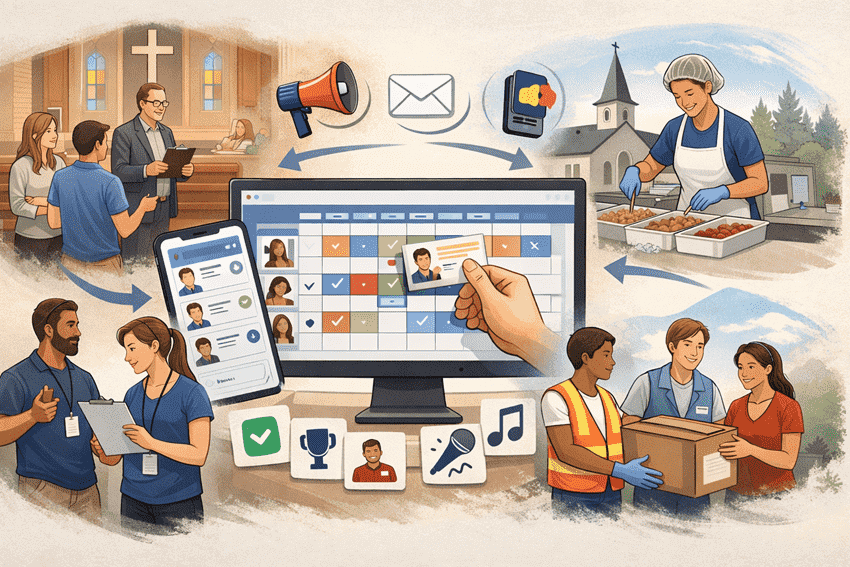
ChMeetings helps churches manage people, groups, events, attendance, communication, and church operations in one place. For youth ministry, this can help leaders organize lesson schedules, communicate with parents, track participation, coordinate volunteers, and plan youth events more easily.
FAQs About Youth Group Lessons
What are youth group lessons?
Youth group lessons are structured Bible studies and activities designed to help teenagers engage with faith, Scripture, and one another. They often include teaching, discussion, games, reflection, prayer, and practical application.
How can I make youth group lessons engaging?
Make youth group lessons engaging by connecting Scripture to real teen experiences, using interactive activities, asking thoughtful questions, including small group discussion, and giving students space to respond honestly. The goal is participation with purpose.
What themes should youth group lessons cover?
Helpful themes include identity in Christ, peer pressure, prayer, anxiety, forgiveness, friendship, dating, social media, service, spiritual disciplines, discipleship, justice, and sharing faith. The best themes match both Scripture and the real needs of your group.
How can I evaluate the success of my youth lessons?
You can evaluate success through student feedback, participation, small group discussion, volunteer observations, attendance patterns, and signs of spiritual growth over time. Ask what students understood, what they still question, and what they are applying.
What makes an effective youth ministry leader?
An effective youth ministry leader is spiritually grounded, approachable, patient, prepared, and willing to listen. They understand Scripture, care about teenagers, communicate well with parents and volunteers, and create a safe environment for honest faith conversations.
How do I incorporate technology into youth group lessons?
Use technology to support the lesson, not distract from it. Helpful tools include slides, polls, Bible apps, quizzes, videos, online forms, and group communication tools. Make sure every tool serves the spiritual goal of the lesson.
What resources can I use for youth group lessons?
You can use Bible passages, church curriculum, devotionals, small group guides, youth leader training materials, discussion questions, service projects, and feedback forms. The most important resource is a clear biblical goal shaped for the needs of your students.
Final Thoughts
The best youth group lessons are not the loudest, flashiest, or most complicated. They are the ones that help teenagers encounter Scripture, ask honest questions, build meaningful relationships, and take one real step of faith.
Start with the spiritual goal. Anchor the lesson in Scripture. Add interaction with purpose. Listen to your students. Evaluate what works. Keep improving.
When youth lessons are planned with care and delivered with love, they can become more than weekly meetings. They can become moments where students feel known, challenged, encouraged, and invited to follow Jesus more deeply.