The church has always been more than a building. It is a sacred space where faith, fellowship, and service come together. It plays a significant role in fostering spiritual life and strengthening bonds among fellow people. In this regard, churches face administrative challenges, such as managing memberships, volunteers, finances, events, and analytics.
Pastors and leaders need to juggle spiritual guidance with administrative tracking using limited manpower. In addition, coordinating with volunteers is a tedious task that involves scheduling, communication, and recognition, considering the limited staff capacity. They have to maintain transparency in financial matters. And, event planning is resource-intensive.
The list does not end here!
Congregants demand sermons, apps, and social media presence. Administrative overload, data silos, privacy and security concerns, hinder outreach. In this situation, maintaining community connections is increasingly becoming more challenging.
These administrative pressures divert the focus of those involved from the core mission.
What is the solution?
The solution is to streamline operations through technology and refocus on spiritual leadership.
Role of technology in church management
Transforming the church’s ministry with digital outreach tools makes spiritual and community tasks easier. Churches can revolutionize their operation by adopting technology. It empowers leaders to achieve the church’s mission effectively while developing sustainable growth in this digital world.
Technology can help churches to:
- streamline operations
- improve engagement
- lessen manual errors
- save time and cost, and
- foster financial stability

Adopting more digital tools, cloud-based management platforms, and intuitive mobile apps can open new horizons for church ministry. In this article, we have outlined five practical use cases where technology enhances the church’s impact. They are membership management, digital giving, volunteer engagement, event coordination, and analytics. These solutions provide operational clarity while retaining congregational connectivity.
The Global Church Management Software Market is poised to expand at a CAGR of 9.5%, starting at USD 1.2 billion in 2024 and projected to cross USD 2.1 billion by 2030, Strategic Market Research reports.
Keep reading to understand the five practical technology use cases: giving, membership, volunteer engagement, events, and analytics.
A: Streamline Giving & Contributions
According to NP Source, 60% are willing to give to their church digitally. It is a fact that fewer people carry cash these days, making things less convenient. Therefore, it is recommended to streamline giving options by providing digital options, such as online payment, app, text, and Kiosk, so that contributors can pay hassle-free.
Online giving makes donations quick and effortless. Contributors can contribute from wherever they are, save their payment information on devices, and pay again for next season/event. It eliminates the need to save account details and other related information, removes manual errors, and saves time. They can check their giving history, too, as required.
Make giving part of your digital ministry, not just a checkbox.
For this, having a functional online giving platform like Donorbox would be helpful. Donorbox integrates seamlessly with your existing church management software, like ChMeetings. Integration with your software enables easy tracking, monitoring, and receiving donations. Further, it facilitates recurring giving, peer-to-peer campaigns, event ticketing & embedded forms. Moreover, it is secure and faster.
B: Smart Membership & Data Management
Churches must have a church management tool to know their congregation and use data to nurture them and take the next steps in the member journey. Church management systems help you maintain data, follow people, and communicate with them.
When your membership and giving data live in one place, follow-ups become meaningful.
Let’s take a look at the important features of a church management system that help to manage membership and data.
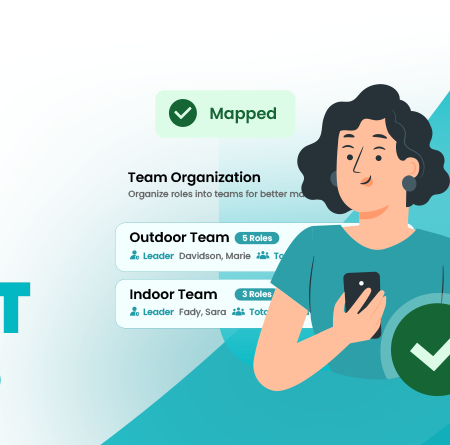
- Helps to create profiles, track people, and assign a team for specific work
- Enables you to organize, schedule, and manage volunteers
- Allows members to update their data, register for events, or contribute online
- Facilitates members in donating both online and offline
- Supports messaging people from anywhere, anytime
ChMeetings comes with unique features, such as a member portal, volunteer scheduling, and messaging. It helps you track who has continuously engaged with you.
C. Volunteer & Event Engagement
Organizing an event and engaging volunteers has its own share of challenges. A lot of work has to be done behind the scenes, like handling registrations, coordinating volunteers, and more. Calling everyone over the phone or getting calls/texts regarding events is indeed tedious. It is labour-intensive, error-prone, and time-consuming.
Treat volunteers like donors — track their involvement, invite their next step, say thank you.
Using a church management system helps you-
- Create and manage events hassle-free
- Collect registration details like name, place, and contact details
- Send reminders about time and location
- Custom one-time or recurring events as per needs
- Add approvers and facility managers for smooth administration
- Custom sign-up forms to create guest lists
- Track the total number of attendees and their profiles
- Manage check-ins online or through a QR code
- Automate communication like sending reminders, thank-you messages
- Send reports, receipts, images or videos to the concerned donors
- Loop giving and volunteering seamlessly
D: Analytics & Insights for Growth
Without clear dashboards, church leaders struggle to see trends and understand the health of their community. Leaders must be able to pinpoint facts, such as membership growth or disengagement, donation frequency, successful events that have drawn more participation, etc.
With this data in place, leaders can guide proactive ministry. Leaders can highlight gaps, create opportunities and plan to re-engage members who have not volunteered or donated recently.
Insight precedes action: get the data, then invite or steward accordingly.
With the ChMeetings platform, you can run analytics, break down silos, and observe financial contributions, volunteer service, event attendance, and overall engagement.
In a nutshell, it provides operational clarity and establishes connectivity with donors and volunteers.
E: Future-proofing & Prioritizing Digital Ministry
Technology adoption is a journey. It is not a one-time event. After the initial rollout, churches must monitor how technology tools are performing. As the congregation grows, it is crucial to evolve by leveraging new technology tools.
Current trends like mobile giving and text-to-give make giving simpler. Peer-to-peer campaigns empower members to connect within their networks. Remote check-ins simplify tracking, and hybrid events blend in-person and digital participation. These trends set the stage for churches to connect and grow in this digital-first era. Given the advantage of technology, churches can become more resilient during uncertain times.
Start with one area (giving or membership) and scale as your ministry grows.
Choose a tool that is built for the future. Amplify your church ministry with the right platform. Choose a platform [for example, ChMeetings] that supports peer-to-peer giving and recurring gifts.
Be prepared for your next campaign!
Be future-ready!
Key takeaways
Choosing the right technology for giving, memberships, volunteer engagement, analytics, and future-proofing is crucial for churches, as it frees up their valuable time and energy for ministry. Building a connected system in this digital world is not a cakewalk, though!
Start small. Make incremental changes. And then scale!
Ask yourself: Where are we losing time and insights?
It’s time to act on it!
If you are using ChMeetings as your church management system, pair it with Donorbox for a full ministry tech stack.
Your church should operate with full efficiency and resilience.
To know more about ChMeetings, the all-in-one church management platform, click here.