Church events are more than calendar entries. They’re how people connect, serve, and decide if they belong. In 2026, managing all of that with spreadsheets or disconnected tools just doesn’t work anymore.
Church event management software handles the full event lifecycle in one place. Planning, scheduling, registration, volunteers, communication, and follow up. It matters now because churches are running more events with leaner teams and higher expectations from members who expect smooth, mobile friendly experiences.
People feel the difference when events are organized. Missed reminders, double booked rooms, or chaotic check ins quietly hurt trust. Good software removes friction so leaders can focus on ministry instead of logistics.
Event management also doesn’t stand alone anymore. In 2026, it’s part of a connected church management ecosystem. Events tie into member records, volunteer scheduling, giving, messaging, and mobile apps. When someone registers, the system updates profiles, sends reminders, alerts teams, and tracks attendance automatically.
That integration is the real shift. Event management isn’t just about planning. It’s about understanding engagement. Who shows up, who serves, and who keeps coming back. The right platform turns events into insight instead of admin work.
Why You Need Event Management Software for Your Church

Most churches start with good intentions and a shared spreadsheet. Then the events multiply. Calendars clash. Volunteers get missed. Someone forgets to send the reminder. Suddenly, planning an event feels heavier than the event itself.
Manual or spreadsheet based planning breaks down fast. There’s no single source of truth. Updates live in email threads. Check in lists are outdated. Room bookings overlap. Volunteers show up unsure of their role or don’t show up at all. The bigger the church or the busier the calendar, the messier it gets.
Dedicated church event software fixes those cracks by design. Everything lives in one system. Events connect to people, teams, rooms, and communication tools automatically. When someone registers, attendance is tracked. When a volunteer is scheduled, reminders go out. When plans change, everyone sees it at once.
The benefits go beyond organization.
You save time because repetitive tasks are automated.
Volunteers feel more confident because expectations are clear.
Members are more likely to attend because reminders and sign ups are easy.
Leaders gain visibility into what’s actually working.
Technology trends in 2026 push this even further. Churches are running more hybrid events that blend in person and online participation. Mobile access is expected, not optional. Data matters more, helping teams see which events drive engagement and which quietly fade. AI assisted scheduling and messaging are starting to reduce planning friction even more.
Let’s be real. Event management software isn’t about being more technical. It’s about being more intentional. When logistics run smoothly, people notice. And when people feel cared for, they come back.
Top Church Event Management Software for 2026
There’s no single best tool for every church. Size, staffing, culture, and how complex your events are all matter. That said, a few platforms consistently stand out in 2026 for how well they handle church specific event needs.
ChMeetings

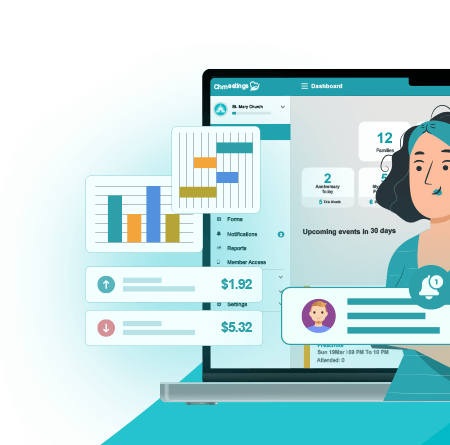
ChMeetings stands out as the best church event management software for 2026 for churches that want everything connected and easy to manage. It’s not just an events tool. It’s a complete church management platform where events naturally tie into people, volunteers, and communication.
Event scheduling and calendar management are flexible and reliable. Churches can create one time or recurring events, organize them by ministry, and publish them to shared calendars that stay updated in real time. Changes don’t get lost, which prevents confusion before it starts.
Registration, attendance, and check in features are fully built in. Churches can manage RSVPs, capacity limits, and attendance tracking without relying on third party tools. Check in is smooth for services, classes, and special events, even when handled by volunteers.
Volunteer coordination is where ChMeetings clearly pulls ahead. Roles are assigned per event, automated reminders go out, and volunteers can confirm with a click. Built in messaging keeps everyone aligned without jumping between systems.
What truly makes ChMeetings the best choice is how seamlessly events connect to the rest of church life. Event participation updates member profiles, attendance feeds into reports, and communication flows automatically. Leaders don’t just plan events. They understand engagement.
ChMeetings is the best fit for small to mid sized churches and growing churches that want powerful event management without complexity. It delivers the strongest balance of features, usability, and value for churches planning for 2026.
Planning Center

Planning Center takes a modular approach. Instead of one system, churches use individual products for services, calendars, registrations, and people management.
Event planning and team scheduling are especially strong for worship services and volunteer driven events. You can assign roles, manage availability, and avoid over scheduling key volunteers.
Registration workflows are flexible and well designed. Permissions allow leaders to control who can edit or view event details, which helps larger teams stay organized.
The main strength is polish and reliability. The limitation is fragmentation. Since events, people, and communication live in separate modules, some churches find it harder to get a full picture without extra setup or added cost.
Best fit is churches with established teams that value detailed service planning and are comfortable managing multiple tools.
Faith Teams

Faith Teams focuses on simplicity. It’s built for churches that want to get organized quickly without a steep learning curve.
Event setup is straightforward. You can create events, schedule volunteers, and track attendance without digging through complex menus. Volunteer management covers the basics well, including role assignments and reminders.
Attendance tracking and member communication are easy to understand, which makes it accessible for churches without dedicated tech staff.
Ideal for small churches or ministries that need essential event management without advanced customization or reporting.
media focused ministries that want events tied closely to digital content and mobile engagement.
eSPACE Church Facility and Event Management

eSPACE is purpose built for churches with complex facility needs. It goes deeper into rooms, resources, and logistics than most general church platforms.
Facility scheduling allows churches to manage rooms, equipment, and setup requirements with precision. This is especially useful when multiple ministries share space throughout the week.
Staff and resource coordination helps prevent double bookings and last minute surprises. Everyone knows what space is being used, when, and for what purpose.
Ideal for churches with multiple buildings, high event volume, or heavy facility usage where logistics matter as much as people management.
Key Features to Look for in Church Event Management Software
Event Creation and Scheduling
Good event software makes setup fast and changes painless. You should be able to create one time events and recurring events without rebuilding everything from scratch. Weekly services, monthly meetings, and seasonal programs should live comfortably in the same system.
Church wide calendars matter just as much as ministry specific ones. Members need a clear view of what’s happening, while teams need filtered calendars that show only what’s relevant to them. When calendars stay in sync automatically, confusion drops fast.
Registration and Ticketing
Registration should feel effortless for attendees and leaders. Online sign ups and RSVPs need to work on any device, especially mobile. If someone can’t register in under a minute, you’ll lose them.
Paid and free event options should be handled in the same workflow. Whether it’s a retreat fee or a free class, the process should feel consistent.
Check in and attendance workflows matter more than most churches expect. Fast check in reduces lines, improves first impressions, and ensures attendance data is actually accurate instead of guessed later.
Volunteer and Team Management
Events run on people, not plans. Strong volunteer tools let you assign roles, schedule teams, and avoid overloading the same few helpers.
Automated reminders and notifications are essential. Volunteers shouldn’t have to remember to check a schedule. The system should bring the event to them at the right time.
Communication and Follow Ups
Clear communication often decides whether an event succeeds or fizzles. Built in email and SMS tools help leaders send updates, reminders, and last minute changes without exporting lists.
Post event follow ups matter too. Thank you messages, next step invitations, or feedback requests help turn attendance into ongoing engagement.
Attendance, Reporting, and Analytics
Tracking attendance should happen naturally as part of the event flow. Manual counting after the fact usually leads to missing or unreliable data.
Reports help leaders see patterns. Which events grow. Which struggle. Who consistently shows up. These insights guide better planning instead of guesswork.
Integrations and Ecosystem Compatibility
Event software shouldn’t sit alone. It needs to integrate with your church management system, giving tools, accounting, and mobile apps.
When systems talk to each other, data stays clean and staff avoid double entry. That saves time and reduces errors that quietly pile up.
Mobile and Hybrid Event Support
In 2026, mobile access isn’t optional. Staff and volunteers need to manage events, check in attendees, and communicate from their phones.
Hybrid support matters too. Many churches run events that include both in person and online participation. The right platform handles registrations, reminders, and attendance across both without extra tools.
How to Choose the Best Church Event Management Software
Choosing event software isn’t about chasing features. It’s about finding a system that fits how your church actually operates day to day.
Start with your church’s size and event complexity. A small church running a handful of monthly events doesn’t need the same setup as a multi campus church managing hundreds of rooms, volunteers, and weekly programs. The more moving parts you have, the more structure and automation you’ll need.
Budget matters, but value matters more. Some platforms look affordable until you add extra modules, users, or event limits. Others cost more upfront but replace several tools at once. Look at what you’re truly replacing, not just the sticker price.
Ease of use is often underestimated. If staff and volunteers can’t learn the system quickly, it won’t get used fully. Clean interfaces, simple workflows, and good onboarding make a bigger difference than long feature lists.
Customer support and training are safety nets. When something breaks the week before a major event, fast help matters. Look for live support, clear documentation, and training resources that don’t assume you’re technical.
Think long term. Your church will change. Events will grow. Teams will shift. The right platform scales with you instead of forcing a painful switch later.
Good software doesn’t just support your current events. It supports the church you’re becoming.
Pricing Models to Expect in 2026

Church event management software pricing looks simple at first glance, but the details matter. In 2026, most platforms follow a few common models, each with trade offs depending on how your church operates.
Subscription based pricing is the most common. Churches pay monthly or annually for access to the platform. Costs usually scale by church size, feature access, or database limits. This model works well for predictable budgeting and ongoing support.
Some tools use per user or per event pricing. You might pay based on how many staff members access the system or how many events you run each month. This can work for smaller churches with limited activity, but it can get expensive fast as ministries grow.
Free or entry level plans still exist, especially for small churches. These often include basic event creation and attendance tracking but limit features like automation, reporting, or integrations. They’re useful for getting started, but many churches outgrow them within a year or two.
Larger churches often see custom pricing. This usually reflects complex needs like multiple campuses, advanced permissions, or high event volume. While custom plans cost more, they often replace several separate tools, which can balance the investment.
The key is understanding what’s included and what costs extra. The cheapest plan isn’t always the most affordable long term.
Church Event Management Trends to Watch in 2026
Church event planning is changing fast, and the tools are evolving with it. What worked a few years ago feels dated now. In 2026, several trends are shaping how churches plan, promote, and measure events.
AI powered scheduling and communication are becoming more practical. Systems can suggest optimal dates, flag conflicts, and automate reminders based on past attendance behavior. It’s not about replacing people. It’s about removing busywork that slows teams down.
Mobile first church engagement is no longer optional. Members expect to discover events, register, and receive updates from their phones. Staff and volunteers expect to manage check ins and schedules the same way. Platforms that treat mobile as secondary will struggle to keep up.
Hybrid and online events continue to grow. Even in person focused churches now offer online classes, interest meetings, or training sessions. Event software needs to support both experiences equally, without forcing churches to manage two separate systems.
Data driven event planning is gaining traction. Leaders want to know which events actually move people forward. Attendance trends, volunteer participation, and follow up engagement help churches plan smarter instead of repeating what’s familiar.
The churches that thrive aren’t running more events. They’re running better ones. Technology is becoming the quiet support system that makes that possible.
Frequently Asked Questions
What is the best church event management software in 2026?
There isn’t a single answer that fits every church, but the best option depends on your size, staffing, and how connected you want your systems to be. Churches that want events tightly integrated with people, volunteers, and communication often choose an all in one platform. Others prefer modular tools that focus on specific workflows. The right choice is the one that reduces friction and fits how your church actually functions.
Can church event management software replace general event tools?
In most cases, yes. Church specific platforms are built around ministries, volunteers, recurring services, and member engagement. General event tools are great for one off conferences, but they usually lack features like volunteer scheduling, attendance history, and church database integration. That difference becomes clear as event volume grows.
Is church event management software suitable for small churches?
Absolutely. Many platforms offer simple setups and affordable plans designed for smaller churches. These tools help small teams stay organized without adding complexity. Starting early also makes growth easier later, since data and habits are already in place.
Do these platforms support online and hybrid church events?
Most modern platforms support both. Common features include online registration, livestream links, automated reminders, and attendance tracking for virtual participants. Hybrid support is becoming standard as churches continue to blend in person and online experiences.
What features should churches prioritize first?
Start with the basics. Event creation, registration, volunteer scheduling, and communication tools deliver the biggest impact early. Once those are working smoothly, reporting, automation, and deeper integrations become much more valuable. The goal is progress, not perfection.