
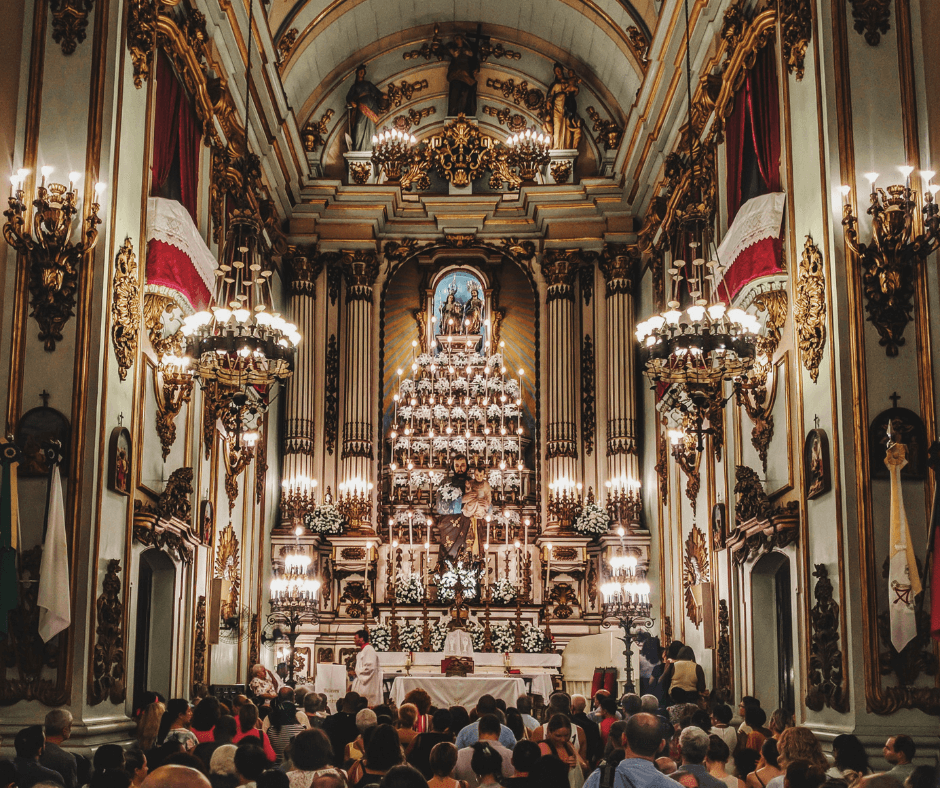

I have sat in many church services over the years, some that left me unchanged and others that stayed with me for weeks. The difference was rarely the size of the building, the quality of the sound system, or the polish of the production. It was almost always something harder to manufacture: a genuine sense of God’s presence, a community that actually cared about each other, and a service designed to invite encounter rather than deliver content.
Spiritually uplifting church services are not accidental. They are the result of intentional choices about worship, community, preaching, prayer, and environment. This guide explores what those choices look like, why they matter, and how any church, regardless of size or tradition, can cultivate them consistently.
“Worship is about experiencing God as much as it is about learning about Him.” — David Christensen, Founder of The Rephidim Project
- What Makes Church Services Spiritually Uplifting?
- Creative Ideas for Uplifting Worship Experiences
- Participating in Virtual and Hybrid Services
- Impactful Sermons that Transform Lives
- The Power of Prayer in Church Services
- Building Community Through Church Activities
-
Frequently Asked Questions about Uplifting Church Services
- What can I expect at a spiritually uplifting church service?
- How to choose the right church for uplifting experiences?
- How do online services compare to in-person ones?
- What role does music play in uplifting church services?
- Can children participate in uplifting church services?
- How can prayer be incorporated into worship services?
- What are some creative ideas for enhancing worship experiences?
- Conclusion
- What Makes Church Services Spiritually Uplifting?
- Creative Ideas for Uplifting Worship Experiences
- Participating in Virtual and Hybrid Services
- Impactful Sermons that Transform Lives
- The Power of Prayer in Church Services
- Building Community Through Church Activities
-
Frequently Asked Questions about Uplifting Church Services
- What can I expect at a spiritually uplifting church service?
- How to choose the right church for uplifting experiences?
- How do online services compare to in-person ones?
- What role does music play in uplifting church services?
- Can children participate in uplifting church services?
- How can prayer be incorporated into worship services?
- What are some creative ideas for enhancing worship experiences?
- Conclusion
What Makes Church Services Spiritually Uplifting?
Before exploring practical strategies, it is worth naming what spiritual uplift actually is. It is not simply emotional warmth, though emotion is part of it. It is not just cognitive engagement, though good teaching matters. Spiritual uplift is the sense that you have encountered something real and true, that you are less alone than you were when you arrived, and that the week ahead looks different because of what happened in that room.
Understanding what produces that experience is the foundation of everything else.
The Role of Community in Worship
I have noticed that the most uplifting services I have experienced were not ones where the worship team was flawless or the sermon was perfectly structured. They were ones where the people around me were genuinely present with each other, where strangers became neighbors within an hour, and where the community itself felt like evidence of something larger at work.
Research supports this instinct. Around 50 percent of attendees report feeling closer to their community during worship services, according to Christian Worship Hour. And 73 percent of first-time visitors say they are more likely to return to a church that provides a genuinely welcoming environment.
A church community that actively welcomes, connects, and cares for its members does more for spiritual uplift than any production value. The service is a container. The community is what fills it.
“Creating a welcoming atmosphere is crucial for engagement and spiritual growth.” — Rev. Dr. Jack L. Daniel, The Rephidim Project
The Power of Uplifting Music
Music is the most consistent vehicle for collective spiritual experience in the church across every tradition and every century. Whether the form is Gregorian chant, classic hymnody, gospel, or contemporary worship, music bypasses cognitive resistance and moves people toward encounter in ways that speech alone rarely does.
Around 78 percent of churchgoers believe that engaging music enhances their spiritual experience, according to TBN. That is not a surprising finding to anyone who has been in a congregation singing together with genuine conviction. The convergence of voices, the shared text, the physical resonance of sound in a room: these create conditions for spiritual openness that are genuinely difficult to replicate through other means.
The key is that the music must be authentic to the congregation rather than performed at them. A worship team that is visibly moved by what they are singing invites the congregation into something real. A polished performance that positions the congregation as an audience produces admiration, not encounter.
Sermons and Messages that Inspire
What makes a sermon uplifting versus merely informative? In my experience, it is specificity, honesty, and the willingness of the preacher to engage their own life rather than speaking from a safe distance above it.
Sermons that inspire are those that take a biblical truth and land it in the actual texture of ordinary human experience: the anxiety of a difficult week, the grief of a loss, the confusion of a moral decision, the ordinary temptation to give up. When a preacher demonstrates that the text is alive in their own life and speaks directly to the congregation’s real experience, the response is not just intellectual agreement but something closer to recognition: someone finally named what I was carrying.
Creative Ideas for Uplifting Worship Experiences
Knowing what makes a service spiritually uplifting is one thing. Building the practical conditions for it is another. These ideas have produced measurable improvements in engagement and spiritual depth across different church contexts.
Integrating Multimedia into Worship
Churches implementing multimedia in their services report increased engagement at a rate of around 66 percent, according to the Center for Biblical Spirituality. That figure reflects the reality that contemporary congregations process information through multiple channels simultaneously, and a service that uses only one channel, spoken words and projected lyrics, leaves significant engagement capacity untapped.
Practical multimedia integration for uplifting services includes:
- Opening video clips that establish the emotional or thematic tone before the sermon begins
- Visual Scripture overlays during prayer times that give the congregation something to anchor their attention
- Testimonial videos featuring congregation members sharing what God has done in specific, recent situations
- Photography and imagery from community service projects that make abstract mission concrete
The goal of multimedia is not production value for its own sake but clarity and emotional accessibility. Used well, it removes barriers between the congregation and the content of worship. Used poorly, it becomes a distraction that distances people from each other and from God.
Interactive Worship Activities
Services that invite active participation rather than passive reception consistently produce deeper spiritual engagement. Interactive elements that work well include:
- Response cards where congregants write a prayer, a commitment, or a question that is then collected and prayed over by a ministry team
- Communal Scripture reading where different sections of the congregation read alternating verses or passages aloud together
- Station-based prayer opportunities during the service, where individuals can move to designated areas for specific types of prayer
- Open microphone moments where congregation members briefly share a word of gratitude or testimony
- Blessing cards distributed at the end of the service for members to carry into the week with a specific person or situation to pray for
Each of these moves the congregation from audience to participant, which is the posture in which spiritual formation actually happens.
Utilizing Social Media for Spiritual Connection
Social media extends the spiritual life of a church beyond the physical walls of the Sunday service. When used thoughtfully, it maintains the momentum of an uplifting service through the rest of the week.
Effective social media practices for uplifting church communities include sharing the sermon’s key passage or main point on Monday morning to help members continue reflecting, posting mid-week prayer prompts that invite congregation members to pray together even when apart, and sharing brief testimonials or encouragements from community members that keep the spirit of Sunday alive through Wednesday and Thursday.
The risk is that social media becomes a marketing channel rather than a pastoral one. When the primary content is announcements and promotions, it loses the relational quality that makes it useful for spiritual connection. When it carries genuine encouragement, prayer, and Scripture, it becomes an extension of the Church service itself into daily life.
Participating in Virtual and Hybrid Services
One of the significant shifts of recent years is the normalization of virtual and hybrid worship. Where online services were once a fallback, they have become for many people a genuine and primary form of participation. Understanding how to make virtual services spiritually uplifting is no longer optional for churches that want to serve their full community.
Creating a Worship Space at Home
The environment in which you participate in a service shapes the quality of your engagement more than most people realize. A person watching a livestream from their couch while scrolling their phone will have a fundamentally different experience than one who has created a quiet, intentional space for worship.
Practical steps for creating a home worship space include:
- Choosing a consistent location that is designated for worship rather than entertainment or work
- Removing or silencing devices that are not being used for the service
- Having a Bible, notebook, and pen available for engagement with the sermon
- Lighting a candle or placing a cross or other meaningful object in view as a visual anchor for attention
- Beginning the service five minutes early in silence rather than switching over at the exact start time
These steps are small but consequential. They signal to your own attention that this time is different, which creates the conditions for spiritual engagement rather than passive consumption.
Joining Online Prayer Meetings
Around 90 percent of congregants report feeling uplifted when engaging in group prayer activities, according to TBN. Online prayer meetings capture this benefit for those who cannot attend in person, and in many cases they have expanded prayer participation significantly because the barrier of travel and scheduling is removed.
The format that works best for online prayer meetings is a structured but unhurried one: a brief opening Scripture reading, a few minutes of silent prayer, an opportunity for participants to share requests verbally or in the chat, and a period of spoken prayer by designated individuals followed by open participation. Closing with a corporate prayer read aloud by all participants creates a sense of shared conclusion that mirrors the communal quality of in-person prayer.
Finding Local Online Services
Where can someone find an uplifting church service online? Most church websites now publish their livestream schedule and archive past services. Searching for denominations or traditions that resonate theologically, combined with exploring their online service quality, is a practical starting point.
For those specifically seeking a new church community, attending online services at several local churches before committing to one gives you the opportunity to experience the preaching, worship, and community culture without the pressure of a physical visit. Many churches also offer online small groups or welcome sessions specifically for digital visitors, which provide a relational entry point that a livestream alone cannot offer.
Impactful Sermons that Transform Lives
A sermon does not need to be long to be transformational. In my experience, the most impactful sermons I have heard were often under thirty minutes, because the preacher had done the work of distilling a complex truth into its essential form rather than padding time with everything they knew about the passage.
What distinguishes a transformational sermon is not length, eloquence, or theological density. It is the quality of encounter it facilitates between the congregation and the living God.
Storytelling as a Preaching Technique
The most consistently effective preaching technique I have observed is the use of story, not illustration, which is a story used to make a point, but genuine narrative that carries the theological meaning within itself rather than pointing to it from the outside.
Jesus used parables for exactly this reason. A story invites the listener to enter it and discover meaning through their own engagement. A proposition delivered directly asks the listener to accept or reject it. The story bypasses resistance in ways that direct instruction cannot.
Effective storytelling in sermons is specific rather than generic, honest rather than polished, and rooted in the actual experience of real people rather than composite characters designed to be universally relatable. The more particular a story is, the more universal its resonance.
Incorporating Personal Testimonies
Nothing in a service carries the weight of a congregation member standing up and saying: God did something specific in my life this week, this month, this year. Personal testimonies make the content of the sermon concrete in a way that no illustration from history or literature can match.
Churches that build testimony sharing into their regular service rhythm, even briefly, consistently report that this element produces more post-service conversation and more spiritual impact than almost any other programming choice. The person sharing does not need to be eloquent. They need to be honest. The Spirit does the rest.
Feedback Mechanisms for Sermon Improvement
Preachers who actively seek feedback from their congregations improve faster than those who rely on their own assessment. Practical feedback mechanisms include brief post-service cards with three questions: what stayed with you, what confused you, and what would you like to explore further? These provide the preacher with information that their own perception of the sermon cannot supply.
Regular conversation with a small group of trusted congregation members who have permission to speak honestly about what is working and what is not provides ongoing accountability that formal feedback forms cannot replicate.
The Power of Prayer in Church Services
Prayer is not an element of worship that can be reduced to a transitional moment between program items. In the churches where I have experienced the most genuine spiritual uplift, prayer was not punctuation. It was the grammar of the whole service.
“The practice of communal prayer strengthens not just faith but community ties.” — Christian Worship Hour
Prayers that Inspire Community
Corporate prayer inspires community when it names the actual concerns of the congregation rather than speaking in abstractions. A prayer that includes the specific situations of identifiable members, whether named or described in broad enough terms to protect privacy, tells the congregation that they are truly known and truly prayed for.
Intercessory prayer sections of a service that invite brief sharing of requests before praying create community through vulnerability. When people hear each other’s needs and pray for them together, the relationships formed in that moment are qualitatively different from those formed through fellowship programs or community events.
Personal vs. Corporate Prayer
Both personal and corporate prayer are essential to a spiritually uplifting service, and they serve different functions. Personal prayer creates space for individual encounter and honest, unfiltered communication with God. Corporate prayer creates shared spiritual experience and strengthens community bonds through the act of addressing God together.
Services that include only corporate prayer can feel impersonal. Services that include only personal prayer can feel disjointed. The most uplifting services I have experienced wove both together: moments of corporate prayer spoken by a leader, moments of silent personal prayer, and moments of open prayer where individuals could speak aloud within the gathered community.
Developing a Weekly Prayer Schedule
A weekly prayer rhythm for a church might look like this:
| Day | Prayer Focus | Format |
|---|---|---|
| Sunday | Worship and community intercession | Corporate in service |
| Monday | Gratitude for the week ahead | Personal or small group |
| Wednesday | Congregation needs and pastoral requests | Prayer meeting, online or in person |
| Friday | Surrender and preparation for the weekend | Personal reflection |
| Saturday | Preparation for Sunday service | Staff and worship team prayer |
A published weekly prayer schedule invites the congregation into a shared rhythm that extends spiritual engagement beyond Sunday and creates a culture of prayer that shapes the whole community rather than only the Sunday gathering.
Building Community Through Church Activities
The most uplifting church services exist within the context of a church community that is actively building relationships outside of Sunday morning. When people genuinely know each other, the service becomes the weekly gathering of a real community rather than a collection of individuals who happen to occupy the same room.
Around 57 percent of new attendees prefer weekly community events that allow for genuine connection, according to Ministry Magazine. Providing those opportunities is not optional for churches that want their services to have lasting spiritual impact.
Creating Fellowship Groups
Small groups are the most consistently effective community-building structure available to a church. They create the relational intimacy that a Sunday service cannot provide, and they give congregation members a specific, named group of people who know their lives and pray for them regularly.
Fellowship groups work best when they are organized around life stage, interest, or geography rather than purely around church programming. A group that forms because its members share a common context, parents of young children, young professionals, people in a particular neighborhood, builds relational depth faster than one assembled purely by availability.
Planning Community Service Projects
Community service projects create shared experience that bonds church members to each other and to the neighborhood they serve. Unlike fellowship events that primarily strengthen existing relationships, service projects also extend the church’s love outward in visible, tangible ways that reflect the character of Jesus.
Practically, service projects are most effective when they are regular rather than occasional, specific rather than generic, and connected to the church’s existing relationships in the community rather than parachuted into unfamiliar contexts.
Hosting Regular Church Events
Regular church events, monthly fellowship meals, quarterly celebrations, seasonal gatherings, create a rhythm of togetherness that sustains community between Sundays. The key word is regular: events that happen consistently build anticipation and tradition in ways that one-off occasions cannot.
Managing the logistics of regular events, from invitation and attendance tracking to follow-up communication with first-time guests, is significantly easier with purpose-built tools. Try ChMeetings Today to keep your community connected and your events organized without the administrative overhead that typically consumes volunteer energy.
| Service Format | Best For | Community Depth | Engagement Level | Technology Needed |
|---|---|---|---|---|
| Traditional liturgical | Established congregations, denominations | High among regulars | Moderate | Low |
| Contemporary worship | Younger adults, growing churches | Moderate | High | Moderate to high |
| Hybrid (in-person + online) | Dispersed communities, accessibility | Moderate | High | High |
| House church | Small intentional communities | Very high | Very high | Low |
| Outdoor or community service-based | Seasonal, outreach-focused | Moderate | High | Low |
Frequently Asked Questions about Uplifting Church Services
What can I expect at a spiritually uplifting church service?
At a spiritually uplifting church service, you can expect genuine worship music that invites participation rather than performance, a sermon rooted in scripture and honest engagement with real human experience, prayer that names actual concerns rather than abstractions, and a community of people who are genuinely glad you are there. The most uplifting services are not necessarily the most polished; they are the ones where you encounter something real, leave feeling less alone, and find that the week ahead looks different because of what happened in that room.
How to choose the right church for uplifting experiences?
Choosing the right church begins with attending a service, not reading a website. Pay attention to whether you feel welcomed before the service begins, whether the worship is accessible or performed at you, whether the sermon engages real life or stays at a safe theological distance, and whether people make genuine effort to connect with you after the service. Visit at least three times before drawing conclusions, because any single service is a snapshot rather than a portrait. Align your choice with a community whose theological convictions you share and whose culture of prayer and service reflects the kind of Christian formation you are seeking.
How do online services compare to in-person ones?
Online services offer genuine spiritual value and genuine limitations simultaneously. They provide accessibility, flexibility, and the ability to participate from anywhere, which matters enormously for people with mobility limitations, caregiving responsibilities, or geographic isolation. What they rarely replicate is the embodied communal experience of being physically present with other believers, the spontaneous conversation after the service, the visual sense of a congregation gathered, and the unmediated human presence that carries spiritual weight in ways that video cannot fully transmit. The most uplifting experience for most people combines regular online engagement with consistent in-person participation when circumstances allow.
What role does music play in uplifting church services?
Music is the most consistently powerful vehicle for collective spiritual experience in the church. Around 78 percent of churchgoers report that engaging music enhances their spiritual experience. Music creates conditions for openness that speech alone rarely achieves: it engages the body through rhythm and breath, the emotions through melody and harmony, and the spirit through text that carries theological truth in memorable form. Whether the tradition is choral, contemporary, or somewhere between, music that is authentic to the congregation and sung with genuine conviction invites encounter in a way that is difficult to replicate through any other element of worship.
Can children participate in uplifting church services?
Yes, and involving children well is one of the marks of a genuinely uplifting church community. Many churches offer age-specific children’s programming during part or all of the service, providing worship and teaching calibrated to developmental stages. Intergenerational worship moments, where children and adults worship together before separating, give children a formative experience of the full community gathered. Churches that treat children as full participants in the worshiping community rather than a separate category produce families who stay together in faith across generations.
How can prayer be incorporated into worship services?
Prayer can be woven throughout a service rather than confined to a single transitional moment. Opening prayers of approach set the tone for encounter. Congregational intercessory prayer creates shared spiritual investment in each other’s lives. Silent personal prayer provides space for unfiltered individual communication with God. Pastoral prayer models honest, specific engagement with God on behalf of the congregation. Closing prayer sends the congregation into the week with a clear sense of commission rather than merely conclusion. For additional practical guidance on prayer formats, recommended prayers for church services offers a useful collection of structures and examples.
What are some creative ideas for enhancing worship experiences?
Creative ideas that consistently produce genuine uplift include testimony sharing by congregation members, station-based prayer during the service, multimedia integration that enhances rather than replaces human connection, response cards that invite active reflection on the sermon, and small group prayer during the service where people pray specifically for those sitting near them. The best creative ideas are those that reduce the distance between the congregation and the content of worship, inviting people from passive reception into active encounter. For evidence-based approaches to service improvement, improving church services effectively provides practical suggestions grounded in ministry experience.
Conclusion
Spiritually uplifting church services are not a product of better technology, more talented musicians, or more compelling preachers, though all of these contribute. They are the product of a community that has decided to take worship seriously: to prepare, to welcome, to pray, and to create the conditions in which people can genuinely encounter God and each other.
Whether you are a church leader seeking to strengthen your Sunday gatherings, someone searching for a church community that will nourish your faith, or someone exploring what spiritually uplifting worship even looks like, the principles in this guide provide a practical and honest starting point.
The church at its best is not a performance venue or a lecture hall. It is a community gathered around the reality of the living God, shaped by prayer, music, scripture, and shared life. When that is what a church is building toward, uplift is not a goal to be manufactured. It is an inevitable consequence.
For more on what it means to build a church community that sustains spiritual growth beyond Sunday morning, explore what genuine Church service looks like when it extends into every area of community life.