

Why church management software is essential in 2026
Church life looks different now. People give online. Volunteers expect reminders on their phones. Pastors need real data, not guesses, to know who’s drifting and who’s engaged. Sticky notes and spreadsheets can’t keep up anymore.
In 2026, church management software isn’t a nice add on. It’s the system holding everything together. From first time guests to long term members, every interaction leaves a trail. Good software turns that trail into clarity. You see patterns. You notice gaps. You act sooner instead of reacting late.
Here’s the thing. Churches that stay organized free up time for actual ministry. Less admin chaos. More people care.
How paid ChMS solutions outperform free tools
Free tools feel tempting at first. No cost. Quick setup. Minimal commitment. But cracks show fast.
Paid church management software goes deeper. You get automation instead of manual work. Reliable support instead of forum posts. Clean reporting instead of half answers. Most free tools stop at basics. Paid platforms are built for growth, complexity, and accountability.
Security matters too. Churches handle sensitive data like donations, family details, and counseling notes. Paid systems invest in protection and compliance because they have to. Free tools rarely do.
And when something breaks, paid software gives you a human who can fix it.
What churches should expect from modern church software
Modern church software should feel like a quiet assistant, not another job to manage. It should save time without demanding constant attention.
At a minimum, churches should expect:
Clear member and family profiles that actually stay updated
Attendance and engagement tracking that shows trends, not just numbers
Online giving that’s easy for members and transparent for leaders
Communication tools that reach people where they already are
Reports that answer real questions about church health
Most importantly, it should scale. Whether you’re adding a second service, launching small groups, or expanding to multiple campuses, the software shouldn’t hold you back.
If it feels clunky now, it’ll feel unbearable later.
Best Paid Church Management Software in 2026 (Ranked)
1. ChMeetings (Best Overall Church Management Software in 2026)
Overview of ChMeetings
ChMeetings keeps climbing for one simple reason. It actually fits how churches work today. It balances depth with clarity, which is rare. You are not buried in options, but you are also not boxed in.
It feels built for pastors, admins, and volunteers instead of software people. That alone puts it ahead of many competitors.
Key features that set it apart
ChMeetings focuses on real ministry workflows. Everything connects, so data does not live in silos.
Member and family management
Member profiles are clean and practical. Families stay linked properly. Life events, notes, tags, and involvement history all live in one place. That makes follow up personal instead of awkward.
Attendance and engagement tracking
Attendance is more than a headcount. You can track patterns across services, groups, and events. Over time, it becomes obvious who is engaged and who might be slipping away.
Online giving and contribution reports
Giving tools are smooth for members and transparent for leaders. Reports are clear and accurate, which matters during audits, budgeting, and year end statements.
Events, groups, and volunteer management
Events connect directly to attendance, communication, and volunteers. Group leaders can manage their people without needing admin access. That trust matters.
Email and SMS communication
Messages feel targeted, not spammy. You can reach the right people at the right time without blasting the entire database.
Pros of using ChMeetings
Strong balance between features and usability
Clean interface that new users learn quickly
Excellent reporting for church health and engagement
Scales well without becoming complicated
Ideal church size and use cases
ChMeetings works best for small to mid size churches, but it scales comfortably into larger congregations. It is especially strong for churches focused on discipleship, small groups, and data driven pastoral care.
2. Planning Center
Overview of Planning Center
Planning Center takes a modular approach. Churches choose the tools they need and skip the rest. That flexibility is its defining trait.
Modular software approach explained
Instead of one massive system, Planning Center offers separate tools for services, giving, people, groups, and registrations. Each module works well on its own.
Core tools churches commonly use
Most churches start with Services and People. Giving and Groups often follow. The ecosystem grows as needs grow.
Strengths for worship planning and volunteers
Planning Center shines in worship planning. Scheduling volunteers, managing rotations, and sharing service plans is smooth and familiar to many teams.
Best fit for mid size to large churches
It works best where departments operate semi independently and teams already rely on structured planning.
3. One Church Software
Overview of One Church Software
One Church Software positions itself as an all in one platform for growing churches. It aims to reduce the need for third party tools.
All in one church management approach
From check in to giving to websites, everything lives under one roof. That simplicity appeals to churches tired of juggling logins.
Automation and reporting capabilities
Automation handles routine tasks like follow ups and reminders. Reports focus on trends that leadership teams can actually use.
Benefits for growing churches
It works well for churches adding staff, ministries, and complexity without wanting enterprise level systems.
4. Tithe.ly with Breeze ChMS
Overview of Tithe.ly and Breeze integration
Tithe.ly focuses heavily on digital giving. Breeze handles the management side. Together, they create a simple but effective setup.
Focus on online giving and engagement
Giving is where this combo excels. Mobile first tools make generosity easy and consistent.
Simplicity and ease of use
Breeze is known for being easy. Volunteers and staff pick it up fast with little training.
Best fit for small to mid size churches
Ideal for churches that value simplicity and strong giving tools over advanced customization.
5. Pushpay and ChurchStaq
Overview of Pushpay ecosystem
Pushpay is built around engagement. Giving, apps, and communication all connect to the member experience.
Digital giving and mobile engagement focus
Mobile apps and text based engagement are central here. It feels modern and polished.
Custom church apps and analytics
Churches can launch branded apps and track engagement across multiple touchpoints.
Best fit for large or multi campus churches
Best suited for churches with significant budgets and complex engagement strategies.
6. ChurchTrac
Overview of ChurchTrac
ChurchTrac keeps things practical and affordable. It covers the essentials without pretending to be flashy.
Core church management features
Membership, attendance, giving, and basic reporting are all included.
Budget friendly positioning
Pricing is one of its strongest selling points.
Best fit for small churches
Great for churches that need structure without high costs or steep learning curves.
7. Faith Teams
Overview of Faith Teams
Faith Teams focuses on simplicity and communication. It does not try to do everything.
Simple church management tools
Core features are easy to understand and quick to set up.
Communication and volunteer features
Messaging and volunteer coordination are its strongest areas.
Best fit for churches seeking straightforward software
Ideal for churches that want less complexity and faster adoption.
8. Realm by ACS Technologies
Overview of Realm
Realm leans toward enterprise level church management. It is robust and data heavy.
Advanced donor and financial management
Financial tracking and donor management are deep and detailed.
Accounting and reporting strengths
Reports support complex organizations with layered oversight.
Best fit for large or complex church organizations
Best for churches with dedicated finance teams and structured operations.
Key Features to Look for in Paid Church Management Software
Member and attendance management
This is the foundation. If member data is messy, everything else suffers.
Good software keeps people connected to their families, groups, and ministries without manual cleanup. Attendance tracking should show patterns over time, not just who showed up last Sunday. You should be able to spot disengagement early and respond with care, not panic.
If it takes more than a few clicks to understand who’s involved and who’s missing, the system is slowing you down.
Online giving and donor tracking
Giving tools should feel effortless for members and crystal clear for leadership. People expect mobile friendly giving that works every time. Churches need accurate records, clean statements, and reports that make sense.
Strong donor tracking helps you see generosity trends without turning giving into pressure. It supports stewardship while respecting trust.
If year end reports cause stress, the software is part of the problem.
Communication tools including email, SMS, and automation
Communication should feel personal, not loud.
Modern ChMS platforms let you send targeted messages based on involvement, attendance, or life stage. Automation handles follow ups so guests do not fall through cracks. Text messages reach people faster than email, but only when used intentionally.
The goal is connection, not noise.
Event and volunteer management
Events should connect naturally to people and communication. Registration, reminders, and attendance tracking should all live in one flow.
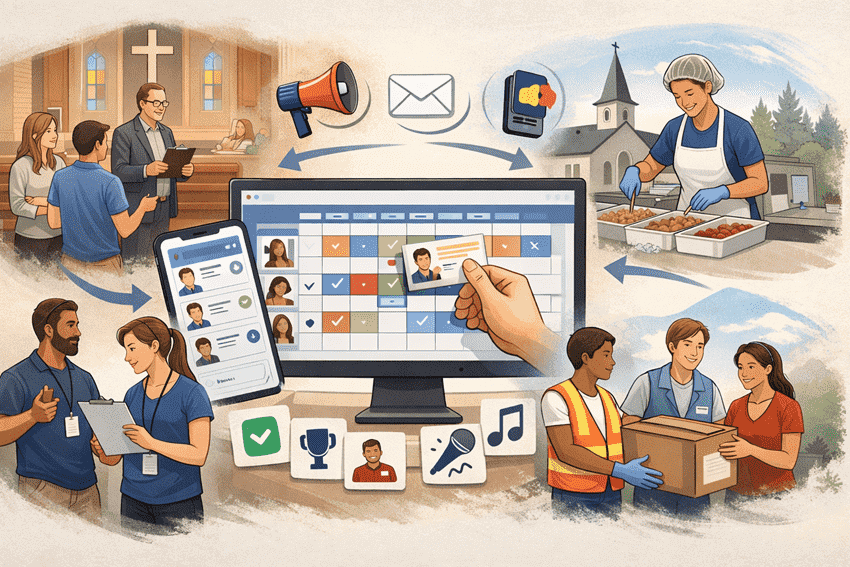
Volunteer management matters just as much. Scheduling, reminders, and role clarity prevent burnout. When volunteers know what’s expected and feel supported, they stay longer.
If managing volunteers feels like herding cats, the tools are failing you.
Reporting and church health insights
Reports should answer real questions.
Are people growing or drifting
Which ministries are thriving
Where should leadership focus next
Dashboards and summaries help leaders make decisions without digging through spreadsheets. Insights matter more than raw data.
Security, data protection, and compliance
Churches hold sensitive information. That responsibility cannot be taken lightly.
Paid software should offer strong security, role based access, encrypted data, and compliance with privacy standards. This protects both the church and the people it serves.
If security feels vague or undocumented, that’s a red flag.