

Evangelism Bible verses help Christians understand why sharing the gospel matters, how to do it with wisdom, and where confidence comes from when conversations about faith feel difficult.
Evangelism is not about winning arguments or forcing people into religious conversations. At its heart, evangelism is sharing the good news of Jesus Christ with truth, humility, love, and dependence on the Holy Spirit.
The Bible gives us both the command and the comfort. It calls believers to make disciples, but it also reminds us that God is present, God prepares hearts, and God gives courage when we feel weak.
This guide brings together the most helpful Bible verses for evangelism, explains their context, and shows how churches, small groups, and individual believers can apply them in everyday life.
Understanding the Importance of Evangelism
Evangelism is central to the Christian faith because the gospel was never meant to be kept private. Jesus called His followers to bear witness, make disciples, and carry the good news beyond their own comfort zones.
What Is Evangelism?
Evangelism is the act of sharing the message of Jesus Christ with others. It may happen through a conversation, a personal testimony, a sermon, a mission trip, a church outreach event, a Bible study, or a simple invitation to church.
Good evangelism is not loud, manipulative, or careless. It is truthful and compassionate. It respects the person while clearly pointing to Christ.
In real church life, I have seen that many people are not resistant to faith itself. They are resistant to pressure, judgment, or conversations that feel fake. Evangelism becomes healthier when it begins with listening, prayer, and genuine care.
Biblical Basis for Evangelism
The clearest foundation for evangelism is the Great Commission. In Matthew 28:19-20, Jesus tells His followers to make disciples of all nations, baptize them, and teach them to obey His commands.
This means evangelism is not only about getting someone to agree with a message. It is about helping people begin a life of discipleship.
Jesus also promised His presence:
“And surely I am with you always, to the very end of the age.”
Matthew 28:20
That promise matters. Evangelism can feel intimidating, but Christians do not share their faith alone.
Community and Individual Impact
Evangelism strengthens both the person who hears the gospel and the person who shares it. When believers speak about faith, they often become more aware of what they believe and why it matters.
Churches also grow healthier when evangelism is part of their culture. A church that prays for people, welcomes newcomers, trains members, and serves the community becomes more outward-looking.
Evangelism is not only a program. It is a shared posture of love, witness, and mission.
Top Bible Verses on Evangelism
The following scriptures summarize the heart of evangelism. Some focus on the command to go, others on personal testimony, courage, readiness, and God’s promises.
| Bible Verse | Main Theme | Practical Application |
|---|---|---|
| Matthew 28:19-20 | Great Commission | Make disciples and trust Christ’s presence |
| Acts 1:8 | Power of the Spirit | Depend on the Holy Spirit, not personal confidence |
| Romans 10:14-15 | Need for preaching | Share the gospel because people need to hear |
| 1 Peter 3:15 | Prepared answers | Be ready to explain your hope with gentleness |
| Mark 16:15 | Global gospel mission | Share the good news widely |
| Luke 10:2 | Prayer for workers | Pray for more people to serve in the harvest |
| 2 Corinthians 5:20 | Ambassadors for Christ | Represent Christ with humility and urgency |
| Revelation 12:11 | Power of testimony | Share what God has done in your life |
| Colossians 4:5-6 | Wise conversations | Speak with grace and discernment |
| John 20:21 | Sent by Jesus | See daily life as part of your mission |
Verses Summarizing the Great Commission
Matthew 28:19-20 is the central evangelism passage:
“Go therefore and make disciples of all nations…”
Matthew 28:19
This verse gives evangelism its direction. Jesus sends His followers outward. The command is not limited to pastors, missionaries, or church leaders. Every believer has a role in pointing others to Christ.
Mark 16:15 also says:
“Go into all the world and preach the gospel to all creation.”
Together, these verses show that evangelism is both local and global. It can happen across the street, across a classroom, across a workplace, or across nations.
For more scripture collections on this theme, resources like 10 Key Bible Verses on Evangelism and Bible Verses about Spreading the Gospel can help readers study the topic further.
Encouraging Personal Testimonies
Revelation 12:11 speaks about the power of testimony:
“They triumphed over him by the blood of the Lamb and by the word of their testimony.”
A testimony does not need to be dramatic to be meaningful. Some people share how God rescued them from a major crisis. Others share how Christ gave them peace, forgiveness, direction, or a new way to live.
A simple testimony can answer three questions: What was life like before? How did God meet you? What has changed since?
This makes evangelism personal without making it self-centered. The focus remains on what God has done.
God’s Promises in Evangelism
Acts 1:8 says:
“But you will receive power when the Holy Spirit comes on you; and you will be my witnesses…”
This verse is important because it reminds us that evangelism depends on the Holy Spirit. Human personality matters less than spiritual dependence.
Some believers are naturally outgoing. Others are quiet and hesitant. Both can be faithful witnesses. Evangelism is not about having the strongest personality. It is about being available, prayerful, and obedient.
Verses That Motivate and Encourage Evangelism
Many Christians want to share their faith but feel nervous. They worry about saying the wrong thing, being rejected, sounding awkward, or not knowing enough Scripture.
The Bible gives courage for those moments.
Empowerment Through the Spirit
Acts 1:8 connects witness with the power of the Holy Spirit. This means Christians should not approach evangelism as a performance.
Before speaking, pray. Before answering hard questions, ask for wisdom. Before inviting someone to church, ask God to prepare the heart.
Luke 12:12 also reminds believers that the Holy Spirit helps them speak with wisdom when they need it.
Evangelism becomes less frightening when we remember that God is already at work before we enter the conversation.
Testimonies from Biblical Figures
The Bible is full of people who witnessed in different ways.
The Samaritan woman in John 4 told her town, “Come, see a man who told me everything I ever did.” She did not have formal training. She simply shared what Jesus had done.
Peter preached boldly in Acts after once denying Jesus. His story shows that failure does not disqualify someone from future witness.
Paul shared the gospel through preaching, reasoning, letters, suffering, and personal testimony. His life shows that evangelism can take different forms depending on the situation.
These examples help ordinary believers see that God uses imperfect people.
God’s Assurance of Support
Romans 10:14-15 asks an important question:
“How can they hear without someone preaching to them?”
This passage shows why evangelism matters. People need to hear the good news. Faithful witness is one way God brings the message to them.
The verse continues:
“How beautiful are the feet of those who bring good news!”
That image is encouraging. God values the messenger who carries the gospel, even when the work feels small or unseen.
For additional reflection, Top 10 Bible Verses for Evangelism and 12 Powerful Scriptures on Evangelism offer more examples that can support personal study or group training.
Practical Applications of Evangelical Scriptures
Bible verses about evangelism are not meant to stay on a page. They should shape how Christians speak, listen, pray, and serve.
Memorization Techniques for Scriptures
Memorizing evangelism verses builds confidence. You do not need to memorize dozens at once. Start with three core verses: Matthew 28:19-20, Acts 1:8, and 1 Peter 3:15.
A simple method is to read one verse each morning, write it on a card or phone note, say it aloud, and use it in prayer. Over time, the verse becomes easier to recall in real conversations.
Here is a practical memorization table:
| Situation | Verse to Remember | Why It Helps |
|---|---|---|
| Feeling afraid to share faith | Acts 1:8 | Reminds you of the Spirit’s power |
| Explaining Christian hope | 1 Peter 3:15 | Helps you speak with gentleness and respect |
| Inviting others into discipleship | Matthew 28:19-20 | Keeps the mission clear |
| Praying for outreach | Luke 10:2 | Focuses prayer on workers and harvest |
| Speaking with wisdom | Colossians 4:5-6 | Guides tone and timing |
Evangelism in Day-to-Day Conversations
Evangelism often begins with normal conversations. A coworker shares a struggle. A friend asks why you still have hope. A neighbor mentions feeling alone. A student asks about church.
In those moments, you do not need to preach a full sermon. You can respond with honesty and care.
You might say:
“My faith has helped me through something similar. Would you be open to hearing about that?”
Or:
“I do not have a perfect answer, but I believe God cares about what you are walking through.”
Evangelism becomes more natural when it grows from relationship.
Community Outreach Examples
Churches can use evangelism scriptures to shape outreach. Matthew 28 can guide discipleship. Luke 10:2 can guide prayer meetings. Colossians 4:5-6 can guide training on respectful conversations.
Examples of outreach include neighborhood prayer walks, service projects, community meals, youth events, visitation teams, local missions, and follow-up with new visitors.
The goal is not only to bring people into a building. It is to bring the love and truth of Christ into real relationships.
The Role of Scripture in Evangelism Training
Scripture should be the foundation of evangelism training. Techniques may help, but they should never replace biblical truth, prayer, and love.
Foundation of Scriptural Knowledge
A believer does not need to know every answer before sharing faith. But a basic grasp of Scripture helps them speak clearly.
Core evangelism passages help answer important questions: What is the gospel? Why did Jesus come? Why does faith matter? What does repentance mean? What does discipleship involve?
Churches can build training around key verses instead of only teaching scripts. This helps people understand the message, not just repeat lines.
Training Programs Focused on Scriptures
A simple church evangelism training could include six sessions:
| Session | Focus | Key Scripture |
|---|---|---|
| 1 | What is the gospel? | Romans 1:16 |
| 2 | Why evangelism matters | Matthew 28:19-20 |
| 3 | Depending on the Spirit | Acts 1:8 |
| 4 | Sharing your testimony | Revelation 12:11 |
| 5 | Answering with gentleness | 1 Peter 3:15 |
| 6 | Outreach as a church | Luke 10:2 |
This structure gives members a clear foundation and practical confidence.
Building Confidence in Evangelism
Confidence grows with preparation and practice. Many believers hesitate because they fear being asked a question they cannot answer.
It is okay to say, “I do not know, but I can look into that with you.” That kind of honesty is often more helpful than pretending.
1 Peter 3:15 gives the right balance:
“Always be prepared to give an answer… with gentleness and respect.”
Preparation matters. So does tone.
The Challenge of Evangelism in Today’s World
Evangelism today requires wisdom. Many people have had negative experiences with religion, feel skeptical of institutions, or associate faith conversations with pressure.
That does not mean evangelism is impossible. It means Christians must be more thoughtful.
Cultural Resistance to Evangelism
Some people resist evangelism because they expect judgment, arguments, or manipulation. Others have real questions about suffering, hypocrisy, science, politics, or church hurt.
A faithful witness should not dismiss those concerns. Listening well is part of loving well.
Colossians 4:5-6 says:
“Be wise in the way you act toward outsiders… Let your conversation be always full of grace.”
Grace-filled speech matters. The way Christians speak can either open a door or close one.
Adapting Strategies for Modern Contexts
Modern evangelism often begins with trust. People may need to see consistency before they are ready to hear words.
This means Christians should share the gospel through both life and speech. Service, hospitality, integrity, compassion, and patience can create space for meaningful conversations.
Digital tools can also support evangelism. Churches can share sermons, testimonies, devotionals, event invitations, and Bible resources online. But digital content should lead toward real care, not replace it.
Engaging in Effective Dialogue
Effective evangelism is a dialogue, not a monologue. Ask questions. Listen carefully. Avoid rushing. Share Scripture when it truly fits the moment.
Good questions include:
“What has your experience with faith been like?”
“What do you think about Jesus?”
“Would you be open to reading a short passage together?”
“What gives you hope when life is hard?”
These questions create space for honest conversation.
For broader biblical context, What Does the Bible Say About Evangelism? and 100 Bible Verses about Evangelism can help readers explore more passages and themes.
Lesser-Known Evangelism Bible Verses Worth Studying
Many people know Matthew 28 and Acts 1, but other passages also shape evangelism deeply.
Colossians 4:5-6
This passage teaches believers to walk wisely toward outsiders and speak with grace. It is one of the most practical evangelism verses because it addresses tone, timing, and discernment.
Evangelism is not only what you say. It is also how you say it.
2 Corinthians 5:20
Paul says believers are ambassadors for Christ. An ambassador represents someone else. That means Christians do not share their own personal brand or opinion as the center. They represent Christ.
This verse gives dignity and responsibility to evangelism.
John 4:39
Many Samaritans believed because of the woman’s testimony. This verse shows the power of a simple story.
A testimony does not need to answer every theological question. It can simply point people toward Jesus.
Psalm 96:3
“Declare his glory among the nations, his marvelous deeds among all peoples.”
This verse reminds us that mission is not only a New Testament idea. God’s heart for the nations is seen throughout Scripture.
How to Use Evangelism Bible Verses in Real Conversations
Scripture should be used with care. A verse can bring light, but if used harshly or without context, it can feel like a weapon.
Start by understanding the person. Are they curious, wounded, skeptical, grieving, or searching? The same verse will not fit every moment.
If someone feels hopeless, Romans 15:13 may be more helpful than starting with a command. If someone asks about Christian mission, Matthew 28 may fit. If someone asks why you believe, 1 Peter 3:15 can guide your answer.
A helpful pattern is: listen, connect, share, invite.
Listen to what they are actually saying. Connect with empathy. Share a verse or testimony that fits. Invite them to continue the conversation, read Scripture, visit church, or pray.
Helping Your Church Grow in Evangelism
Evangelism becomes healthier when the whole church is equipped. Members need Scripture, training, prayer, encouragement, and follow-up systems.
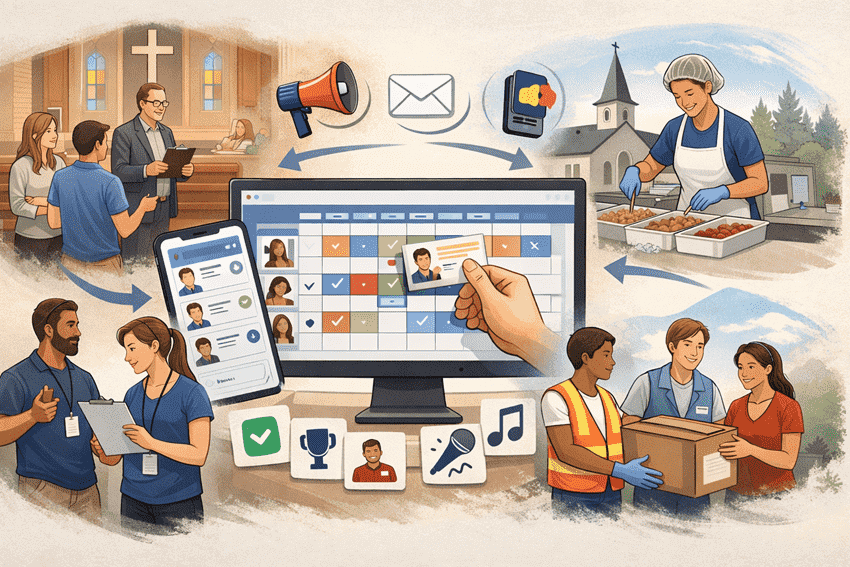
ChMeetings helps churches manage people, groups, events, attendance, communication, and church operations in one place. This can support evangelism by helping churches organize outreach events, follow up with visitors, coordinate small groups, communicate with volunteers, and care for people after first contact.
FAQs About Evangelism Bible Verses
What are the best Bible verses for evangelism?
Some of the best Bible verses for evangelism include Matthew 28:19-20, Acts 1:8, Romans 10:14-15, 1 Peter 3:15, Mark 16:15, Luke 10:2, 2 Corinthians 5:20, and Colossians 4:5-6. These verses cover the Great Commission, the power of the Holy Spirit, personal testimony, wise speech, and the need to share the gospel.
How can I effectively use Bible verses in evangelism?
Use Bible verses in evangelism by understanding their context, memorizing a few key passages, and applying them naturally in conversation. Do not force verses into every moment. Listen first, then share Scripture that speaks to the person’s question, need, or spiritual openness.
What does the Great Commission instruct us to do?
The Great Commission instructs believers to make disciples of all nations, baptize them, and teach them to obey Jesus’ commands. It shows that evangelism is not only about conversion, but about helping people become lifelong followers of Christ.
How does Scripture encourage evangelism?
Scripture encourages evangelism by reminding believers that God sends them, empowers them through the Holy Spirit, and remains with them. Verses like Acts 1:8 and Matthew 28:20 show that Christians are not alone when they share their faith.
Are there verses that emphasize the value of personal testimonies?
Yes. Revelation 12:11 and John 4:39 both show the power of testimony. Sharing what God has done in your life can make the gospel personal and relatable, especially when done with humility and honesty.
What Bible verse helps when I feel afraid to share my faith?
Acts 1:8 is a helpful verse because it reminds believers that the Holy Spirit gives power to witness. 1 Peter 3:15 also helps by focusing on preparation, gentleness, and respect instead of pressure or fear.
How can a church train members for evangelism?
A church can train members by teaching key evangelism scriptures, helping people write their testimony, practicing respectful conversations, praying for outreach, and creating clear follow-up systems for visitors and new believers.
Final Thoughts
Evangelism Bible verses give Christians a biblical foundation for sharing faith with truth, courage, and love. They remind us that evangelism is not a sales pitch or a debate. It is witness.
Jesus sends His people. The Holy Spirit empowers them. Scripture guides their words. The church supports the mission.
Start with a few verses. Pray through them. Memorize them. Practice sharing your story. Then look for one real conversation where you can speak with grace, listen with care, and point someone toward Christ.